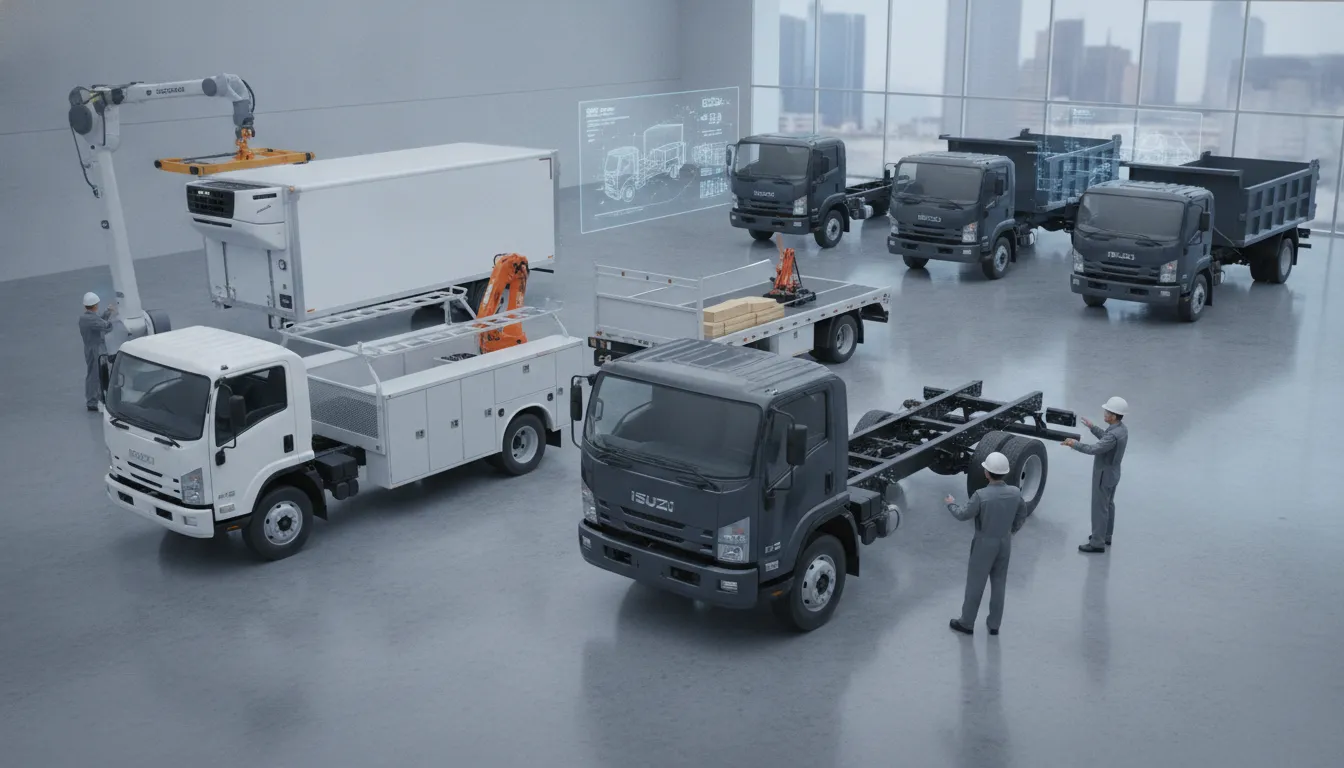
A truck that works well for one crew may not suit another. Movers, painters, haulers, and construction contractors all carry different cargo and follow different routines, so body style and equipment should reflect the actual work. With the Isuzu FTR, businesses can consider options such as enclosed bodies, tool storage, liftgates, racks, hydraulic systems, and compatible hooklift containers. This guide to Isuzu FTR truck body configurations and upfit options helps you sort through those choices. Learn what to consider when matching a setup to cargo, routes, job-site access, and crew needs, plus which chassis ratings and specifications to confirm with a dealer or qualified upfitter.
Key Takeaways
- Choose a body for your regular jobs: Match the setup to the cargo, tools, loading routine, routes, and job-site access your crew needs.
- Verify capacity and fit before ordering: Include the body, equipment, passengers, fuel, and cargo when checking payload, GVWR, axle ratings, and chassis compatibility.
- Plan upfits as one complete system: Review options such as liftgates, racks, tool storage, or hooklifts with a dealer or qualified upfitter to confirm they suit your work and the FTR configuration.
What Work Does the Isuzu FTR Handle?
Medium-duty jobs and demanding loads
The Isuzu FTR is designed for medium-duty work that calls for a larger body or greater carrying capacity than a lighter truck can provide. With a listed gross vehicle weight of 25,950 pounds, it may suit businesses hauling construction materials, landscaping supplies, equipment, or debris. The right setup depends on the truck’s rated capacity and the weight of the body, equipment, passengers, and cargo.
The FTR can also be equipped for specialized work. For example, a hooklift setup can help dumpster rental and cleanout businesses transport compatible containers. Before choosing a truck, check licensing requirements for its rating and intended use. Federal and state rules can depend on factors such as vehicle and combination weight. You can see an example of an Isuzu FTR hooklift truck to understand how this configuration can support container-hauling work.
Match the truck setup to cargo, routes, and tasks
The FTR’s body and equipment should fit the work your crew does every day. A landscaper may need space for mowers, materials, and yard waste. A contractor might prioritize secure tool storage and room for job-site supplies. Movers may need an enclosed body to protect furniture, while a delivery operator could benefit from equipment that makes loading and unloading easier.
Think about more than cargo volume. Consider the weight and dimensions of what you carry, how often you load and unload, and whether your routes include narrow streets, tight job sites, or limited parking. These details affect body size and equipment choices. Isuzu describes the FTR chassis as configurable for different cargo, routes, and tasks. Share your daily work requirements with a dealer or upfitter before settling on a setup.
Check chassis and body compatibility
A body that looks like the right size still needs to fit the truck’s chassis and weight ratings. Wheelbase, cab-to-axle measurement, axle ratings, and payload all affect compatibility. The completed truck must stay within its ratings when the body, installed equipment, passengers, fuel, and cargo are accounted for. Weight placement matters, too, since an unbalanced load can affect handling and component wear.
The FTR is offered with multiple wheelbase options to accommodate different body applications. Isuzu lists F-Series wheelbases from 152 to 248 inches and body lengths up to 30 feet, depending on configuration. Those dimensions are a useful starting point, but they do not confirm that every body will fit every chassis. Review the Isuzu F-Series specifications with a dealer or qualified upfitter to verify the fit and ratings for your intended setup.
Which Isuzu FTR Body Configurations Can You Choose?
The Isuzu FTR can be equipped with different body styles to carry cargo, tools, materials, or specialized equipment. The best fit depends on what your crew transports, how you load and unload, and where the truck operates. A mover may need enclosed space, while a landscaper may prioritize easy access to materials and debris.
Think about the work your truck handles most often, not just the occasional job. List the usual cargo, its dimensions and weight, and any equipment crews need to load it. Then consider practical details such as job-site access, delivery routes, and whether cargo needs protection from the weather or temperature control.
A body also has to fit the FTR chassis and work within the truck’s weight and operating limits. Body dimensions, added equipment, and cargo all affect the finished configuration. Review your plans with a dealer or qualified upfit provider before choosing a setup. They can help confirm compatibility and identify the specifications to check, so the truck is suited to your regular work.
Box bodies for enclosed cargo, moving, and delivery
A box body provides enclosed space for cargo that needs protection during transport. It can be a good choice for movers, delivery operators, and contractors carrying supplies between job sites. The enclosed design helps shield items from weather and road debris, while the body’s interior can be arranged to suit the goods you carry.
Before selecting a box body, consider the size and shape of your typical loads, how often crews load and unload, and whether side access would help. You may als
o want to consider cargo-management features, such as tie-down points or shelving, as well as loading equipment like a liftgate. The Isuzu truck model guide identifies box bodies as an option for enclosed cargo, moving, and delivery work. Confirm body dimensions and equipment fit with your dealer or upfit provider.Flatbeds for bulky materials and equipment
A flatbed gives crews an open platform for loads that are difficult to fit into an enclosed body. Landscapers, construction contractors, and haulers may use one to transport bulky materials, machinery, or equipment. The open sides can make loading and unloading more accessible, depending on the cargo and the equipment available at the job site.
Consider the load’s dimensions and weight, how it will be secured, and whether it needs weather protection. Tie-down points and other cargo-securement features should suit the items you carry. A commercial truck upfit guide describes flatbeds as a practical choice for bulky materials and equipment. Ask your upfit provider to review the platform, securement needs, and any added equipment alongside the FTR chassis specifications.
Refrigerated bodies for temperature-sensitive cargo
A refrigerated body is designed to carry products that need temperature control while in transit. Businesses transporting food or other temperature-sensitive goods may need this setup, along with suitable insulation and refrigeration equipment. Choose the body and cooling system based on the cargo’s requirements, including its temperature range and the length of typical trips.
Daily work patterns matter, too. Frequent stops and door openings can affect temperature control, so consider how deliveries are scheduled and where the truck will operate. The Isuzu truck model guide notes that refrigerated bodies can be fitted to the FTR. Have your dealer or upfit provider review the complete configuration, including the body, refrigeration unit, and expected cargo, before you order.
Utility and service bodies for tools and maintenance
Utility and service bodies give crews dedicated space for tools, parts, and job-site equipment. They can work well for maintenance teams, painters, and contractors who travel between jobs and need supplies organized and accessible. Compartments, drawers, and toolboxes can be planned around the items your crew uses most often.
Start with a list of essential tools and equipment, then consider which items need secure storage and which should be easy to reach. Check that compartments can accommodate larger items, too. Storage systems and their contents add weight, so include them when reviewing truck capacity. Isuzu upfit coverage highlights utility and service bodies for tradespeople carrying tools and maintenance equipment. Discuss your storage needs and the completed truck’s weight with your dealer or upfit provider.
Dump and landscape bodies for materials and debris
Dump and landscape bodies can help crews move loose materials, yard waste, and job-site debris. Landscapers and construction contractors may choose a dump body when they need to unload materials without removing them by hand. The right body style depends on the materials you haul, the volume of each load, and the places where you need to unload.
Review the body’s capacity and operating requirements alongside the FTR chassis specifications. Think about access at job sites and the types of material crews handle regularly. An Isuzu FTR body example describes dump bodies for landscaping and construction work. Before settling on a configuration, ask your dealer or upfit provider to check body fit, weight, and equipment compatibility for your intended use.
Hooklift systems for compatible, interchangeable containers
A hooklift system can let a truck load and unload compatible containers, giving a business options for different types of work. For example, a contractor or hauler may use one container for materials and another for debris. Swapping containers can make the truck useful across jobs, as long as the system, containers, and chassis are designed to work together.
Check compatibility before choosing a hooklift setup. Confirm the system’s requirements, container dimensions, and loaded weights with your dealer or upfit provider. Also consider where spare containers will be stored and how crews will load, unload, and secure them. This Isuzu FTR hooklift example shows how compatible, interchangeable containers can support varied applications. Ask about the operating procedures and equipment your team will need for everyday use.
Specialized bodies, including crane setups
Some jobs call for a body and equipment package designed around a specific task. A crane setup, for example, may help crews handle lifting work. Other specialized bodies can be configured to suit particular materials, equipment, or service needs. The right choice depends on the work, the loads involved, and the space available at each job site.
Plan specialized equipment with the truck’s weight, load distribution, and chassis requirements in mind. Give your dealer or upfit provider details about the loads you expect to handle, where the truck will operate, and how crews will use the equipment. Coverage of the Isuzu and Shyft Group collaboration includes specialized body config
urations such as crane setups. Confirm installation and operating requirements before selecting a package.Which Upfits Can You Add to an Isuzu FTR?
An Isuzu FTR can be configured with storage, cargo-management equipment, loading systems, and accessories for specific jobs. The right choices depend on the body, the materials or equipment you carry, and how your crew loads and unloads the truck. Plan the body and upfits together rather than choosing accessories one at a time. That helps ensure they work as a system and fit the truck’s available capacity.
Shelving, drawers, and toolboxes for organized storage
Shelving, drawers, and toolboxes give crews dedicated places for tools, parts, and supplies. Landscapers might separate hand tools from irrigation equipment, while maintenance teams can keep repair parts and safety gear close at hand. Contractors may use drawers for smaller items that could otherwise shift during travel.
Start by listing what your crew carries and sorting items by how often they are used. Place frequently needed tools where workers can reach them easily, and consider whether doors or drawers have enough room to open at your regular job sites. Storage takes up space and adds weight, so account for both when planning the body and cargo capacity. A thoughtful layout can make it easier to find equipment without moving other items first.
Racks, tie-downs, and cargo-management systems
Racks and cargo-management equipment help carry long, bulky, or irregular loads. Window installers may need a setup for frames and trim, while contractors could use racks for ladders, conduit, or building materials. Tie-down points, load bars, and dividers can help keep cargo secure and organized on the road.
Choose equipment to suit the size and weight of the loads, and consider how workers will secure and remove items throughout the day. A custom setup may include toolboxes, ramps, or material-handling equipment. Ask a truck body upfitter about available options, then confirm that each accessory fits the body and does not block doors, lights, or other equipment.
Liftgates, ramps, and loading equipment
A liftgate can help crews move heavy items between the ground and the truck bed. It may be useful for movers, delivery teams, or contractors who regularly handle equipment and supplies. Ramps can suit wheeled loads such as carts and mowers. The right choice depends on what you carry, how often you load it, and the space available at your work sites.
Check the equipment’s rated capacity against your heaviest expected load, and make sure the truck has room for it to operate. Liftgates and ramps add weight, which reduces the capacity available for cargo. Ask about the body, mounting requirements, and intended use when planning the installation. Some specialists offer custom body fabrication and hydraulic equipment installation, so you can discuss a complete setup with an upfitter.
Hydraulics, work lights, and job-specific equipment
Hydraulic systems can operate equipment such as dump bodies, hooklift systems, and other body-mounted tools. Work lights can help crews see the truck and their work area during early starts, evening jobs, or dim conditions. Depending on the application, a truck may also need power outlets, air lines, or controls for specialized equipment.
Begin with the tasks the truck needs to handle, then ask an upfitter which systems are compatible with the selected body and chassis. Confirm where controls, wiring, and hydraulic components will be installed, and make sure workers can reach them safely. These systems should be planned as part of the full truck configuration. Their weight, placement, and power requirements can affect how the vehicle operates and how much cargo it can carry.
Tarp systems and body-specific accessories
A tarp system can cover materials or debris and help contain a load during transport. Depending on the body and application, the system may be manual or powered, with controls placed for convenient operation. Other body-specific accessories can include sideboards, ladder racks, tool carriers, and container hardware.
Choose accessories based on the loads you carry and the steps your crew follows at each stop. For example, a powered tarp may let workers cover a load without climbing onto the truck. The Isuzu FTR hooklift example features a remote-operated hydraulic tarp system as part of a purpose-built setup. Ask an upfitter whether a similar accessory suits your body, cargo, and work routine, and confirm that it fits the chassis configuration.
Match upfits to chassis ratings and intended use
Before choosing equipment, confirm that the body and each upfit fit the truck’s ratings and dimensions. The body, liftgate, racks, storage, and other equipment all add weight, leaving less capacity for cargo. Their placement also matters, since uneven loading can affect weight distribution and axle loads.
Review the gross vehicle weight rating, axle ratings, wheelbase, and body fit with your dealer or upfitter. Explain what you plan to carry, how the truck will be loaded, and where it will operate. Use Isuzu’s FTR model information as a starting point, then verify the specifications for the exact chassis you are considering. Have the complete configuration reviewed before installation so the body and equipment suit the truck’s intended work.
Which Industries and Jobs Fit FTR Body Configurations?
The Isuzu FTR can be configured for a range of commercial jobs, but the right setup depends on what your crew carries and how it works. Landscapers may need room for equipment and bulk materials
, while movers often prioritize enclosed cargo space and easy loading. Contractors, window installers, maintenance teams, and businesses transporting temperature-sensitive goods have their own requirements for storage, access, and cargo protection.Start by listing the truck’s regular tasks. Note the size and weight of your cargo, how often you load and unload, and whether you need to carry tools alongside materials. Consider the routes and job sites, too: tight access, frequent stops, and limited parking can affect which body and equipment make sense.
Then review the proposed configuration with a commercial truck dealer or upfitter. The body, liftgate, racks, toolboxes, and other equipment all add weight and affect available payload. Check that the complete setup fits the chassis ratings and suits your intended use. This planning helps you compare options based on your crew’s day-to-day work, rather than choosing equipment that may not serve your regular jobs.
Landscapers and haulers: move equipment, materials, and debris
Landscapers and haulers may carry mowers, hand tools, soil, mulch, yard waste, or construction debris. A dump body can help crews unload loose material, while a hooklift system may suit businesses that use different containers for different jobs. The best fit depends on what you haul most often and how you load and unload it.
The Isuzu FTR hooklift truck is described for landscaping, dumpster rental, construction debris, and municipal work. Before choosing a configuration, estimate the weight of typical loads and consider where the truck will operate. Ask your dealer to check body fit, payload, and equipment compatibility, especially if you plan to carry tools or other equipment along with materials.
Construction contractors: carry tools and job-site supplies
Construction crews may need to bring tools, supplies, and equipment to jobsites, along with materials or debris. An enclosed body can protect cargo, while a service body can keep frequently used tools organized and accessible. Contractors who regularly haul loose material or use containers may want to compare dump and hooklift configurations as well.
Some FTR hooklift configurations include tool storage, which can help crews bring essential equipment to the job. Make a list of the tools and supplies your team uses most, then plan where each item will go. Consider how added storage affects weight and available payload, and have a dealer confirm that the complete setup fits the truck’s ratings and your work requirements.
Movers and delivery operators: protect cargo and simplify loading
Movers and delivery operators often need an enclosed body to protect goods from weather and road debris. A box body can provide enclosed cargo space, while a liftgate or ramp may help with loading and unloading heavier items. Interior tie-downs and cargo-management equipment can help keep items secure in transit.
Some FTR hooklift builds can also be equipped with a hydraulic, remote-operated tarp system. According to Smith Truck Co.’s FTR build details, the system can simplify covering a load and help protect cargo. Think about the types of goods you carry, how often you make stops, and the loading equipment your crew needs. Confirm body dimensions and payload before selecting the setup.
Window installers: secure long, bulky, or fragile materials
Window installers may transport glass, frames, and other materials that are long, bulky, or fragile. A suitable rack, padded supports, and secure tie-down points can help keep products stable on the road. Plan for safe loading and unloading, too, especially if crews handle large panels at customer sites with limited space.
Smith Truck Co. describes FTR hooklift containers in 12- to 15-foot lengths, which may suit some material-transport needs. The right configuration depends on the specific items you carry and how they must be supported. Before ordering, confirm the body and rack dimensions, check that the materials can be secured properly, and consider whether the truck can access your regular jobsites.
Maintenance teams and painters: organize tools and supplies
Maintenance crews and painters often carry hand tools, ladders, paint, cleaning supplies, and replacement parts. A utility or service body can provide dedicated compartments, while shelving and drawers can keep frequently used items easy to find. Separate storage can also help crews organize supplies for different service calls.
Some FTR builds can include a backpack toolbox with broom and shovel holders, as Smith Truck Co. notes. When planning storage, measure the equipment you carry and account for its weight. Consider how crews will access tools at a jobsite, and whether any supplies need secure or separate storage. Ask your dealer to check that the toolbox and other accessories fit the selected body and chassis.
Businesses that transport temperature-sensitive cargo
Businesses that carry food, flowers, medical supplies, or other temperature-sensitive goods may need an insulated body and refrigeration equipment. Choose a system based on the cargo’s temperature requirements, delivery distances, loading frequency, and expected stop schedule. Body insulation, door seals, and access points also matter, especially when crews open the cargo area often.
The Shyft Group and Isuzu have discussed plans for a body program aimed at commercial vehicle needs in North America, including temperature-sensitive cargo. The companies outlined their
shyft-group-isuzu-expand-collaboration-123100831.html">collaboration and planned body program, but buyers should confirm current availability and FTR compatibility with a dealer. Review the refrigeration system’s requirements, body weight, and remaining payload before choosing a configuration.How Does the Isuzu FTR Compare With the NPR and NQR?
The FTR, NPR, and NQR suit different load sizes and body setups. Compare each truck’s ratings, dimensions, and available payload against the work you do every day. A higher GVWR can allow for a heavier total loaded vehicle, but it does not tell you how much cargo the truck can carry after the body and equipment are installed.
Compare model ratings, dimensions, and body-fit requirements
The FTR is a Class 6 truck with a 25,950-pound gross vehicle weight rating (GVWR). The NQR is rated at 17,950 pounds, while the NPR is rated at 12,000 pounds, according to this Isuzu model overview. These figures describe the maximum loaded weight allowed for each truck, including the chassis, body, equipment, passengers, and cargo. They are not the same as payload capacity.
Body fit depends on more than the rating. Wheelbase, cab-to-axle measurement, frame layout, and body length all affect which box, flatbed, or service body can be installed. Ask your dealer or upfit provider to check the specifications for the exact chassis and body combination you’re considering.
Consider the FTR for larger or heavier body needs
The FTR may suit businesses that need a larger body, heavier equipment, or capacity for bulkier loads. Landscapers, construction contractors, and haulers may carry materials, tools, or debris that call for more room and a higher-rated chassis. A hooklift setup is another option for compatible work: it lets an operator load and unload interchangeable containers. FTR hooklift applications include landscaping, construction debris, and municipal work.
Plan around the completed truck’s weight, not just its GVWR. A body, liftgate, crane, or other equipment adds weight and reduces the payload available for cargo. Ask for an estimated completed weight and confirm that your typical load stays within the truck’s ratings.
Match the model to cargo, routes, and work demands
An NPR can work well for lighter commercial tasks, such as local deliveries or carrying tools and supplies. The NQR offers a higher GVWR for jobs that require more capacity, while the FTR may be a better match for heavier loads or larger bodies. Configurations vary, so compare the specific models you’re considering. For example, the NPR and NPR-HD comparison explains how capacity differs between those versions.
Consider your route as well as your cargo. A larger truck may carry more, but your crew still needs to maneuver it through city streets, fit into job-site entrances, and park where work takes place. Think about how often you load and unload, what equipment travels with you, and whether your truck spends more time on local roads or highways.
Verify current specifications and upfit compatibility
Before choosing a body or equipment package, confirm the specifications for the exact truck, model year, and configuration. Review its wheelbase, cab-to-axle measurement, axle ratings, frame details, and expected payload after installation. Then have the dealer or upfit provider confirm that the body, liftgate, crane, or hydraulic equipment fits the chassis and suits the work.
A dealer can help compare available configurations and coordinate with an upfit provider. Inventory may include ready-built trucks as well as chassis suited to custom bodies, as shown in this Isuzu dealer listing. Ask for current vehicle details and a completed weight estimate before making a decision. Licensing requirements depend on applicable rules and how the truck is configured and used, so check what applies to your operation.
How Do You Choose the Right FTR Body and Upfit?
Start with the jobs your Isuzu FTR handles most often. The right setup depends on what you carry, where you work, and how your crew loads and unloads. Write down your regular requirements, then review them with a truck dealer or qualified upfitter to confirm that the proposed body and equipment suit your FTR chassis.
Identify cargo type, dimensions, weight, and loading needs
List the cargo you expect to carry, including its typical dimensions and weight. A moving crew may need an enclosed body and liftgate, while a landscaper may need space for equipment, materials, and debris. Note how often you load and unload, how cargo will be secured, and whether workers will load by hand, forklift, or ramp.
Estimate both a typical load and your heaviest expected load. Include passengers, tools, body weight, and any added equipment in your planning. These details help determine the right body style and loading accessories. They also help your dealer confirm that the completed truck stays within its weight ratings.
Consider routes, job-site access, and parking limits
Consider where the truck will travel and work. Tight entrances, low-clearance areas, narrow streets, and limited parking can affect the body length and equipment you choose. A longer body may provide more room for cargo, but it can be harder to position at a residential property or crowded job site.
Share your regular routes and job-site conditions with your dealer or upfitter. The FTR chassis configuration should suit the de
mands of your work, including travel with a loaded body. Before ordering, confirm the truck’s overall length and height, and account for accessories such as racks or liftgates that extend beyond the body.Prioritize equipment crews use regularly
Make a list of the tools and supplies your crew uses throughout a typical shift. Shelves, drawers, bins, and exterior toolboxes can keep them organized and easier to reach. Window installers may need secure storage for tools and protective materials, while maintenance teams may need space for parts, ladders, and service equipment.
Plan storage around how workers use the truck. Keep heavy items low and secured, and place frequently used tools where the crew can reach them without moving other gear. Avoid adding cabinets or accessories simply because there is room. Each item adds weight and takes up space that could be used for cargo. A practical layout gives crews clear places to store and find their equipment.
Consider interchangeable bodies for varied work
If your business handles different types of jobs, ask whether an interchangeable body system makes sense. A hooklift, for example, can work with compatible containers for hauling debris or other materials. That flexibility may suit landscapers, haulers, and cleanout crews whose daily needs change.
Before choosing a system, consider how often your crew would switch containers and where you would store them. You’ll also need suitable space to load and unload each container. The Isuzu F-Series offers multiple wheelbase options for different body applications, but a dealer or qualified upfitter should confirm that the body, system, and containers fit your specific FTR configuration.
Balance capacity and convenience with added weight and cost
Additional equipment can make work more convenient, but it also adds weight, cost, and maintenance requirements. A liftgate, crane, heavier body, or storage system uses some of the truck’s available payload. Ask for the estimated finished vehicle weight and confirm how much capacity remains for cargo, crew, and tools.
Compare each option with the work it will support. A liftgate may be worthwhile for frequent heavy deliveries, while equipment used only occasionally may be harder to justify. Include installation and ongoing service in your decision. For example, a hooklift FTR setup may suit a business that regularly uses compatible containers. Check that the system fits your loads, work routine, and truck specifications before moving ahead.
Which Specifications Should You Check Before an FTR Upfit?
Before choosing a body or equipment, confirm that the Isuzu FTR chassis can support the work you expect it to do. A box body, liftgate, crane, or storage system changes the truck’s weight and may affect available payload, axle loads, and handling. Share details about your typical cargo, crew, routes, and job sites with your dealer and upfitter early. That gives them a clear picture of how you’ll use the truck and helps them recommend components that work together.
Check specifications for the exact chassis you’re considering, not just general FTR model information. Wheelbase, weight ratings, and equipment requirements can vary by configuration. Isuzu’s F-Series specifications offer a starting point for comparing options, while your dealer and upfitter can verify fit and ratings for a proposed build. It’s also useful to consider the truck fully loaded, with the body, equipment, passengers, fuel, and typical cargo accounted for. Reviewing these details before installation can help you select a setup that suits your daily work and supports safe operation.
Payload, GVWR, axle ratings, and weight distribution
Start with the FTR’s gross vehicle weight rating (GVWR) and axle weight ratings. The body, liftgate, tools, passengers, fuel, and cargo all count toward the truck’s total weight. Ask your dealer or upfitter to estimate the finished truck’s weight and remaining payload, then check that neither axle will exceed its rating under typical working conditions. Where you place heavy equipment matters, too: a load can stay within the overall GVWR while putting too much weight on one axle. Plan for the way your crew actually loads the truck, and consider having the completed vehicle weighed before it enters service.
Wheelbase, body length, and cab-to-axle fit
Compare the chassis wheelbase and cab-to-axle measurement with the body manufacturer’s fit requirements. These dimensions affect body placement, turning space, and how the finished truck handles. Isuzu lists eight F-Series wheelbase options, from 152 to 248 inches, for a range of body applications; the F-Series details can help you narrow down suitable chassis options. A longer body may carry more material, but it can also make tight job sites and parking areas harder to manage. Ask your upfitter to confirm the fit on the specific FTR chassis and review how the body length affects weight distribution.
Cargo securement and center-of-gravity requirements
Choose tie-downs, rails, racks, partitions, and other securement features to match the size and shape of your cargo. Then consider where that cargo will sit in the body. Heavy items should be positioned to support balanced loading, while tall or uneven loads need careful attention to center of gravity because placement can affect stability and handling. Make sure frequently used tools are accessible and that cargo stays secured during stops and turns. If you carry unusual loads or install specialized equipment, ask your upfitter to review the design. Examples of varied body applications appear in this
https://www.worktruckonline.com/videos/tour-isuzus-latest-trucks-upfits">Isuzu upfit overview.Check compatibility among the chassis, body, liftgate, and equipment
Treat the chassis, body, liftgate, and added equipment as parts of one system. Confirm that each item is designed for the FTR’s dimensions and ratings, and check how its weight affects payload and axle loads. A liftgate, crane, or hydraulic system may also require particular mounting points, electrical connections, or power capacity. Give your dealer and upfitter a clear list of the equipment you plan to use, along with details about your cargo and daily tasks. They can check component fit and installation needs before work begins. Purpose-built body programs, such as the Isuzu and Shyft collaboration, reflect the importance of matching truck platforms with body solutions.
Check licensing requirements for truck ratings and use
Confirm licensing requirements for the completed truck and the way you plan to operate it. In the United States, CDL requirements can depend on the vehicle’s GVWR or actual weight, the combined rating or weight when towing, and the type of vehicle or cargo. Some FTR configurations may be below the federal weight threshold for a CDL, but don’t assume the same rules apply to every truck or use. Ask your dealer or fleet manager to review the ratings, expected loaded weight, trailer plans, and any applicable state requirements. The FMCSA’s CDL guidance outlines federal standards; verify whether additional endorsements or local rules apply to your operation.
How Can the Right FTR Body and Upfit Help?
Organize cargo, tools, and materials
A well-planned storage setup keeps tools and materials easy to find, so crews can spend less time searching and more time working. Shelving, drawers, secure toolboxes, and labeled compartments help keep equipment in place while the truck is on the road. The right combination depends on your work: landscapers may need space for hand tools and supplies, while maintenance teams may prioritize parts, safety gear, and service equipment.
Start with the items your crew uses most often, and place them where they’re easy to reach. Keep heavier equipment secured and make sure storage doesn’t block access to other cargo or truck controls. One Isuzu FTR hooklift setup includes tool storage designed to keep equipment organized and accessible.
Make loading and unloading more efficient
The right loading equipment can make routine work faster and less physically demanding. Depending on the body and cargo, useful options may include a liftgate, ramp, tie-down points, or hydraulic tarp system. Movers may need a liftgate for heavy furniture, while haulers may use a tarp to cover materials before travel. Choose equipment based on the loads you handle and the places where crews load and unload.
Think about how often your team handles cargo, who performs the work, and whether equipment is easy to operate safely. A remote-operated tarp, for example, can cover a load without requiring someone to climb onto the truck. The Roll-Rite system featured on an FTR hooklift operates hydraulically by remote, illustrating how a suitable upfit can simplify a regular task.
Configure the truck for specific work
An FTR can be paired with different bodies and equipment to suit a range of jobs. A hooklift with compatible containers may work well for construction debris, landscaping materials, or dumpster rentals. A service body can provide organized storage for a maintenance crew, while a flatbed can carry bulky materials or equipment. Begin with the work your business does most often, rather than choosing features that may see little use.
Consider the full work cycle: what you carry, where you load, how you unload, and whether the truck needs to serve several purposes. Interchangeable containers can help some businesses adapt a hooklift truck to different tasks. The FTR hooklift example is described for dumpster rental, construction debris, landscaping, and municipal work. Confirm that any body and equipment match your chassis and operating needs.
Avoid paying for unused capacity or equipment
A body that’s larger than your work requires, or equipment your crew rarely uses, can add cost without making daily jobs easier. A setup with too little usable capacity may create extra trips or limit the cargo you can carry. Estimate the weight and dimensions of typical loads, then account for the body, tools, passengers, and added equipment when reviewing capacity.
Ratings and licensing requirements depend on the truck’s configuration and use, so check the details before you buy. One FTR hooklift listing describes a 25,950-pound GVW configuration as operating under CDL requirements. That specification doesn’t automatically apply to every FTR or location. Review the listed FTR details with your dealer, and confirm applicable licensing rules for your operation.
Support safe, reliable daily operation
Your body and upfit need to work with the truck’s ratings and the way your crew uses it. Added equipment affects total vehicle weight and weight distribution. Before installation, confirm that the proposed setup suits the chassis, axle ratings, payload limits, and cargo. Also consider securement points, visibility, access to controls, and safe loading procedures. These details help crews use the truck as intended on the road and at the job site.
For dependable daily use, choose equipment suited to the work and follow the manufa
cturer’s maintenance guidance. On a hooklift truck, the lift system, hydraulics, and containers all need to match the application. The Stellar NXT 18-L hooklift is featured on one FTR build, but a dealer can help determine whether that equipment and configuration fit your workload.How Can a Truck Dealer Help Plan an Isuzu FTR Upfit?
The right Isuzu FTR upfit starts with a clear understanding of your work. A truck dealer can help connect your day-to-day needs with the chassis, body, and equipment options that suit them. Bring details about what you carry, how you load it, and where the truck operates. That gives you a practical starting point for planning a setup for landscaping, construction, moving, hauling, or service work.
Review work requirements and truck specifications
Describe a typical workday before choosing a body or equipment. A landscaper may need to carry mowers, tools, and materials, while a mover may need enclosed cargo space and convenient loading. A contractor might prioritize organized storage for tools and job-site supplies.
Share cargo dimensions and weight, crew size, route conditions, and how often the truck will be loaded. Your dealer can use those details to discuss body styles and compare your requirements with the FTR’s specifications. Industry guidance on upfitting Isuzu trucks emphasizes matching the vehicle to its intended work. Ask the dealer to confirm current specifications and available configurations for the truck you’re considering.
Confirm body and equipment fit before installation
Ask the dealer to verify that the body and equipment fit the FTR chassis before installation. The review should cover dimensions, mounting points, clearances, and the added weight of the complete setup. A liftgate, toolboxes, or hydraulic equipment can affect payload and weight distribution, so account for all components, not just the body.
The intended job also matters. A hooklift system, for instance, needs to work with compatible containers and loading conditions. This Isuzu FTR hooklift example shows one configuration for cleanout and dumpster work. Before approving the installation, ask the dealer to check truck ratings and discuss any licensing requirements that may apply to your planned use.
Coordinate upfit planning, installation, and ongoing service
A dealer can help coordinate the steps from selecting a body and equipment to arranging installation. Ask who will manage each part of the process, what details the installer needs, and how the completed truck will be inspected before delivery. Clear communication helps ensure the finished setup supports the tasks your crew handles regularly, from moving materials to carrying tools and equipment.
Plan for maintenance, too. Find out who services the chassis and upfit components, how to schedule repairs, and whether the equipment has separate service requirements. Isuzu’s collaboration with The Shyft Group highlights the role of coordinated truck and body solutions. Your dealer can explain which options and service support are available for your specific FTR.
Frequently Asked Questions
What types of businesses may benefit from an Isuzu FTR? The FTR may suit landscapers, construction contractors, movers, haulers, maintenance teams, and other businesses that need a medium-duty truck with a body tailored to their work. The best fit depends on your cargo, routes, job sites, and equipment needs.
Can an Isuzu FTR be configured for different jobs? Yes. Depending on chassis compatibility, an FTR can be paired with bodies such as a box body, flatbed, service body, dump body, or hooklift system. A dealer or qualified upfitter can help confirm which options fit the specific truck.
How do I know how much the FTR can carry after an upfit? The truck’s usable payload depends on its ratings and the weight of the completed setup. Include the body, accessories, passengers, fuel, tools, and cargo when assessing the load. Ask your dealer or upfitter for a completed-weight estimate and confirm axle loads as well as total vehicle weight.
How should I choose between the FTR, NPR, and NQR? Compare the specific trucks’ ratings, body-fit measurements, and expected payload with your regular work needs. Also consider route access, parking, and job-site conditions. A dealer can review the exact configurations you’re considering and help determine which is appropriate.
What information should I bring when planning an FTR upfit? Bring a list of typical cargo, including its dimensions and weight, along with details about tools, crew size, loading methods, routes, and job-site access. This gives the dealer and upfitter the information they need to discuss body options, equipment, compatibility, and applicable licensing requirements.