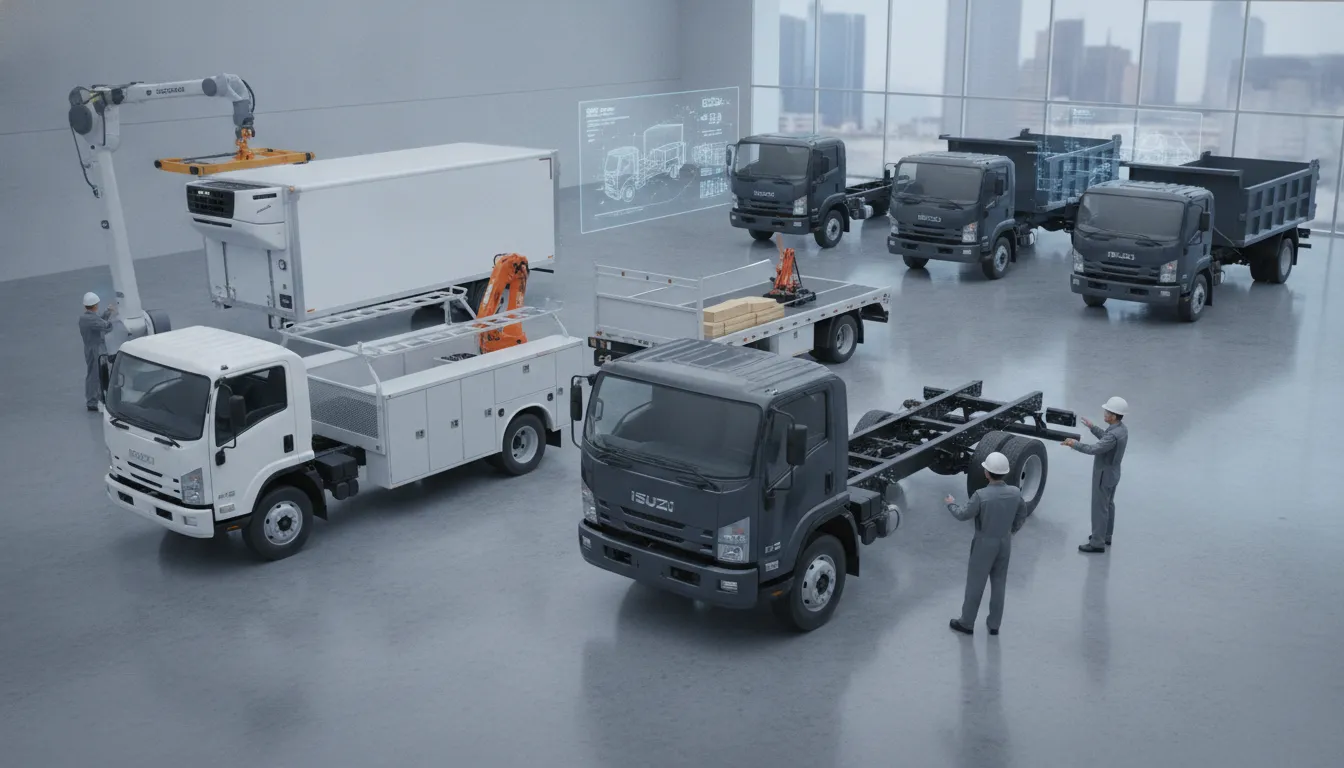
A truck that fits your business should support the work you do most often, not just the heaviest load you might carry once a year. Start with your regular routes, cargo, crew size, equipment, and body requirements. Then compare those needs with the isuzu npr specifications, including GVWR, GAWR, curb weight, payload, towing capacity, engine torque, and available wheelbases. The standard NPR may suit lighter commercial applications, while the NPR-HD can provide additional capacity for dense cargo and heavier equipment. Understanding the difference can help your business choose a dependable Chevrolet, Isuzu, or Hino commercial truck with the right capabilities. Key Takeaways Select gas or diesel based on usage: Gas models fit local routes with frequent stops, while diesel models suit heavier loads, longer routes, and extended operation. Verify capacity before purchasing: Compare GVWR, GAWR, payload, curb weight, body weight, occupants, equipment, cargo, and towing requirements for the exact chassis. Match the upfit to the job: Choose the right body, wheelbase, storage, access features, and equipment, then confirm axle loading, clearances, safety systems, and service support with your dealer and upfitter. What Are the Isuzu NPR Gas and Diesel Specifications? The Isuzu NPR offers two powertrains for commercial buyers: a 6.6L V8 gasoline engine and a 5.2L turbo-diesel. Both are built for commercial service, but they suit different routes, loads, and maintenance plans. The gas model can be a practical choice for local work with frequent stops, while the diesel may suit businesses that carry heavier cargo or cover longer distances. Landscapers, movers, contractors, painters, window installers, and service crews should look beyond horsepower when comparing trucks. Consider payload, body weight, annual mileage, idle time, terrain, towing needs, and access to qualified service technicians. Specifications can also vary by model year and chassis configuration, so compare the exact truck using the current Isuzu N-Series gas specifications and diesel specifications. 6.6L V8 Gas Engine: 350 Horsepower, 425 lb-ft of Torque The Isuzu NPR gas model uses a 6.6-liter V8 that produces 350 horsepower at 4,500 rpm and 425 lb-ft of torque at 3,800 rpm. This output supports responsive acceleration on local routes, especially when the truck makes frequent stops at jobsites, loading areas, and delivery locations. The gas engine may suit businesses with moderate annual mileage, short routes, or fleets that already use gasoline-powered vehicles. It can also be a practical fit for painters, window installers, maintenance crews, and local contractors carrying tools and materials without regularly operating near the truck’s maximum ratings. Gasoline service is familiar to many repair facilities, which can simplify routine maintenance. However, the engine’s output does not determine the truck’s legal carrying capacity. Always confirm GVWR, axle ratings, curb weight, body weight, and final payload before choosing a configuration. 5.2L Turbo-Diesel: 215 Horsepower, 452 lb-ft of Torque The NPR diesel uses a 5.2-liter 4HK1-TC turbo-diesel rated at 215 horsepower at 2,500 rpm and 452 lb-ft of torque at 1,850 rpm. While the diesel has a lower horsepower rating than the gas engine, it produces more torque at a lower engine speed. That low-speed pulling power can help when the truck starts with a full body, climbs grades, or operates for long periods under load. The diesel may fit movers, haulers, construction crews, and landscaping companies that regularly carry dense materials or tow equipment. It can also work well for businesses with consistent highway mileage and longer duty cycles. Diesel ownership includes additional emissions equipment and service requirements. Fuel quality, fluid levels, filter changes, and aftertreatment operation all matter. Review the manufacturer’s N-Series diesel specifications and ask the dealer to identify the exact emissions equipment installed on the truck. Compare the Transmission, Drivetrain, and Emissions Systems Gas-powered NPR models pair the V8 with an eight-speed Hydra-Matic automatic transmission. It uses a lock-up torque converter and two overdrive gears, helping the engine maintain efficient operating speeds on both city streets and highways. This setup suits stop-and-go routes, local deliveries, and work that requires frequent acceleration. Diesel models use an Aisin A465id six-speed automatic transmission with double overdrive. The transmission is designed for smooth power delivery and commercial-duty operation. Both versions use rear-wheel drive, although axle ratios and related equipment can differ by chassis and model year. The emissions systems also differ. Gas models use gasoline emissions controls, while diesel models may include a diesel particulate filter and selective catalytic reduction equipment. These systems help meet emissions standards but require correct fluids, operating conditions, and service procedures. Check the truck’s specifications and review the applicable Isuzu owner information before buying or modifying the chassis. Choose Gas or Diesel for Routes, Loads, Mileage, and Maintenance Choose the gas NPR when the truck will handle mostly local travel, frequent stops, moderate loads, and lower annual mileage. A landscaping crew carrying hand tools, a painting company transporting supplies, or a service contractor using a utility body may appreciate the gas engine’s horsepower and familiar maintenance requirements. The diesel NPR deserves closer consideration when the truck carries dense cargo, travels long distances, climbs grades, or operates for many hours at a time. A mover with a loaded box body, a hauler pulling equipment, or a construction company carrying materials may benefit from the diesel’s low-speed torque. Fuel economy depends on payload, body style, traffic, terrain, tire selection, and idle time. Compare the full operating cost, including oil and filter service, emissions-system maintenance, fuel-system repairs, and expected mileage. Also compare the NPR and NPR-HD when the application may require additional capacity. Check Model-Year and Chassis-Cab Differences NPR specifications can change by model year, cab configuration, wheelbase, engine, emissions equipment, and factory options. A used truck may have a different transmission, axle rating, payload, or emissions system from a newer NPR, even when the model name is the same. Standard Cab configurations may offer wheelbases from about 109 to 212 inches, with body lengths of roughly 10 to 24 feet depending on the chassis and wheelbase. Crew Cab models, installed bodies, fuel levels, and optional equipment can change curb weight and available payload. Before purchasing, compare the door-jamb label, VIN data, axle ratings, GVWR, body weight, and intended cargo. The final build sheet is especially important when buying a used truck or replacing a body. A Chevrolet, Isuzu, or Hino truck dealer or qualified service center can verify whether the engine, transmission, body, and chassis ratings match the work you plan to perform. How Do Isuzu NPR GVWR and Payload Ratings Work? GVWR and payload ratings show how much weight an Isuzu NPR can carry safely after the truck is equipped for work. These figures help you select the right chassis before adding a box body, dump body, service body, liftgate, or other commercial equipment. GVWR, or Gross Vehicle Weight Rating, is the maximum permitted weight of the completed truck. That total includes the chassis, body, fuel, driver, passengers, tools, permanently mounted equipment, and cargo. Payload is the amount of weight left for people, equipment, and materials after the truck’s operating weight is accounted for. The standard NPR and NPR-HD have different GVWR ratings, so the right choice depends on your daily loads and planned upfit. A landscaper carrying mulch and equipment may have different requirements than a mover using a box body or a contractor carrying compressors and tools. Review the NPR and NPR-HD specifications as a starting point, then confirm the exact ratings for the truck you plan to purchase. Model year, cab style, wheelbase, engine, body, and installed equipment can all change the final capacity. Standard NPR: 12,000-Pound GVWR and Class 3 The standard Isuzu NPR has a 12,000-pound GVWR, placing it in Class 3. This rating includes the truck, body, occupants, fuel, tools, and cargo. It is not the amount of freight you can add to an empty chassis. A standard NPR may suit landscapers, painters, delivery operators, maintenance companies, and contractors with moderate cargo requirements. Its compact size can also help when working in alleys, residential driveways, and busy commercial areas. Before selecting this model, weigh the proposed body and permanently mounted equipment. A heavy enclosed body, liftgate, shelving system, or compressor uses capacity before you load job materials. The truck’s actual curb weight and axle ratings also need to fit your expected work. NPR-HD: 14,500-Pound GVWR and Class 4 The Isuzu NPR-HD has a 14,500-pound GVWR and is classified as a Class 4 truck. Its 2,500-pound advantage over the standard NPR provides more room for heavier bodies, tools, equipment, and cargo. This extra capacity can help construction crews, landscapers, movers, haulers, and service contractors carrying dense or bulky loads. An NPR-HD may also be a practical starting point for a dump body, landscape body, or service body with cabinets and a compressor. The higher GVWR does not guarantee a specific payload. Body weight, cab configuration, wheelbase, axle ratings, and installed equipment still affect capacity. Use the NPR and NPR-HD comparison to narrow your options, then review the exact certification label and build sheet. Compare GVWR, GAWR, Curb Weight, and Payload GVWR is the maximum weight of the complete truck. GAWR, or Gross Axle Weight Rating, is the maximum permitted weight on an individual axle. The front and rear axles may have different ratings, and both must remain within their limits. Curb weight refers to the truck’s operating weight before your cargo and job equipment are added. Payload is the remaining capacity after accounting for the chassis, body, fuel, occupants, tools, and permanently installed equipment. A useful planning method is: Available payload = GVWR minus the completed truck’s operating weight. Weight distribution matters, too. A truck can remain below its GVWR while placing too much weight on the rear axle. Load position affects tires, brakes, steering, suspension, and handling. Review the Isuzu N-Series specifications, then confirm the ratings on the specific truck’s certification label. Review Published Payloads Up to About 6,978 Pounds Published NPR payload figures vary by model, cab style, wheelbase, engine, and body configuration. Some commercial truck guides place standard NPR payload in the approximate range of 5,000 to 6,000 pounds, while NPR-HD configurations may provide roughly 7,000 to 8,000 pounds. You may also see published figures near 6,978 pounds for certain NPR configurations. Other N-Series listings show figures such as 8,470 pounds or more for specific NPR-HD and NPR-XD configurations. These numbers apply to particular chassis and equipment combinations, not every truck carrying the NPR name. A refrigerated body, liftgate, shelving, or service equipment can reduce usable cargo capacity substantially. Treat published payload as a research figure, then verify the exact chassis, body, and equipment package using the manufacturer’s N-Series data. Account for Bodies, Fuel, Occupants, Tools, and Cargo Begin with the body you plan to install. A lightweight flatbed generally uses less capacity than a refrigerated body, landscape dump body, enclosed box, or service body with drawers. Include the weight of liftgates, ladder racks, hitches, winches, compressors, auxiliary tanks, and other permanent equipment. Next, account for fuel, the driver, passengers, tools, and supplies. A window installer may carry glass racks, ladders, sealants, and installation equipment. A painter may need sprayers, scaffolding, and materials. A maintenance contractor may carry generators, parts, compressors, and hand tools. Estimate the heaviest realistic load, not only an average workday. Consider where each item will sit and how it will be secured. Keep dense cargo low and distribute it across the body. If the remaining capacity is narrow, consider an NPR-HD or a lighter body design before finalizing the upfit. Verify Door-Jamb Ratings, VIN Data, and the Build Sheet Check the certification label on the driver-side door jamb before purchasing a new or used NPR. The label generally lists the vehicle’s GVWR, axle ratings, tire information, and loading details. Use it to evaluate the individual truck, particularly when comparing used vehicles with different bodies or modifications. The VIN can help confirm the original model, engine, cab, and chassis configuration. On a used truck, inspect whether the current body matches the chassis and whether previous modifications added weight or changed axle loading. Missing labels, unapproved alterations, or an unknown body history deserve additional inspection by a qualified truck professional. Request the final build sheet or upfit documentation before approving the purchase. It should identify the body weight, equipment, dimensions, axle placement, and estimated remaining payload. Cross-check those details with the N-Series specifications and the door-jamb label so the completed truck matches the demands of your business. How Do Wheelbase and Dimensions Affect NPR Performance? Wheelbase and chassis dimensions affect how an Isuzu NPR carries cargo, handles turns, and reaches busy jobsites. A shorter truck can fit more easily in narrow streets and crowded parking areas, while a longer truck can support a larger body for equipment, materials, or household goods. The best choice depends on more than cargo-box length. Cab-to-axle distance, body overhang, axle ratings, cargo placement, and ground clearance all influence performance. Isuzu offers several NPR wheelbase configurations for delivery, service, construction, landscaping, and hauling applications. Review the N-Series gas truck specifications when comparing chassis options, and confirm details for the exact model, cab style, engine, and upfit package. A body, liftgate, toolboxes, or other equipment installed after purchase can change the finished truck’s length, weight, payload, and center of gravity. Choose From 109-, 132.5-, 150-, and 176-Inch Wheelbases The Isuzu NPR offers 109-, 132.5-, 150-, and 176-inch wheelbase options. The 109-inch configuration suits compact bodies and routes with frequent turns, narrow streets, and limited parking. The 132.5-inch and 150-inch options provide more room for cargo without creating as large a footprint as the longest chassis. The 176-inch wheelbase can accommodate longer bodies, expanded storage, and larger cargo areas. It may suit movers, landscape operators, and equipment haulers that need additional deck space. Before ordering, compare the manufacturer’s NPR gas specifications with the body manufacturer’s recommended wheelbase and cab-to-axle requirements. Compare Regular-Cab and Crew-Cab Dimensions and Payload Cab style affects seating, finished weight, and the payload available for cargo. A regular cab leaves more capacity for the body, tools, and materials, which can benefit contractors carrying dense equipment or supplies. A crew cab provides seating for additional workers, but its added weight reduces the capacity remaining for cargo and body equipment. Published specifications list a maximum body payload of about 8,470 pounds for the NPR-HD standard cab and approximately 7,725 pounds for the crew-cab version. These figures can change with the chassis, body, accessories, occupants, and cargo. Use the Isuzu N-Series diesel specifications as a reference, then confirm the certification label and final build sheet for the specific truck. Match Cab-to-Axle Measurements to Body Lengths Cab-to-axle, or CA, measures the distance from the back of the cab to the center of the rear axle. This measurement helps determine which body length will fit the chassis and sit correctly over the frame. A body that does not match the available CA can create excessive rear overhang, uneven axle loading, or interference with the cab. Depending on the wheelbase and chassis, NPR configurations can support bodies of roughly 10 to 24 feet. A shorter body may suit a service contractor carrying tools and parts, while a longer body can give movers, window installers, and delivery operators more room for bulky items. Have the upfitter verify body length, mounting points, rear overhang, and axle loading before installation. Check Overall Length, Width, Height, Clearance, and Cargo Space Published dimensions help determine whether the NPR will fit your routes, facilities, and worksites. Typical specifications list an overall width of about 81.3 inches and a height of approximately 92.9 inches. The finished measurements can change with the body, tires, mirrors, roof equipment, liftgate, and other accessories. Measure the complete truck, not only the cargo box. Confirm overall height before entering garages, loading docks, and covered work areas. Check total length when planning parking and backing space, and review body width for residential streets or narrow jobsite entrances. The NPR diesel specification sheet provides a useful reference, but the final upfit drawing should show the completed vehicle dimensions. Balance Short-Wheelbase Maneuverability With Long-Wheelbase Capacity A shorter wheelbase generally creates a tighter turning path and a smaller overall footprint. This can help landscapers, maintenance crews, painters, and contractors working in residential neighborhoods, alleys, and confined commercial lots. It also makes it easier to position the truck near a driveway, building, loading area, or jobsite entrance. A longer wheelbase provides more room for a larger body, but it requires more space for turns, backing, and parking. It may be the better fit for movers, haulers, and construction crews carrying bulky cargo or equipment. Select enough wheelbase for the intended body without adding length that the job does not require. Comparing the NPR and NPR-HD can also help when payload and chassis capacity are part of the purchase decision. Account for Turning Radius, Overhang, Weight Distribution, and Clearance Wheelbase is only one factor that affects handling. Front and rear overhang, steering angle, tire size, body width, and cargo placement also influence how the NPR moves through tight spaces. A body that extends too far behind the rear axle can increase rear swing during turns and affect the truck’s balance. Keep cargo within the front and rear axle ratings, and place heavy equipment low and within the approved load area. Check ground clearance at the bumper, steps, hitch, body, and underbody equipment, especially for construction and landscaping applications. Before delivery, review the completed dimensions and load plan with the dealer and upfitter. This confirms that turning space, clearance, body fit, and axle loading suit the truck’s intended work. What Are the Isuzu NPR Chassis Capabilities and Upfit Limits? The Isuzu NPR chassis can support many commercial bodies, including box, dump, landscape, flatbed, utility, and service bodies. Choosing the right upfit requires more than measuring the available deck space. The truck’s frame, axle ratings, suspension, payload, body weight, cargo placement, and equipment requirements must all work together. A properly matched chassis helps your truck carry its intended load without placing excessive stress on the frame, axles, tires, or brakes. It also leaves room for tools, fuel, occupants, and equipment that may be added after delivery. Review the current Isuzu N-Series specifications with your dealer, then have the body builder confirm the finished configuration before installation begins. Review Frame Rails, Crossmembers, Axles, and Suspension The frame supports the body, tools, cargo, and equipment mounted behind the cab. Frame rail size, crossmember placement, axle capacity, and suspension design all affect how the truck performs under load. The NPR-HD uses a heavier-duty chassis configuration than the standard NPR, making it a better fit for demanding cargo, towing, and equipment applications. Ask the body builder to review the available mounting points before installing a dump body, landscape body, liftgate, or service body. The installation must allow adequate clearance for the wiring, fuel system, suspension, tires, and drivetrain. Reviewing the differences between the NPR and NPR-HD can help you select the right starting point for your application. Match GAWR, Tires, Brakes, and Load Distribution Gross axle weight rating, or GAWR, limits the weight that each axle can safely support. A truck may have sufficient total payload capacity but still exceed its front or rear axle rating if cargo, tools, or equipment are positioned poorly. This matters when carrying landscape materials, window packages, concrete tools, or heavy service equipment. Tires, wheels, brakes, and suspension components must match the selected chassis rating. Keep dense cargo low and distribute it across the body instead of concentrating it at the rear. After the upfit is complete, weigh the truck by axle with a typical working load. Compare those readings with the door-jamb information and applicable N-Series specifications. Check Towing, GCWR, Hitch, and Tongue-Weight Ratings If the NPR will tow a trailer, evaluate the entire combination instead of looking only at the truck’s payload. Gross combined weight rating, or GCWR, includes the truck, body, occupants, cargo, trailer, and trailer cargo. The hitch rating and tongue-weight limit also apply, so the lowest rating in the combination determines the allowable setup. A contractor may tow an equipment trailer, while a landscaper may pull a trailer loaded with mowers and materials. In each case, account for the weight transferred to the truck through the hitch. Confirm that the chassis, hitch, trailer wiring, brake controller, and trailer brakes are compatible. Use the published N-Series diesel ratings as a starting point, then verify the specific VIN and final upfit plan. Confirm PTO, Electrical, and Hydraulic Compatibility Some commercial bodies require more than a mounting surface. Dump bodies, snow equipment, refrigeration units, liftgates, and specialized service bodies may need hydraulic power, electrical capacity, or a power take-off, commonly called a PTO. These systems must match the engine, transmission, wiring, controls, and expected duty cycle. Discuss the equipment requirements with the dealer and upfitter before purchasing the chassis. Confirm PTO provisions, hydraulic pump requirements, battery and alternator capacity, control locations, and idle-time demands. A maintenance truck may need power for compressors and work lights, while a dump body may require a hydraulic system for repeated cycles. The Isuzu body builder resources provide useful guidance for planning approved interfaces. Match Body Mounts, Center of Gravity, and Chassis Fit The body must match the cab-to-axle measurement, wheelbase, frame length, and available mounting locations. A body that is too long can create excessive rear overhang and poor weight distribution. A body that is too short may reduce usable capacity or place cargo in an awkward position. Center of gravity also affects handling. Tall bodies, stacked windows, tanks, ladders, and loaded landscape materials can raise the truck’s center of gravity. Keep heavy items low, secure loose equipment, and follow the body manufacturer’s mounting instructions. Review the available N-Series gas chassis configurations before selecting a body for painting, installation, crew, or service work. Match Each Upfit to the Chassis Ratings Start with the truck’s expected working load, then add the body, liftgate, racks, toolboxes, fuel, occupants, and regular cargo. This produces a more useful payload estimate than considering the body weight alone. Leave capacity for normal changes, such as a full load of materials or equipment added later. The standard NPR may suit lighter box, service, delivery, and contractor applications. The NPR-HD may be a better fit for heavier bodies, dense cargo, frequent towing, or equipment-intensive work. Before approving the build, request a completed weight estimate and confirm the GVWR, GAWR, tire ratings, axle loading, body mounts, and auxiliary systems. The dealer and qualified upfitter should verify that the finished truck matches the work it will perform. Which Isuzu NPR Configuration Fits the Job? The right Isuzu NPR configuration depends on the work your truck performs every day. A window installation crew may need an enclosed body with racks and protected storage, while a landscaper may need a dump body, equipment racks, and room for soil or mulch. Movers often prioritize cargo volume, while contractors may need payload capacity for tools, materials, and jobsite equipment. The standard NPR and NPR-HD share the low-cab-forward design that gives drivers good visibility and easier access in tight areas. Their chassis ratings, axle capacities, engine choices, and wheelbase options differ, however. Comparing those specifications before choosing a body can help you select a truck that handles the job without paying for capacity you will not use. Compare GVWR, Payload, and Class Ratings The standard Isuzu NPR has a 12,000-pound Gross Vehicle Weight Rating (GVWR), which places it in Class 3. The NPR-HD has a 14,500-pound GVWR, placing it in Class 4. That gives the NPR-HD 2,500 pounds more rated capacity, which can make a significant difference when you carry heavy tools, materials, or equipment. Payload is the weight available for the body, occupants, fuel, tools, and cargo after accounting for the truck’s curb weight. Depending on the body and configuration, an NPR typically carries about 5,000 to 6,000 pounds, while an NPR-HD may carry approximately 7,000 to 8,000 pounds. Review the NPR and NPR-HD rating differences before selecting a chassis, then confirm the exact rating on the truck’s door-jamb label and final build sheet. Compare Frame, Axle, Suspension, and Load Capacity The NPR-HD is designed for heavier commercial work with a stronger frame, additional crossmembers, and heavier-duty axles. Its rear axle rating is 17,500 pounds, compared with 13,200 pounds for the standard NPR. Both models have a 7,000-pound front axle rating, but the NPR-HD provides more rear-axle capacity for dense cargo and equipment. These ratings matter when you install a dump body, landscape body, utility body, or other heavy upfit. The body itself uses part of the available payload, and concentrated loads can place substantial weight over the rear axle. Ask your dealer or body manufacturer to review the frame, suspension, tires, brakes, axle ratings, and weight distribution together. Each axle and the complete vehicle must remain within its published limits. For applications that regularly carry masonry, construction equipment, landscaping materials, or loaded service equipment, review the NPR-HD chassis details before ordering the body. Compare Shared Gas and Diesel Options for Different Duties Both the NPR and NPR-HD are available with gas and diesel engine choices. The 6.6-liter V8 gas engine produces 350 horsepower and 425 pound-feet of torque. It can suit businesses that run local routes, make frequent stops, and prefer a familiar gasoline powertrain for everyday service. The 5.2-liter Isuzu 4HK1-TC turbo-diesel produces 215 horsepower and 452 pound-feet of torque. Its torque output can help with heavier loads, sustained operation, and routes that include grades or frequent hauling. Fuel availability, annual mileage, idling, maintenance planning, and expected ownership period should all influence your decision. Compare the manufacturer’s N-Series gas specifications with the N-Series diesel specifications, then confirm the available engine and emissions equipment for the model year you are considering. Match Wheelbase and Body Size to Jobsite Access Wheelbase affects how the truck turns, where the body sits, and how much cargo space you can install. The NPR offers wheelbase choices from 109 to 212 inches, supporting body lengths of approximately 10 to 24 feet. A shorter wheelbase can make it easier to enter residential driveways, narrow streets, alleys, and crowded jobsites. It can also reduce the space needed to turn around. Longer wheelbases can support larger bodies and distribute cargo across more of the chassis, but they require additional room at loading docks and jobsites. Before selecting a body, measure the cab-to-axle distance, overall length, rear overhang, door clearance, and turning area. The Isuzu N-Series gas specifications provide wheelbase and configuration information to help match the chassis to your intended body length. Choose the Standard NPR for Lighter-Duty Work The standard NPR is a practical choice for businesses carrying moderate loads on local routes. Its 12,000-pound GVWR and available body configurations suit package delivery, catering, food service, small moving jobs, and light construction. It can also work well for contractors who carry hand tools, ladders, compact equipment, and job materials without routinely approaching the limits of a heavier chassis. For window installers and painters, an NPR with an enclosed body can provide protected storage for glass, frames, ladders, sprayers, and supplies. Movers may pair it with a box body sized for smaller residential jobs. A contractor or maintenance company may choose a service body when organized compartments matter more than maximum cargo volume. Before selecting the standard NPR, calculate the loaded weight of the body, crew, fuel, tools, and typical cargo. If the truck will regularly carry dense materials or receive a heavy upfit, compare it with the NPR-HD rather than relying on an estimated payload figure. Choose the NPR-HD for Heavy Cargo and Equipment The NPR-HD is suited to work that consistently demands additional GVWR, rear-axle capacity, and payload. Common applications include transporting construction materials and equipment, utility work, bulk food delivery, commercial relocations, and medium-duty freight. It can also suit landscapers carrying soil, stone, mulch, or compact machines, provided the body and load remain within the chassis ratings. Construction and maintenance contractors may benefit from the added capacity when a truck carries generators, compressors, welders, parts, and tools at the same time. A commercial mover may need the NPR-HD when a larger box body and heavier household loads are part of the business model. The added capacity is most useful when it reflects your normal loaded condition, not just a rare maximum. Compare the complete upfit weight, cargo requirements, axle loading, and route conditions with the NPR-HD specifications before ordering. A properly matched NPR-HD can provide room for equipment and future growth while keeping the truck within its published ratings. Which Isuzu NPR Body Fits Your Application? The right Isuzu NPR body depends on what you carry, how you load it, and where the truck works. A moving company may need an enclosed box body with a liftgate, while a landscaper may need an open body for mulch, soil, and debris. A contractor who carries tools between jobs may get more value from a service body with organized compartments than from a standard cargo box. The Isuzu NPR platform can support many commercial body styles, including box, refrigerated, dump, landscape, flatbed, stake, utility, and service bodies. This flexibility lets you configure the truck around your daily work, rather than forcing your crew to work around an unsuitable body. Isuzu lists several of these options among its N-Series gas truck applications. Before choosing an upfit, consider your typical cargo, loading method, route conditions, storage needs, and future equipment. Body weight matters just as much as cargo volume. A larger body may offer more room, but it can also reduce available payload and affect axle loading. Your Chevrolet, Isuzu, and Hino truck dealer or body supplier can help match the body to the chassis ratings and job requirements. Use Box and Refrigerated Bodies for Moving and Delivery Box bodies are a strong choice for movers, delivery companies, appliance installers, and businesses that need protected cargo space. The roof and walls shield furniture, packages, tools, and supplies from weather and road debris. Depending on your route, you can add a roll-up rear door, side access door, shelving, ramp, or liftgate. Refrigerated bodies suit businesses that transport food, flowers, pharmaceuticals, and other temperature-sensitive products. The proper setup depends on the required temperature range, cargo volume, route length, and frequency of door openings. Insulation and interior dimensions matter as much as the refrigeration unit, so review the complete body package before making a decision. For moving and delivery work, compare body length, interior height, rear opening size, floor capacity, and dock access. A body with more cargo space may still be a poor fit if it creates excessive rear overhang or places too much weight behind the rear axle. Use Dump and Landscape Bodies for Construction and Landscaping Dump bodies work well for construction crews, landscapers, painters, and property maintenance companies that move loose materials or jobsite waste. Gravel, topsoil, mulch, brush, and demolition debris are easier to unload when the body can tip. Choose sidewalls and a floor that match the materials you carry, then confirm that the hoist can handle the loaded body. Landscape bodies often combine an open cargo area with side compartments, removable sides, racks, or tool storage. This setup lets crews carry plants, soil, mowers, trimmers, hand tools, and safety equipment on one truck. Open access also makes frequent loading faster than using a fully enclosed body. Isuzu identifies dump and landscape bodies as suitable applications for its N-Series gas trucks. Before ordering, review payload, body weight, hoist capacity, axle ratings, and load distribution. A heavy body can leave less capacity for materials, tools, and crew equipment. Use Flatbed, Stake, and Hauling Bodies for Materials and Equipment Flatbed bodies provide an open, level surface for lumber, pipe, roofing supplies, pallets, generators, and compact equipment. They work well when cargo is too long, wide, or irregular for an enclosed body. A stake body adds fixed or removable panels that help contain materials while keeping the load accessible from multiple sides. Contractors and haulers should also consider tie-down points, side rails, bulkheads, ramps, and equipment racks. These features make loading more orderly and help keep cargo secure in transit. If you carry a skid steer, lift, or other powered equipment, confirm that the deck, ramps, and rear structure can handle the equipment’s loaded weight. The Isuzu N-Series diesel specifications include flatbed and stake body applications, along with chassis details and available body lengths. Match the body to the truck’s GAWR, payload, wheelbase, and expected cargo position, not simply the dimensions of the items you plan to carry. Use Utility and Service Bodies for Maintenance and Contracting Utility and service bodies suit electricians, HVAC companies, plumbers, maintenance teams, cable technicians, and general contractors. Exterior compartments keep tools and parts organized while leaving the central area open for larger equipment. Compartments can be arranged for hand tools, fasteners, hoses, power equipment, and replacement materials. A service body can also reduce unnecessary movement around the jobsite. Workers can retrieve common tools from outside the body instead of climbing into the cargo area. When comparing options, review compartment depth, drawer systems, lighting, locks, ladder storage, and space for a compressor or generator. The NPR and NPR-HD can both support utility and service body applications. This NPR and NPR-HD comparison offers additional information about how the models differ. Ask the body supplier to include shelving, drawers, generators, compressors, ladders, and full compartments when calculating body weight and axle loading. Use Enclosed Bodies for Window Installers, Painters, and Crews Enclosed bodies are useful for window installers, painters, flooring crews, restoration companies, and contractors who carry valuable tools and materials. A protected cargo area keeps products dry and can provide added security when the truck is parked between jobs. Shelving, racks, partitions, and bins help separate fragile products from heavier equipment. Window installers may need padded racks, long-item storage, and a clear loading path for frames and glass. Painters may need shelving for cans, sprayers, drop cloths, and ladders, as well as ventilation appropriate for the materials they carry. Crew-oriented businesses may prefer a wide rear opening, side access, and enough interior height for efficient loading. The N-Series supports enclosed body applications, but the final layout should reflect your work. Measure the longest items, stored equipment height, and clearance needed to move materials without damage. Interior lighting, non-slip flooring, secure locks, and tie-down points can make the body safer and more useful. Match Body Weight, Cargo Space, Storage, Access, and Securement Start with the cargo you carry most often, then account for occasional loads and future equipment. Available Isuzu body lengths can range from approximately 10 to 24 feet, depending on the model and wheelbase. The N-Series diesel specifications can help you compare body length options, but you should also review cab-to-axle fit, rear overhang, body weight, and axle distribution. Next, consider how your crew loads and unloads. A liftgate may be necessary for heavy pallets, while side doors can save time on delivery routes. Shelving and compartments improve organization, but they add weight. Tie-down rails, bulkheads, racks, straps, and load bars help keep cargo in place during transit. Do not judge capacity by body dimensions alone. Include the body, liftgate, fuel, passengers, tools, accessories, and cargo when checking the truck’s ratings. Verify the final numbers against the door-jamb label, VIN information, chassis documentation, and upfit build sheet before placing the order. A qualified commercial truck dealer or body supplier can confirm that the selected body fits the chassis and remains within its ratings. How Does the Isuzu NPR Support Safety and Driver Comfort? An Isuzu NPR is built for commercial work that involves frequent stops, tight job sites, loading zones, and long hours behind the wheel. Its Low Cab Forward design gives drivers a clear view of the road and nearby obstacles, while the step-in cab can make repeated entry and exit easier during a busy workday. Safety and comfort equipment can vary by model year, cab configuration, engine, and selected packages. Before buying, review the truck’s build sheet and the manufacturer’s N-Series specifications. Confirm which features are included on the truck and which require an available package or specific configuration. The best way to evaluate an NPR is to connect each feature to the work your crew performs. A landscaper may prioritize visibility and body clearance around residential properties. A mover may focus on cab access, storage, and braking performance with a loaded box body. A maintenance contractor may need camera support, comfortable seating, and easy access to tools. Use a test drive and a detailed inspection to confirm that the truck fits the job before completing an upfit. Use Low-Cab-Forward Visibility and Step-In Access The NPR uses Isuzu’s Low Cab Forward design, which positions the driver closer to the front of the truck than a conventional pickup-style cab. This layout can provide a broad view of nearby vehicles, pedestrians, curbs, and obstacles around the body. Clear sightlines are useful when pulling away from a curb, backing into a delivery area, or positioning the truck at a crowded construction site. The design also supports a tighter turning radius and easier maneuvering in urban areas. That can help landscapers, movers, window installers, and service contractors working in alleys, residential streets, and small commercial lots. The step-in cab reduces the need to climb up into the truck, while wide-opening doors make frequent entry and exit more manageable. Before purchasing, check the step height, door swing, grab handles, mirror placement, and access to the driver’s seat. The NPR and NPR-HD comparison provides additional information about the Low Cab Forward layout and its effect on access and maneuverability. Rely on ABS, Stability Control, and Airbags Commercial trucks carry substantial weight, so braking and stability systems deserve careful attention. Depending on the model and configuration, NPR safety equipment can include driver and passenger front airbags, four-channel anti-lock brakes, and Automatic Brake Hold. The manufacturer’s N-Series diesel specifications identify these systems and can help buyers compare available equipment. Anti-lock braking helps reduce wheel lockup during hard braking, which can help the driver maintain steering control. Stability control can assist in certain loss-of-control situations, especially when road conditions change or a load shifts. Airbags provide another layer of protection during a collision, but they work alongside seat belts, not in place of them. Ask the dealer to confirm the exact safety equipment on the truck you are considering. Also inspect brake condition, warning lights, tire condition, and load securement practices. Electronic safety systems cannot correct excessive speed, poor weight distribution, worn components, or cargo that has not been secured properly. Check Tire-Pressure Monitoring, LED Lights, and Daytime Running Lights Tires and lighting affect both vehicle control and how easily other road users can see a commercial truck. A tire-pressure monitoring system can alert the driver when pressure falls outside the expected range. That warning gives the crew an opportunity to inspect the tire before a minor issue affects handling, fuel use, or roadside reliability. LED headlamps can provide clear illumination, while daytime running lights help make the truck more noticeable in traffic. These features are useful for contractors who leave before sunrise, return after dark, or work near active roads. The N-Series gas truck information lists tire-pressure monitoring and LED lighting among the available equipment. Drivers should still complete a walkaround before each shift. Check tire pressure, tread, valve stems, lamps, lenses, reflectors, and wiring. Pay particular attention after installing a dump body, utility body, liftgate, or other equipment that may affect lighting placement or add electrical connections. Review Cameras and Available Lane, Braking, and Cruise Assistance A camera system can improve awareness around the truck, especially when a box, utility body, or other upfit creates areas the driver cannot see directly. Rearview camera support may help when backing toward a dock, driveway, or job site. Drivers should still check mirrors, complete a walkaround, and use a spotter when conditions call for one. Selected N-Series configurations may offer an Advanced Driver Assistance System package. According to the N-Series diesel specifications, available features can include Lane Departure Warning, Automatic Emergency Braking, Following Distance Warning, and Full-Range Adaptive Cruise Control. Ask whether these systems are installed on the specific truck, since availability can vary by model year, cab, chassis, and package. During the test drive, check how warnings appear, where controls are located, and whether the system settings suit your routes. Driver assistance should support attentive driving rather than replace it. Compare Seating, Climate Control, Controls, and Storage Driver comfort matters when a crew spends most of the day moving between jobs. The NPR cab is designed for long workdays, with durable fabric seats and a practical commercial interior. During a test drive, check seat adjustment, steering-wheel position, pedal placement, mirror visibility, and access to frequently used switches. Climate control is also important for drivers working in hot, cold, or dusty conditions. Test the heating, air conditioning, ventilation, and windshield defrosting functions. Look for storage that can hold paperwork, phones, gloves, personal items, and small tools without interfering with the driver’s movement. The N-Series gas truck specifications describe a spacious cab with durable seating and a two-tone gray interior. Compare regular-cab and crew-cab layouts based on your crew size and payload needs. A crew cab can carry additional workers, while a regular cab may leave more available capacity for equipment and materials. Complete Service Inspections and Upfit Safety Checks Safety equipment works best when the entire truck is maintained as one system. Establish a routine for checking brakes, tires, lights, mirrors, seat belts, warning systems, fluid levels, and windshield condition. Drivers should also confirm that doors latch correctly, steps remain secure, and cargo is restrained before leaving the yard. An upfit can change the truck’s weight distribution, visibility, center of gravity, and overall dimensions. After installing a dump body, utility body, shelving, liftgate, or hydraulic equipment, inspect the body mounts, wiring, hydraulic lines, reflectors, work lights, and backup alarms. Confirm that each component is secure and does not interfere with required safety equipment. Review the manufacturer’s N-Series warranty information and specifications with the dealer and upfitter. Keep records of inspections, repairs, and modifications. These records can help confirm that the completed truck remains within its GVWR, axle ratings, tire ratings, and equipment requirements. How Do You Match Isuzu NPR Specifications to the Work? The right Isuzu NPR configuration depends on more than engine output or the payload listed in a brochure. Consider the complete workday: how far the truck travels, how often it idles, what it carries, where it operates, and which body or equipment it needs. A window installer may need enclosed storage and easy access, while a landscaper may need a dump body, tool compartments, and capacity for dense materials. Start by reviewing the truck’s regular duty cycle. Frequent stops and short trips place different demands on the powertrain than long regional routes. Then account for the body, passengers, tools, fuel, and cargo before choosing a chassis. The Isuzu N-Series specifications can help you compare available wheelbases, body lengths, ratings, and chassis details. Choose Gas or Diesel for Mileage, Idling, Routes, and Duty Cycle Gas and diesel NPR trucks can both serve commercial fleets, but each may suit different work patterns. A gasoline engine can be a practical choice for local and regional routes with frequent starts, stops, and lighter loads. It may also work well for businesses that need a flexible chassis for multiple commercial bodies and prefer fueling at locations equipped for gasoline. Diesel may suit businesses that regularly carry heavier loads, travel longer routes, or operate under sustained demand. Its torque characteristics can support loaded acceleration and hill climbing, while diesel fuel economy may favor high-mileage use. Idling habits matter as well. Compare expected fuel use, maintenance requirements, service access, and purchase cost with your truck dealer before choosing. The N-Series gas truck information offers a useful starting point for comparing applications. Configure the NPR for Moving, Delivery, and Hauling The standard NPR is generally suited to lighter commercial work, including local delivery, package delivery, catering, food service, small moving jobs, light construction, and utility work with lighter equipment. Its cab-over design can help drivers see corners and position the truck in alleys, neighborhoods, loading areas, and busy commercial streets. For movers and delivery companies, evaluate body length, interior height, rear-door opening, and loading equipment together. A box body with a liftgate may make it easier to handle furniture, appliances, and packages, but the body and liftgate also use part of the available payload. Haulers should include ramps, racks, tie-downs, and other securement equipment in the weight calculation. Review the differences between the Isuzu NPR and NPR-HD before choosing a chassis for a specific load. Configure the NPR-HD for Construction, Landscaping, and Heavy Cargo The NPR-HD may be a better choice for applications that regularly carry construction materials, tools, equipment, bulk products, or other dense cargo. Construction contractors may pair it with a dump body, flatbed, or stake body. Landscapers may need capacity for mulch, soil, pavers, plants, and power equipment. Commercial relocation companies can also benefit from additional capacity when transporting heavy furnishings or equipment. Do not treat the NPR-HD rating as permission to load without limits. The body, accessories, occupants, and cargo must remain within the truck’s GVWR and axle ratings. Tires, brakes, suspension, and weight distribution must also suit the completed vehicle and its regular loads. If your business carries heavy materials only occasionally, compare the purchase and operating costs of the NPR-HD with the loads you expect throughout the year. A dealer can help match the chassis to your typical cargo rather than your heaviest possible load. Choose Service Bodies for Maintenance and Contractors A service or utility body can turn an NPR into a mobile workspace for maintenance teams, electricians, plumbers, HVAC technicians, and general contractors. Side compartments keep hand tools, parts, and safety equipment organized. The center area can hold compressors, generators, ladders, or other job-specific equipment. This arrangement can reduce trips back to the shop while keeping essential equipment close to the crew. Before ordering a service body, list everything the crew carries during a normal week. Include drawers, shelving, ladder racks, compressors, welders, tanks, spare parts, and safety gear, not just the primary tools. Isuzu supports several commercial body types, including landscaping, dump, refrigerated, and box van bodies. Each option changes empty weight, axle loading, and center of gravity. Ask the dealer and body manufacturer to confirm chassis fit, mounting method, final payload, and clearance for all accessories. Match Body Access and Cargo Dimensions to Window and Painting Work Window installers and painters often need a truck that protects materials while keeping supplies easy to reach. An enclosed body can carry glass, frames, ladders, drop cloths, sprayers, trim, and finishing supplies, but the interior layout must match the longest and most fragile items. Measure racks, shelves, doors, and partitions before selecting the body. Advertised cubic capacity does not show whether the truck can accommodate a long window frame or a bulky sprayer. Body length is another important consideration. Depending on the model and wheelbase, N-Series configurations can support body lengths of approximately 10 to 24 feet. Use the published Isuzu body-length specifications to narrow your options, then confirm the cab-to-axle measurement and rear overhang with the upfitter. A low step height and wide rear or curbside door may help crews load supplies safely at homes, offices, and job sites. Reserve Payload for Future Equipment and Cargo Payload planning should include more than the cargo you carry today. Add the body, liftgate, racks, partitions, toolboxes, fuel, passengers, and personal protective equipment before estimating the remaining working capacity. Actual payload varies with the truck’s equipment and body type, so a figure from a general specification sheet may not match the finished vehicle. Leave room for new services and heavier jobs when possible. A contractor who starts with hand tools may later add a generator, compressor, trailer equipment, or another crew member. The NPR-HD is often listed with approximately 7,000 to 8,000 pounds of payload capacity, but the final rating depends on the specific build. Confirm the door-jamb label, VIN records, axle ratings, and final build sheet before purchase. Your dealer can calculate the completed truck’s usable payload after the body and equipment have been installed. What Should You Check on an Isuzu NPR Specification Sheet? An Isuzu NPR specification sheet gives you the numbers needed to match a truck to your work. It helps you compare engine options, confirm weight limits, plan an upfit, and avoid paying for capacity you will not use. For landscapers, movers, contractors, painters, window installers, haulers, and maintenance crews, the right configuration depends on more than horsepower. Body weight, tools, passengers, cargo, towing, and jobsite access all affect the final choice. Specifications can vary by model year, cab configuration, wheelbase, engine, and body application. Use the sheet for the exact VIN or chassis you are considering, then compare it with the manufacturer’s N-Series specifications. A commercial truck dealer or qualified upfitter can also review the proposed body and equipment before you place an order. Confirm Engine Output, Fuel, Transmission, and Emissions Equipment Start by confirming the engine, fuel type, horsepower, torque, transmission, and drivetrain. Depending on the configuration and model year, the Isuzu NPR may use a 6.6-liter V8 gas engine rated at 350 horsepower and 425 lb-ft of torque. Diesel models may use a 5.2-liter turbocharged four-cylinder engine, with output listed at 215 horsepower and 452 lb-ft of torque at 1,850 rpm. Make sure the sheet identifies the exact engine rather than relying on a general NPR description. Gas power may suit shorter routes, frequent stops, and buyers who prefer easy access to gasoline. Diesel can make sense for higher annual mileage, heavier daily use, and demanding low-speed work. Check the automatic transmission, axle ratio, emissions equipment, fuel tank capacity, and required fluids. These details affect service planning and operating costs, so compare the exact chassis with Isuzu’s gas truck specifications. Verify GVWR, GAWR, Curb Weight, Payload, GCWR, and Towing Check every weight rating, not just the advertised payload. GVWR is the maximum permitted weight of the completed truck, including the chassis, body, fuel, occupants, tools, and cargo. GAWR shows the maximum load for each axle. Curb weight tells you how much capacity remains after equipment is installed, while GCWR covers the combined weight of the truck and trailer. A standard NPR may have a 12,000-pound GVWR, while an NPR-HD may reach 14,500 pounds. The rating for the specific chassis takes priority, however. Published payload figures can change with the cab, wheelbase, engine, tires, body, and optional equipment. Weigh the body, liftgate, shelving, compressor, water tank, or dump equipment before estimating usable cargo capacity. Also confirm the towing rating, hitch rating, tongue-weight limit, and trailer-brake requirements. A truck can have enough engine power to pull a trailer while still exceeding an axle or combined-weight limit. Review Isuzu’s diesel specifications, then verify the final ratings on the door label and build sheet. Measure Wheelbase, Cab-to-Axle Distance, Body Size, and Clearance Wheelbase affects body length, turning space, weight distribution, and jobsite access. Depending on the model and cab configuration, NPR wheelbases may include 109, 132.5, 150, and 176 inches. Match the wheelbase to the body you plan to install instead of choosing the longest available frame by default. Cab-to-axle distance is equally important. It indicates the space available behind the cab and helps the body manufacturer select a suitable length. A body that is too long can create excessive rear overhang or place too much weight behind the rear axle. A body that is too short may waste cargo space or interfere with equipment placement. Measure the proposed body’s exterior length, width, height, interior dimensions, door opening, and floor height. Compare those measurements with parking spaces, loading areas, garage doors, and jobsite entrances. The N-Series diesel specifications provide a useful starting point, but the final chassis drawing should control your order. Check Turning Space, Dock Height, Ground Clearance, and Overhang A truck that meets its weight requirements may still be difficult to use if its dimensions do not suit your routes. Check the turning diameter, front and rear overhang, overall height, and overall width. These measurements matter when a mover backs into a residential driveway, a landscaper enters a narrow property, or a contractor works between buildings. Dock height deserves special attention for box and refrigerated bodies. Measure the loading dock, body floor, and liftgate platform together. If the truck sits too high or low, loading carts and equipment becomes more difficult. For construction and landscaping work, compare ground clearance with the surfaces you regularly cross, including gravel, curbs, ramps, and uneven lots. Review the truck’s height against garage doors, low branches, warehouse entrances, and overhead utilities. Roof-mounted equipment, ladder racks, exhaust components, and liftgates can change the final dimensions. Ask the upfitter for a completed drawing that shows the body, equipment, clearance, and overhang before approving the build. Match the Body, PTO, Electrical System, Hitch, and Auxiliary Equipment The body and equipment must work with the chassis, not simply fit on top of it. List the body type, body weight, mounting method, center of gravity, and expected cargo distribution. Common NPR applications include box, refrigerated, dump, landscape, flatbed, stake, utility, and service bodies. The body manufacturer should confirm compatibility with the frame, wheelbase, axle ratings, and mounting points. If you need a dump body, crane, compressor, liftgate, or hydraulic tool system, check whether the truck supports a power take-off, hydraulic pump, and required control hardware. Confirm PTO location, available torque, operating speed, and clearance around the transmission and frame. Electrical requirements matter too. Review battery capacity, alternator output, auxiliary circuits, lighting, trailer wiring, and provisions for inverters or additional equipment. For towing, confirm the hitch class, receiver size, wiring, brake controller, and tongue-weight rating. Have the dealer and upfitter review Isuzu’s body builder information so the completed truck follows applicable installation guidance. Review Service Intervals, Warranty, Parts, and Local Support A specification sheet should lead to a practical ownership plan. Ask which engine oil, filters, coolant, transmission fluid, and diesel emissions fluids the truck requires. Confirm inspection intervals for brakes, tires, suspension, belts, hoses, batteries, and emissions components. Your service schedule should reflect the actual duty cycle, including idling, short trips, heavy loads, dusty roads, and frequent stop-and-go driving. Review warranty coverage for the chassis, engine, transmission, emissions equipment, and factory-installed options. Terms can vary by component, model year, mileage, and use, so read the written coverage instead of relying on a general sales description. Isuzu’s commercial vehicle warranty information can help you identify covered systems and plan ownership costs. Local parts and service access matter as well. Ask whether the nearest qualified facility can handle the truck, body equipment, diagnostics, and warranty work. For a contractor or delivery operator, repair time can affect scheduled jobs and customer commitments. Before purchasing, identify service locations, mobile repair options, parts availability, and the maintenance support offered by the selling dealer. Validate Door-Jamb Ratings and the Final Upfit Build Sheet Use the door-jamb label as the final reference for the completed chassis ratings. It should identify the vehicle’s GVWR, front and rear GAWR, tire information, and required inflation pressures. Compare those figures with the proposal, VIN records, and manufacturer documentation. If the label does not match the paperwork, pause the purchase until the discrepancy is explained. The final upfit build sheet should list the body, body weight, equipment, mounting hardware, fuel, batteries, liftgate, shelving, tanks, toolboxes, and other additions. It should also show axle loads, remaining payload, center-of-gravity information, and changes to the electrical or hydraulic systems. Ask the upfitter to confirm that the completed truck stays within every applicable rating. Before delivery, inspect the body mounts, fasteners, wiring, lighting, tires, brakes, safety equipment, and cargo-securement points. Weigh the finished truck when practical, both empty and in its normal working condition. Keep the door-label information, build sheet, scale ticket, warranty documents, and service records together. These records help your team load the truck correctly and give the service department useful information for future repairs. Frequently Asked Questions What is the difference between the Isuzu NPR and NPR-HD? The standard NPR has a 12,000-pound GVWR and suits lighter commercial applications. The NPR-HD has a 14,500-pound GVWR, giving it more capacity for heavy bodies, dense materials, equipment, and larger loads. Your choice should depend on the completed truck weight, cargo, body, and axle ratings. Should I choose a gas or diesel Isuzu NPR? The gas model may fit local routes, frequent stops, moderate mileage, and businesses that prefer familiar gasoline service. The diesel model may be a better match for longer routes, sustained operation, heavier loads, and frequent grade climbing. Compare fuel use, service needs, emissions equipment, and local repair support before deciding. How much payload can an Isuzu NPR carry? Payload varies based on the chassis, cab, engine, wheelbase, body, liftgate, tools, passengers, and accessories. Published figures may range from roughly 5,000 to 8,000 pounds across NPR and NPR-HD configurations. Always confirm the exact remaining payload using the door-jamb label, build sheet, and a loaded weight calculation. Which body style is best for my business? Box bodies work well for movers and delivery crews, while dump and landscape bodies suit construction and landscaping work. Flatbeds and stake bodies provide open space for equipment and materials. Utility and service bodies are useful for maintenance teams and contractors, while enclosed bodies can protect windows, paint supplies, tools, and other products. What should I review before buying an Isuzu NPR? Check the engine, transmission, GVWR, front and rear axle ratings, curb weight, payload, towing capacity, wheelbase, cab-to-axle measurement, and body compatibility. Also review the final upfit weight, equipment requirements, warranty, service access, and completed truck dimensions. Have a qualified commercial truck dealer and upfitter verify the configuration before purchase.