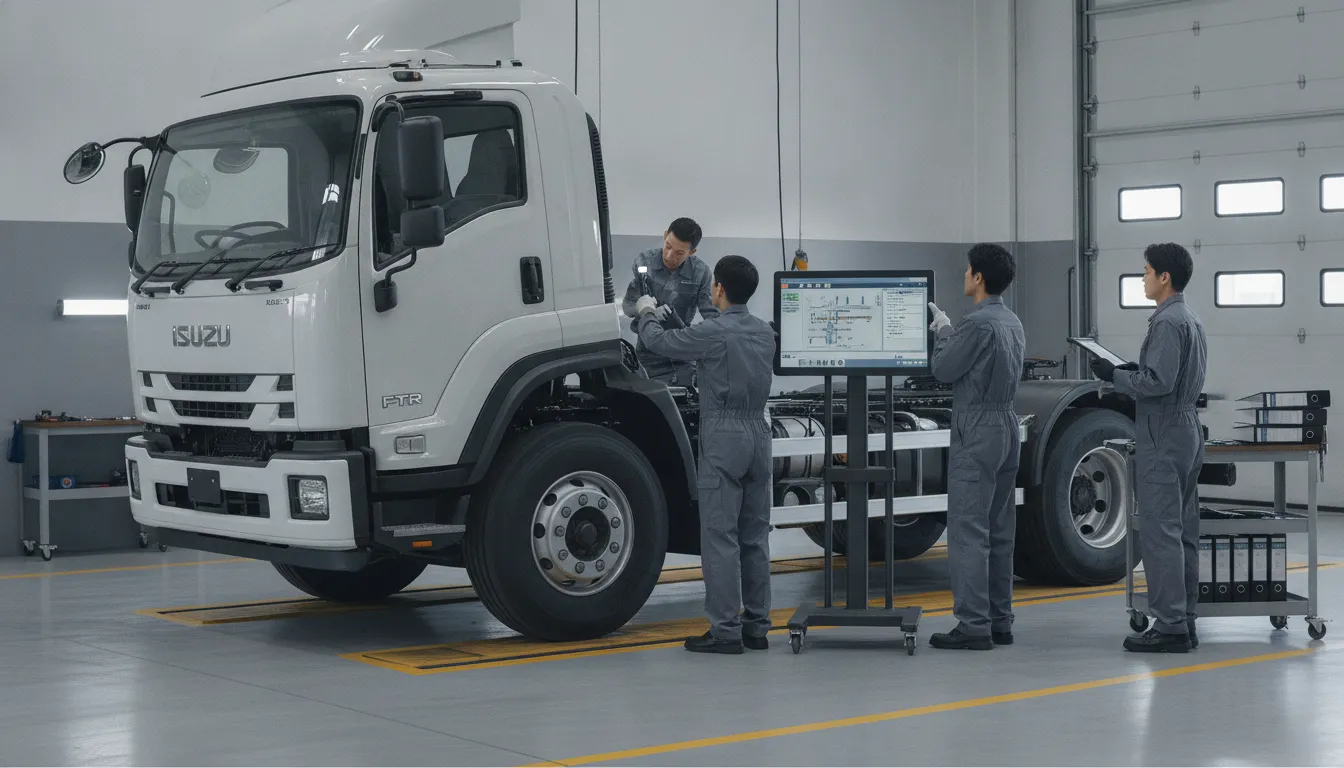
For a landscaping crew, moving company, construction contractor, or hauler, truck downtime can affect more than transportation. It can mean delayed jobs, rescheduled deliveries, and equipment sitting idle. A thoughtful Isuzu FTR truck service and maintenance plan helps you prepare for scheduled work and respond sooner when symptoms appear. Begin by checking the manual for your truck’s maintenance schedule, then track its mileage, engine hours, and repair history. Your service provider can use those details, along with information about loads, routes, and idling, to recommend the right checks. This guide explains what to monitor and how to plan service with fewer surprises.
Key Takeaways
- Verify your FTR’s specifications: Use the VIN, model year, and configuration to confirm the right service schedule, parts, and load limits.
- Build a consistent inspection routine: Check key components before work, note unusual symptoms, and stop if the truck may be unsafe to operate.
- Keep maintenance organized: Track mileage, engine hours, and repairs, then work with a qualified technician to plan service and review written estimates.
What Should FTR Owners Know?
An Isuzu FTR’s service needs depend on its model year, equipment, and the work it does. Before arranging maintenance, ordering parts, or loading the truck for a job, confirm its specifications and check that its service plan fits its day-to-day use.
Check your model year’s engine, transmission, chassis, and configuration
FTR specifications can vary by model year and configuration. Before requesting service or parts, confirm the truck’s model year, engine, transmission, chassis, and any modifications or upfits. Your VIN and vehicle identification plate can help a service provider find the correct information.
Use the owner’s manual and service guidance that match your specific truck. Don’t assume that instructions for a different FTR apply. Isuzu’s Priority Service Maintenance Program outlines model-specific maintenance and includes more than an oil change. Ask your service provider to confirm the recommended schedule and parts for your truck.
Confirm payload ratings, body fit, and operating limits
Before loading the truck, check its GVWR, axle ratings, and other limits in the vehicle documentation. Include the weight of the body, equipment, fuel, passengers, and cargo when assessing the load. If your FTR has a liftgate, crane, service body, or another upfit, confirm that it is compatible with the chassis and within applicable weight limits.
Secure and distribute cargo according to the vehicle and body guidance. Don’t use the way a truck looks, or what it carried on a previous job, to judge whether a new load is suitable. If you’re unsure about a load or upfit, ask a qualified truck professional to review it before the truck goes to work.
Plan maintenance around loads, routes, idling, and duty cycle
Heavy loads, long periods of idling, rough roads, and frequent stops can affect how your truck wears. Keep track of mileage and engine hours, and tell your service provider how the FTR is used. Details about typical routes, loads, and work conditions help them recommend a maintenance plan that fits the truck’s duties.
Follow the schedule for your model year and configuration rather than relying on a general interval. Isuzu’s maintenance program guidance describes service plans tailored to vehicle requirements and includes a multi-point inspection. Ask your provider which checks apply to your FTR and whether its workload calls for closer attention between scheduled services.
What Should You Check Before Each Workday?
Set aside a few minutes for a pre-workday check before loading the Isuzu FTR or heading to a jobsite. A consistent walkaround can help you spot visible issues early and give a technician useful information if something needs attention. Park on level ground, secure the truck, and follow the inspection steps in the owner’s manual for your model year and configuration.
Check the truck in the same order each day so it’s easier to notice changes. Look over the exterior first, then check the cab and dashboard before driving. Some checks depend on the truck’s equipment, including its brake system, so use the manual rather than assuming every FTR is configured the same way. Isuzu’s Priority Service Maintenance Program describes routine inspections that cover fluids, filters, and other components.
Keep a log of anything unusual, including warning lights, fluid loss, tire damage, or changes in how the truck sounds and handles. Note when the symptom occurs and whether the truck is carrying a load. If you find a condition that could affect safe operation, don’t put the truck to work until it has been assessed. A repeatable checklist, such as this commercial vehicle maintenance checklist, can help your crew follow the same routine.
Check oil, coolant, and visible leaks
Park on level ground and check oil according to the owner’s manual. Depending on the procedure for your truck, you may need to use the dipstick or an electronic reading. Check the coolant reservoir only when the engine is cool, and never remove a hot cooling-system cap. Look beneath the truck and around the engine for fresh drips, wet areas, or residue. Record any fluid loss, even if the truck appears to run normally. If a level is low or keeps dropping, have a qualified technician investigate the cause before it leads to a larger repair.
Inspect tires, wheels, lights, mirrors, and windshield
Check each tire for low pressure, cuts, bulges, embedded objects, and uneven tread wear. Use a tire-pressure gauge and compare the reading with the specification for your truck and tire setup. Look for visible damage to the wheels, then test the headlights, brake lights, turn signals, and hazard lights. Clean the mirrors and windshield so you have a clear view from the cab. Report cracked glass, damaged mirrors, or lights that don’t work. A consistent walkaround checklist can help you catch these issues before the truck leaves the yard.
Check brakes, steering, suspension, and air-system parts
Look for visible damage or leaks around brake, steering, and suspension components. If your FTR is equipped with air brakes, follow the manual’s procedure for checking the air system and its warning indicators. After starting the truck, assess brake response and steering feel in a safe area. Pay attention to a soft or unusual brake pedal, pulling, vibration, or an air-pressure warning. If braking or steering feels unsafe, don’t continue the route. Have a qualified truck technician inspect concerns you can’t identify or resolve safely.
Inspect belts, hoses, battery connections, and dashboard warnings
With the truck parked and the engine off, look for belts that are cracked, frayed, or unusually loose. Check hoses for splits, swelling, wet spots, or rubbing against nearby components. Look at battery connections for looseness or corrosion, and avoid touching damaged wiring. Once you start the truck, check the dashboard for warning lights or messages. Consult the owner’s manual to understand what they indicate, and record any warning before contacting a technician. Don’t dismiss a warning just because it disappears after a restart.
Note changes in noise, smell, handling, or performance
Pay attention to anything that feels different from the truck’s usual operation. New knocking, squealing, hissing, vibration, or unusual exhaust or fluid smells may be worth investigating. Notice whether the truck pulls to one side, brakes differently, shifts unusually, or loses power. Write down when the change occurs, such as during a cold start, while carrying a load, or after extended idling. These details can help a technician assess the issue. Don’t guess at the cause, and stop operating the truck if the symptom could affect safe driving.
How Often Does an Isuzu FTR Need Service?
There isn’t one service interval that fits every Isuzu FTR. The right schedule depends on the truck’s model year, engine, configuration, and workload. Start with the maintenance schedule in the owner’s manual, and ask a qualified Isuzu truck service provider to confirm which intervals apply to your vehicle. That’s especially helpful if your FTR has a specialized body or spends long days on job sites, hauling materials, or making frequent stops.
As a general reference, a dealer’s Isuzu service guidance cites service every 8,000 kilometers, about 5,000 miles, or 150 engine hours. Don’t treat that as a universal FTR interval. Use your truck’s schedule to set service dates, and consider both mileage and engine hours when tracking use. Isuzu’s Priority Service Maintenance Program describes a model-specific maintenance plan that includes more than an oil change. Keeping good service records helps you plan the next visit and gives technicians useful details about your truck’s history.
Follow the schedule for your model year, engine, and configuration
Check the owner’s manual for the maintenance schedule that matches your FTR’s model year, engine, transmission, and chassis configuration. Requirements can vary, so don’t assume that a schedule for another FTR or Isuzu truck applies to yours. If you’re not sure which manual or schedule is correct, ask a qualified service provider to verify your vehicle details.
General guidance can help with planning, but it shouldn’t replace the manufacturer’s schedule. For example, a dealer’s service guidance cites 8,000 kilometers or 150 engine hours. Confirm the interval for your specific truck before setting reminders or booking work. The owner’s manual is also the place to check required fluids, capacities, and service procedures.
Track mileage and engine hours between services
Record the odometer reading and engine hours at each service. Mileage tells you how far the truck has traveled, while engine hours account for time spent running, including idling at a job site or waiting between deliveries. Depending on the schedule for your FTR, either measure may help determine when maintenance is due.
A simple logbook, fleet system, or maintenance app can keep this information in one place. For each visit, note the date, mileage, engine hours, work completed, and any concerns reported by the driver or technician. These details make it easier to plan the next service and help the shop understand how the truck is used. If your team shares the vehicle, ask each driver to report unusual sounds, warning lights, or changes in performance.
Adjust service plans for heavy loads and severe conditions
Your FTR’s workload can affect the attention it needs. Frequent heavy loads, long periods of idling, repeated short trips, stop-and-go driving, and dusty work environments may place extra demands on components. Let your service provider know how the truck is used, including the routes it runs and the conditions it works in.
Don’t change the manufacturer’s service intervals without checking first. Instead, ask whether your operating conditions call for more frequent inspections or additional checks. Isuzu’s Priority Service Maintenance Program can be customized to include items such as tires and brakes. That can help you plan maintenance around the demands of hauling, construction, landscaping, or other commercial work. Your provider can explain which checks make sense for your FTR and its schedule.
Schedule specified oil, filter, fluid, brake, tire, and driveline checks
Follow your manual’s schedule for oil and filter changes, fluid checks, and inspections of brakes, tires, and driveline components. The work required can vary by model and service interval, so confirm specifications before ordering parts or booking an appointment. A scheduled service should cover the maintenance due at that interval, not just an oil change.
Isuzu describes its Priority Service Maintenance Program as a model-specific plan that includes a multi-point inspection. When arranging service, ask which items the shop will check, whether any parts need attention, and what to monitor before the next visit. This gives you a clearer picture of your truck’s condition and helps you plan repairs around your work schedule.
Record inspections, services, and repairs
Keep a maintenance history for your FTR that includes routine services, inspections, repairs, and replaced parts. Record the date, odometer reading, engine hours, work completed, and any symptoms or recommendations. Save invoices and inspection reports with your log so you can confirm what was done and when.
These records help you plan upcoming maintenance and give technicians useful context if an issue returns. They can also reveal patterns, such as repeat tire wear or a warning light that appears more than once. Bring the latest records to each appointment and ask the service provider to document its findings. A clear history helps you make informed decisions about repairs and keep your truck’s maintenance aligned with the work it handles.
Which FTR Problems Need Prompt Attention?
A change in how your Isuzu FTR sounds, handles, or performs deserves attention, especially when you rely on it to carry tools, materials, or equipment to a job site. Addressing symptoms early can help you plan repairs and reduce the chance of an unexpected interruption. If the truck shows a serious brake problem, overheats, or displays a critical warning, stop in a safe place and follow the owner’s manual before deciding whether to continue.
You can gather useful information without trying to diagnose the problem yourself. Note warning messages, visible leaks, unusual sounds, and changes in handling. Check only what the manual identifies as safe for a driver to inspect, and never work beneath a truck that is not properly supported. Isuzu’s Priority Service Maintenance Program describes multi-point inspections that cover items such as fluids and filters. Share your observations with a qualified truck technician, who can assess the cause and advise whether the FTR is safe to return to work.
Overheating: Check coolant levels, leaks, and airflow
If the temperature gauge climbs above its usual range or an overheating warning appears, pull over safely as soon as possible. Continuing to drive may cause further engine damage. After parking, let the engine cool before checking the coolant level according to the owner’s manual. Look for visible leaks around accessible hoses or beneath the truck, and check whether debris is blocking airflow through the radiator area. Never remove a radiator cap while the engine is hot.
A low coolant level is one possible sign, not a complete diagnosis. Don’t restart the truck if the warning returns or you find a leak. Regular cooling-system checks can help catch issues early, as noted in this Isuzu service interval guide. Arrange an inspection before putting the truck back to work.
Engine or emissions warnings: Record fault codes and follow the manual
When an engine or emissions warning appears, note the exact dashboard light or message and whether the truck’s performance changes. If a diagnostic code is available, record it before arranging service. A photo of the dashboard can help preserve details if the warning disappears. Check the owner’s manual for guidance on the alert and whether you should stop driving.
Avoid clearing codes or replacing parts based on a guess. A code can point to a system that needs testing without identifying the underlying cause. Isuzu’s Priority Service Maintenance Program includes multi-point inspections of items such as fluids and filters. Give the technician the code, when the warning appeared, and any changes in performance. These details can help inform the diagnosis.
Transmission changes: Note slipping, delayed engagement, or unusual noise
Pay attention if the transmission slips, takes longer than usual to engage, shifts differently, or makes a new noise. These changes can affect how the truck responds, particularly when carrying a load. If it behaves unpredictably, stop in a safe location and check the owner’s manual before continuing. Don’t repeatedly accelerate or shift under load to test the problem.
Record when the symptom occurs, such as during startup, on a grade, or with a particular load. Note whether the truck was cold or warm and whether any warning lights appeared. This information may help a technician assess the issue. Fleet maintenance guidance identifies slipping, delayed engagement, and unusual transmission noises as signs that need prompt attention. Arrange an inspection with a qualified truck technician before the symptom worsens or affects your ability to control the vehicle.
Electrical faults: Check battery connections and record warning lights
Flickering lights, intermittent starting, or several warning indicators appearing together may signal an electrical fault. If it’s safe, look for obvious looseness or corrosion at accessible battery connections, following the owner’s manual. Don’t disconnect components unless the manual directs you to do so. Before driving, check that the headlights, brake lights, turn signals, and hazard lights work.
Record which systems are affected and when the issue occurs. Note whether it follows rain, extended idling, or recent service, and take a photo of any warning lights. Electrical symptoms can have several causes, so avoid replacing parts based on a guess. Fleet inspection guidance recommends checking lights and battery connections. If the truck won’t start reliably or required safety lights fail, arrange an inspection before returning it to the road.
Brake, tire, or suspension changes: Watch for uneven wear or altered handling
A longer stopping distance, pulling to one side, vibration, or a change in steering response calls for prompt attention. Check tires for low pressure, visible damage, or uneven wear, and look for signs that a wheel may be loose. Don’t crawl beneath a truck unless it is properly supported. If braking feels weak, the truck pulls sharply, or a tire appears damaged, stop safely and arrange assistance rather than continuing with a load.
Note when the change began and whether it happens while braking, turning, or traveling at a particular speed. Uneven tire wear or altered handling can involve tires, brakes, suspension, or related components. Fleet maintenance checklists recommend checking tire pressure, tread depth, and overall condition. Have a qualified technician inspect the truck before putting it back into demanding service.
Document symptoms and conditions; don’t assume the cause
A clear record can help a technician understand what happened and when. Write down the date, mileage, engine hours if available, load, route conditions, and what the truck was doing when the symptom began. Include dashboard messages, diagnostic codes, unusual sounds or smells, visible leaks, and changes in handling. Photos or a short recording can capture an intermittent issue that may not appear during an appointment.
Keep your notes factual. “Temperature warning appeared after a long climb” gives the technician more to work with than a guess about which part failed. Don’t erase codes or make adjustments that could hide the original symptom. Isuzu’s service program outlines the role of thorough inspections. Share your notes when booking service, and ask what checks are needed before the FTR returns to work.
Where Can You Find the Right Isuzu FTR Service Manual?
The right service information can help you plan maintenance, check specifications, and explain an issue to a technician. Start with Isuzu resources or ask a qualified Isuzu truck service provider to help identify the correct information for your vehicle. Make sure any manual or schedule you use matches your FTR’s model year and configuration.
Check Isuzu resources or consult a qualified Isuzu truck service provider
Start with Isuzu’s official service resources, then confirm that the information applies to your specific FTR. Isuzu’s Priority Service Maintenance Program provides maintenance schedules tailored to vehicle requirements. A qualified Isuzu truck service provider can help you identify the right service information and explain what applies to your truck.
When you contact a provider, have the model year, VIN, engine details, and configuration ready. This information helps narrow down the correct reference materials. Also ask whether the document is an owner’s manual, a maintenance schedule, or a workshop service manual. These resources serve different purposes, and an owner’s manual may not include the detailed repair procedures found in a workshop manual.
Match the manual to your truck’s model year, engine, and configuration
Check the manual against the truck itself, not only the FTR name on its cover. Model year, engine, transmission, chassis, and installed equipment can affect maintenance procedures and specifications. FTR trucks used for different jobs may also have different body configurations or components.
Use the VIN and vehicle identification information to confirm the match. Isuzu describes its maintenance schedules as tailored to each vehicle’s requirements, so a general schedule may not cover your truck’s needs. If your FTR has been modified or fitted with specialized equipment, ask a qualified service provider whether the manual applies to those changes. Confirming the details first can help you avoid following an unsuitable procedure or ordering an incorrect part.
Find service intervals, procedures, fluid specifications, and capacities
A useful service manual should explain when maintenance is due and provide instructions for specified tasks. Look for service intervals, inspection steps, fluid types and capacities, filter details, and model-specific notes. Check whether an interval is based on mileage, engine hours, time, or operating conditions.
Don’t assume the same interval applies to every FTR. A general service interval reference can offer context, but follow the schedule for your truck when planning maintenance. Keep a record of mileage, engine hours, services, and repairs so you can track what is due. If your truck hauls heavy loads, idles for long periods, or works in demanding conditions, ask a technician whether its maintenance plan should account for that use.
Use diagnostic codes, troubleshooting steps, wiring diagrams, and parts information
When a warning light appears or the truck’s behavior changes, record the symptoms and any diagnostic codes. A service manual may include code definitions, troubleshooting steps, wiring diagrams, connector locations, and parts information. These details can help you describe the issue clearly when arranging service.
Use troubleshooting guidance as a starting point, not as proof of what caused the problem. Electrical and emissions faults can involve several components, and replacing a part based on a code alone may not fix the issue. Note when the warning appeared, what the truck was doing, and whether you noticed a change in performance. If a diagnostic procedure calls for specialized tools or training, contact a qualified Isuzu truck service provider.
Confirm specifications before maintenance or repairs
Before starting work, verify the procedure, fluid specification, capacity, torque value, and part number against information for your exact truck. Don’t rely on a specification from another model year or an online discussion that doesn’t identify the vehicle configuration. If the manual and a parts listing appear to conflict, check with Isuzu or a qualified service provider.
Take extra care with brakes, steering, suspension, electrical systems, and other safety-critical components. If a procedure is unclear or requires tools you don’t have, arrange service with a trained technician. Ask the provider to explain the inspection findings and confirm which specifications and parts they plan to use. Checking the details helps you make informed decisions about maintenance and repairs.
When Should You Call a Qualified Truck Technician?
A daily walkaround can help you spot changes before they interrupt a workday, but it can’t replace a professional diagnosis. Call a qualified truck technician when a warning light stays on, a problem keeps returning, or the truck handles differently than usual. This is especially important when your Isuzu FTR carries tools, equipment, or materials for a job. Share what you’ve observed, including when the symptom started and whether it changes with load, speed, or idling. Clear details can help the service team assess the issue and recommend next steps. If you’re unsure whether it’s safe to keep driving, stop in a safe location and call for guidance.
Stop safely if you notice serious brake problems, overheating, or critical warnings
If the brakes feel weak, respond differently, or make unusual noises, pull over as soon as you can do so safely. Stop driving if the engine overheats or a critical dashboard warning appears. Continuing could put people at risk or lead to more damage. Once parked, check your owner’s manual and contact a qualified technician. Don’t open a hot cooling system or attempt a roadside repair unless you’re trained and can do so safely. Isuzu emphasizes regular maintenance for reliable operation, and prompt attention to serious problems can help prevent a small concern from becoming a larger repair.
Request a diagnosis for persistent engine, transmission, electrical, or emissions faults
Arrange a diagnosis if an engine or emissions warning returns, the truck repeatedly loses power, starting becomes difficult, shifting changes, or electrical issues keep recurring. Note when the symptom appears, such as during a cold start, while carrying a load, or after extended idling. Record warning lights and fault codes if you can, but avoid clearing codes or replacing parts based on a guess. Those details can help the technician investigate the cause. Ongoing issues may point to a problem that needs specialized testing. Isuzu’s service resources provide guidance for owners seeking support with engine, transmission, electrical, and emissions concerns.
Leave safety-critical repairs and specialized procedures to trained technicians
Brake, steering, and suspension repairs can directly affect safe operation, so have them handled by a technician with the right training, tools, and service information. Specialized diagnostics may also require equipment that isn’t available in a typical shop or at a jobsite. If a repair could affect how the truck stops, steers, or carries its load, ask a qualified provider to inspect it. Before work begins, find out what checks are included and whether the service calls for a road test or follow-up inspection. Isuzu describes multi-point inspections in its Priority Service Maintenance Program, which can help owners understand the value of a thorough service visit.
Ask about inspections and worn belts, hoses, filters, and brake parts
At scheduled service, ask the technician to check belts, hoses, filters, and brake parts for wear, damage, or leaks. These components can affect reliability and safe operation, so knowing their condition helps you plan repairs around your work schedule. Tell the service team about anything you’ve noticed, including fluid spots, squealing, a change in pedal feel, or visible cracks on a belt. Ask which items need attention now and which can be monitored until the next visit. The inspection should account for your FTR’s condition and how you use it. A commercial vehicle maintenance checklist offers examples of components technicians may review.
Confirm inspection scope, parts, labor, and warranty terms
Before approving work, request a written estimate that lists the inspection, recommended repairs, parts, labor, and diagnostic charges. Confirm which concerns the estimate covers, and ask the shop to contact you before completing additional work. Find out whether the parts are genuine Isuzu parts or alternatives, and ask how the choice affects any applicable coverage. Review the warranty terms for both parts and labor, along with the provider’s policies if the repair doesn’t resolve the issue. If your truck may qualify for an Isuzu maintenance program, ask what it covers and whether it applies to the planned service. Clear details help you compare estimates and prepare for downtime.
What Affects Isuzu FTR Service Costs?
Isuzu FTR service costs depend on the work required, the parts used, and how your truck is configured. A routine maintenance visit will have a different price from troubleshooting a warning light or repairing a major component. Costs can also vary by service provider and location, so it helps to ask for a clear estimate before approving work.
For contractors, movers, landscapers, and other businesses that rely on their trucks, the cost of service is only part of the decision. Consider how long the FTR may be out of service and whether the work can be scheduled around jobs and deliveries. Ask what the estimate includes, when the shop expects to finish, and how it will handle any additional repairs it finds. Isuzu’s service network can help you find a dealership for model-specific service and an estimate.
Consider labor, parts, service scope, and truck configuration
The work required, labor time, and parts all affect the final bill. Your FTR’s model year, engine, transmission, chassis, and body configuration can influence which parts and procedures apply. For example, a scheduled inspection has a different scope from diagnosing an engine warning or repairing a driveline issue.
Ask the service provider to itemize labor, parts, diagnostic work, fluids, and fees. If the technician finds another issue, ask what it means for the truck and request an updated estimate before approving additional work. A clear breakdown helps you understand the proposed repair and plan for the expense.
Compare written estimates for the same work and parts
A written estimate helps you compare service providers fairly. Describe the same symptoms or maintenance needs to each shop, then confirm that each quote covers the same work. Ask whether diagnostics, labor, fluids, shop fees, and taxes are included.
Check which parts each estimate specifies, including the part brand and warranty. A lower quote may cover a different repair scope or parts than another estimate, so ask questions before comparing totals. Find out whether the price is fixed or could change if the technician discovers another issue. Also ask how the shop will contact you for approval and when it expects the truck to be ready. Isuzu’s dealer service information can help you locate a provider for another estimate.
Ask about service packages, current offers, and suitable parts
Ask whether the shop has a maintenance package or current offer that fits your FTR’s needs. Compare the services included, such as inspections, oil and filter changes, or labor, and check any mileage limits, exclusions, and coverage dates. A package is most useful when it covers work your truck actually needs and fits its service schedule.
For repairs, confirm that the proposed parts are suitable for your truck’s model year and configuration. Ask about the parts warranty and whether the estimate includes installation. Isuzu’s Priority Service Maintenance Program includes multi-point inspections and is designed to help protect owners from increases in parts and labor costs. Ask a dealer about current terms and availability before enrolling.
Check eligibility for Isuzu maintenance programs or oil coverage
Review your purchase or lease documents to see whether your FTR has oil coverage or a maintenance plan. Eligibility and terms may depend on the truck, purchase date, mileage, and program rules. Confirm what work is covered, when service is due, and whether you need to use a specific location.
Modern Work Truck Solutions reports that a two-year or 60,000-mile oil coverage plan has been offered with new FTR diesel purchases, including oil and filter changes every 10,000 miles. Coverage details can vary, so check your paperwork and confirm current terms with an Isuzu dealer before scheduling service.
Weigh DIY work against safety, warranty, and downtime
Simple checks, such as looking for visible leaks or checking fluid levels, can help you spot changes between service visits. Use the owner’s manual for the correct specifications, and take on only work you can do safely with the right tools and experience.
For brake, engine, transmission, electrical, or emissions concerns, ask a qualified truck technician to diagnose the problem. Specialized tools or procedures may be required, and improper repairs can create safety risks or affect warranty coverage. Consider downtime as well: a repair that takes longer than expected can disrupt job schedules, deliveries, and crew availability. Before deciding, ask a commercial truck service provider to explain the work, estimate the cost, and give you an expected turnaround time.
How Can You Keep FTR Maintenance on Schedule?
A simple routine helps you plan service around your workload instead of waiting for a problem to interrupt it. Track the truck’s use, follow the schedule for your specific FTR, and share clear records with your service provider.
Log mileage, engine hours, and repairs
Keep a maintenance log for each Isuzu FTR. Record the odometer reading, engine hours when available, service dates, repairs, and any symptoms you’ve noticed. Whether the truck hauls materials to a construction site or carries equipment for a landscaping crew, this history helps you track upcoming service and gives your technician helpful context.
Follow the schedule for your truck’s model year and configuration. One Isuzu service interval guide cites 8,000 kilometers or 150 engine hours, but intervals can vary. Check your owner’s manual or confirm the correct schedule with an Isuzu service provider.
Set reminders based on the manual and your truck’s work demands
Use your FTR’s maintenance schedule to set reminders for inspections and service. Add alerts to a digital calendar, fleet-management system, or paper log. Include the due date as well as the mileage or engine-hour target, and make the schedule easy for everyone who drives the truck to access.
Factor in how you use the FTR. Heavy loads, frequent idling, dusty job sites, and stop-and-go routes can affect maintenance needs. Follow the manual’s guidance for severe operating conditions, and ask a technician whether your work routine calls for more frequent checks. Isuzu’s Priority Service Maintenance Program provides model-specific schedules to help owners plan service.
Address symptoms early to help prevent extended downtime
Pay attention to warning lights, leaks, unusual noises, and changes in braking or handling. Record when a symptom began, what the truck was doing, and whether it happens under particular conditions, such as a heavy load or a long drive. Share those details with your technician so they can investigate the issue.
If a warning signals a serious problem or the truck feels unsafe, stop in a safe place and follow the owner’s manual. For other concerns, arrange an inspection promptly. During scheduled service, ask about checks of fluids, filters, and driveline parts. Isuzu’s maintenance program information describes multi-point inspections that can help identify concerns early.
Coordinate preventive maintenance with a commercial truck service provider
Work with a commercial truck service provider familiar with Isuzu FTR models, and book routine maintenance before a busy period. Bring your maintenance log and explain the truck’s usual loads, routes, and operating conditions. Sharing any symptoms in advance helps the service team prepare for the visit and focus on relevant checks.
When you schedule, ask what the service includes, how long the truck may be out of operation, and whether the technician expects to recommend follow-up work. If your crews rely on the FTR for daily jobs, plan service around work commitments where possible. Isuzu’s service resources can help you find support and review available service options.
Frequently Asked Questions
Can I use the same maintenance schedule for every Isuzu FTR?
No. Service requirements can vary by model year, engine, configuration, and how the truck is used. Check the owner’s manual for your FTR, and confirm the schedule with a qualified Isuzu truck service provider if you’re unsure.
Should I track engine hours as well as mileage?
Yes, when your truck’s schedule or service provider uses engine hours. They can account for time spent idling at job sites, which the odometer won’t capture. Keep both readings in your maintenance log when available.
What should I do if a warning light appears during a job?
Check the owner’s manual for guidance, record the message or light, and note what the truck was doing when it appeared. If the warning indicates a serious issue, or the truck’s braking, steering, or performance changes, stop safely and contact a qualified technician.
Can I load an FTR based on what it carried on a previous job?
Not without checking the truck’s ratings and current setup. Account for the body, equipment, fuel, passengers, and cargo, and confirm that any upfit is compatible with the chassis. Ask a qualified truck professional to review the load if you’re uncertain.
What information should I have ready when booking service?
Share the VIN, model year, engine and configuration details, current mileage and engine hours, and any warning messages or symptoms. Your service records and notes about loads, routes, and idling can also help the technician assess the truck.