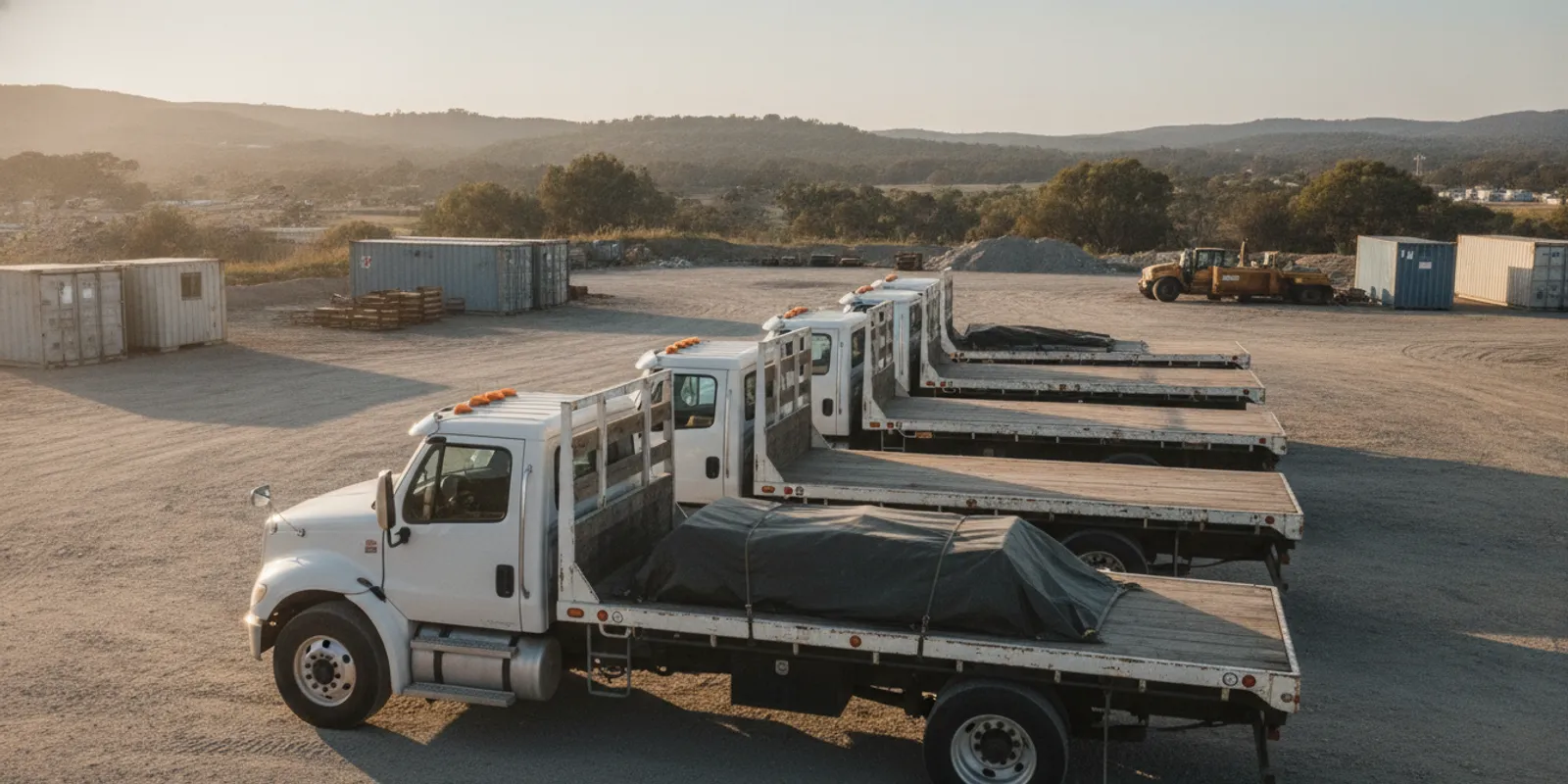
Choosing between a stake bed vs flatbed starts with the cargo and loading routine, not just the truck’s appearance. Both provide an open platform for hauling materials, but stake sides add containment around the load while a flatbed keeps the deck open. Match the body to what your crew carries, how it loads and unloads, and the access it needs on a typical workday.
Contact the team about your truck needs
What is the practical difference between a stake bed and a flatbed?
A flatbed is an open, level deck with no fixed side walls. Its unobstructed edges can make it easier to approach cargo from different sides and to load items that extend beyond the deck, when safely secured and allowed by applicable rules. Buyers may also hear this body called a platform truck. Tri-County Truck’s flatbed truck options provide a place to start comparing platform configurations.
A stake bed uses a platform deck with upright stakes fitted around its edges. Depending on the body design, the stakes may be removable or repositionable. The upright sides create a boundary for loose or irregular materials and can help keep cargo arranged within the bed. They are not a substitute for suitable tie-downs, covers, or safe loading practices.
Neither design is automatically better. A flatbed may suit crews that need open side access for bulky equipment or frequently changing loads. Stake sides may help crews carrying items that benefit from a defined perimeter. If your cargo changes by job, consider which body works for the greatest share of your real work without creating a difficult compromise for the rest.
Which body fits the work you do?
List the loads you haul during a normal week, not only the largest item you might carry once a year. Include materials, tools, equipment, how many pieces travel together, and whether anything is fragile, loose, long, or awkward to handle. Then note how those loads are placed on and taken off the truck.
- Construction and building materials: Lumber, pipe, panels, and bundled materials can call for a clear deck and access from the sides. Stake sides may help define a perimeter for appropriate cargo, while the flatbed’s unobstructed edges can be useful for loading long or wide pieces. Secure and position every load for the specific vehicle and trip.
- Landscaping and property maintenance: Crews may combine equipment, supplies, and materials. A stake-bed layout can help separate or contain some cargo; an open platform can offer flexibility for larger equipment or irregular items. Evaluate whether the side structure interferes with the way your crew handles the heaviest or most frequent items.
- Contractor equipment and machinery: Think about the loading method, tie-down access, ramp needs, and whether the equipment’s dimensions fit the deck. Do not assume that an open body alone makes a load suitable. Confirm equipment weight, tie-down points, and the truck’s rated capacity with the relevant specifications.
- Hauling mixed or changing cargo: If daily loads vary, compare the most common configuration with your occasional special loads. Removable stakes may provide flexibility on some bodies, but confirm how the actual body is designed to work and how its components are secured or stored.
For every load, consider whether it needs protection from weather, theft, or road debris. An open stake bed and an open flatbed do not provide an enclosed cargo space. If the work calls for a roof or secure enclosure, a different body style may be a better starting point. Compare the dealership’s box truck configurations if keeping cargo enclosed is a priority.
How do loading and unloading change the decision?
Access can matter as much as cargo capacity. Walk through how each load gets onto the truck: forklift, crane, ramp, hand loading, or another method. A flatbed’s open edges can be valuable when equipment needs to approach from the side. Stakes may restrict some approaches depending on their position and the body’s construction. Check the exact truck rather than relying on a body name to answer the question.
Think about the unloading destination, too. Is the truck backed into a narrow yard, parked alongside a building, or positioned on a job site with limited maneuvering room? Will the crew need to reach cargo from one side, both sides, or the rear? A body that fits the load but blocks the usual unloading path may slow the job every day.
Ask the people who operate the truck to describe their routine. A driver may prioritize visibility and securement access; a crew member may need to reach tools or supplies quickly; a shop or fleet manager may care about inspecting and maintaining the body. Their answers can reveal whether a stake arrangement helps organize work or creates an obstacle.
Compare the trade-offs before choosing
Use this table to frame the discussion. It is a general comparison, not a specification for every body. Designs vary, so confirm the actual body, dimensions, and equipment on the truck you are considering.
| Decision point | Stake bed | Flatbed / platform |
|---|---|---|
| Side boundary | Upright stakes create a perimeter; configuration and removability depend on the body. | Open deck without fixed side walls. |
| Side access | Stakes may limit some loading or unloading approaches. | Open edges can allow access from more sides, subject to load and site conditions. |
| Typical planning question | Will a defined edge help carry and arrange the regular cargo? | Does the crew need a clear deck for bulky, long, or changing loads? |
| Items to verify | Stake position, attachment, deck dimensions, tie-down points, and loading clearance. | Deck dimensions, tie-down points, loading method, and any needed accessory equipment. |
| Best next step | Test the intended cargo and handling sequence against the specific body. | Confirm that the open platform and chassis fit the cargo, access, and route. |
The table cannot determine payload, legal capacity, or whether a particular load can be carried. Those depend on the truck’s specifications, installed body and equipment, cargo weight and placement, and applicable requirements. Check the truck’s labels and documentation and have the configuration reviewed before committing to a load plan.
What should you verify about capacity and securement?
Start with the truck’s ratings, not a guess based on deck size. A body, liftgate, toolboxes, racks, spare tire, and other installed equipment contribute weight. That leaves less capacity for cargo. Ask for the truck’s relevant ratings and the body or upfit information, then consider the weight of the cargo and anything carried with it, including tools and crew where applicable to the rating being checked.
Do not use a body type as proof that a truck has enough capacity. Two trucks with similar-looking decks may have different chassis, wheelbases, equipment, and ratings. For a chassis-based build, compare the proposed configuration with available cab and chassis trucks and discuss the intended body and payload before selecting a unit.
Securement also deserves a specific plan. Identify suitable tie-down points and equipment for the cargo; check that the load is stable, balanced, and restrained for travel. Stake sides are boundaries, not cargo restraints, and an open deck does not eliminate the need to secure cargo. The Federal Motor Carrier Safety Administration is a starting point for federal commercial motor vehicle safety information. Confirm which cargo-securement requirements apply to your vehicle, cargo, and operation rather than relying on a general body comparison.
How do you choose the chassis and body together?
Set the body requirements before narrowing the chassis. Write down the required deck length and width, cargo dimensions and weights, loading method, worksite access, and any equipment the truck must carry. Then compare chassis and body combinations that can meet those needs within their ratings. A body that looks right by itself may not leave sufficient capacity or fit the route and worksite once installed on a particular chassis.
Check wheelbase and overall length against the places the truck needs to enter, turn, park, and unload. A longer deck can seem useful until the truck cannot maneuver through a yard or fit at a regular stop. Consider cab and crew needs as well: how many people travel, what tools stay in the cab, and whether a larger cab changes the space or configuration available for the body.
Make a short specification sheet before shopping. Include:
- The regular cargo types, largest routine dimensions, and estimated weights.
- Loading and unloading equipment and the side or rear access needed.
- Deck dimensions and any stake, rack, tie-down, or accessory requirements.
- Routes, parking spaces, gates, overhead limits, and job-site turning room.
- Expected daily tools and equipment that will remain on the truck.
- Questions about chassis ratings, body weight, and the completed configuration.
This list gives a sales conversation a useful starting point. If the specification is not final, say what is known and what still needs measuring. A drawing, photos of the work area, cargo dimensions, or a sample load can help clarify the fit without treating an estimate as a confirmed truck capacity.
What should you inspect on a truck?
When reviewing a specific truck, compare its actual body with your specification sheet. Measure the deck and check whether the load can be positioned without blocking required access. Inspect the platform surface, attachment points, stake pockets or mounts if present, and visible signs of damage or repairs. Operate removable or adjustable components as intended and ask how they are retained during travel.
Look at the relationship between the body and chassis. Ask what equipment is installed, whether it affects usable payload, and which documentation identifies the completed configuration. Confirm that the truck can accommodate the securement equipment and loading method your crew uses. If the truck is used, ask about its history and have concerns inspected by a qualified professional before purchase.
Then test the everyday workflow in your mind: where does each item go, how is it secured, who unloads it, and what must be reached first? A practical layout can reduce repeated handling. If you expect to trade a current vehicle, gather its details and use the trade-in appraisal path as part of your purchase planning.
How can buyers narrow the choice?
Use a simple three-step decision. First, choose the body based on the most frequent cargo and the loading access the crew actually needs. Second, verify the full truck configuration against dimensions, ratings, and worksite constraints. Third, compare the available truck and financing details only after the operational fit is clear. Tri-County Truck sells Chevrolet, Isuzu, and Hino commercial trucks; the best choice depends on the work and the specific configuration, not the badge alone.
For a stake bed, ask whether the stakes match the cargo and whether their layout interferes with loading. For a flatbed, ask how cargo will be kept stable and restrained and whether your crew needs additional equipment. For either body, confirm the body’s specifications and the truck’s ratings before relying on a planned payload.
If you are still comparing purchase options, review the dealership’s commercial vehicle financing information and ask what details are needed to discuss your situation. Financing terms and eligibility depend on the application and lender; do not treat a preliminary estimate as an approval or guaranteed rate.
Request a quote and discuss your truck configuration
Frequently asked questions
Is a stake bed the same as a flatbed?
Not exactly. Both use an open platform, but a stake bed has upright stakes around the deck while a flatbed has no fixed side walls. Body designs vary, so confirm the configuration of the truck you are considering.
Can stakes be removed from a stake-bed truck?
That depends on the body. Some designs use removable or adjustable stakes, while details differ by manufacturer and configuration. Ask how the specific stakes attach, how they are secured, and where they can be stored when removed.
Which body is better for construction materials?
It depends on the materials, dimensions, loading method, and job-site access. A flatbed can provide open side access for some long or bulky items; stake sides may help define a boundary for other loads. Compare the actual load and truck configuration, and plan suitable securement either way.
Does a flatbed carry more than a stake bed?
Not by definition. Capacity depends on the chassis ratings and the completed truck, including body and other equipment. Ask for the specifications for the exact configuration and account for the cargo and tools you plan to carry.
Should I select the body before the truck?
Decide what the body must do before settling on a chassis, then evaluate the body and chassis as one configuration. This helps you avoid choosing a deck that cannot meet your access, dimension, or capacity needs once installed.
The right choice is the body that fits your regular loads, loading routine, and work sites while meeting the truck’s documented limits. Bring those details to the conversation before selecting a stake bed or flatbed.