
The best truck for landscaping matches the load you haul most days. It also has to fit the sites you enter and the crew that unloads it. A landscape dump is often the starting point because it holds loose material and still leaves room for tools. A dovetail body, a service body, or a heavier dump can be the better truck when the work is equipment, service calls, or dense debris instead of mulch and brush.
Call (954) 971-4022 to compare a landscaping truck with Tri-County in Pompano Beach.
Lou Bachrodt's Tri-County Truck in Pompano Beach sells Chevrolet, Isuzu, and Hino commercial trucks and can put a landscape dump on a chassis sized for the route. Start with the landscape dump trucks in stock, then confirm the body, payload, and access on the exact unit. Sales is at 754-203-6347, and the lot is at 1801 West Atlantic Boulevard.
Start with the work, not the brand
Landscapers in Broward, Palm Beach, and Miami-Dade run very different days. One crew dumps mulch at gated homes. Another hauls mowers between commercial sites. A third spends the morning on irrigation calls and the afternoon on debris. The best truck for landscaping is the setup that covers the days that pay the bills, not the rare job that looks impressive in a photo.
Write down one typical morning before you compare trucks:
- What is loose: mulch, soil, stone, clippings, or mixed debris.
- What is equipment: a mower, a spreader, hand tools, or a trailer.
- Who rides: a driver only, or a crew that needs a second row.
- Where it goes: a wide commercial gate, a tight driveway, or a route with low trees and speed bumps.
That list decides the body first. Brand comes after the body fits. Tri-County carries Chevrolet, Isuzu, and Hino so the chassis conversation can follow the work instead of starting with a logo.
Which body fits a landscaping day?
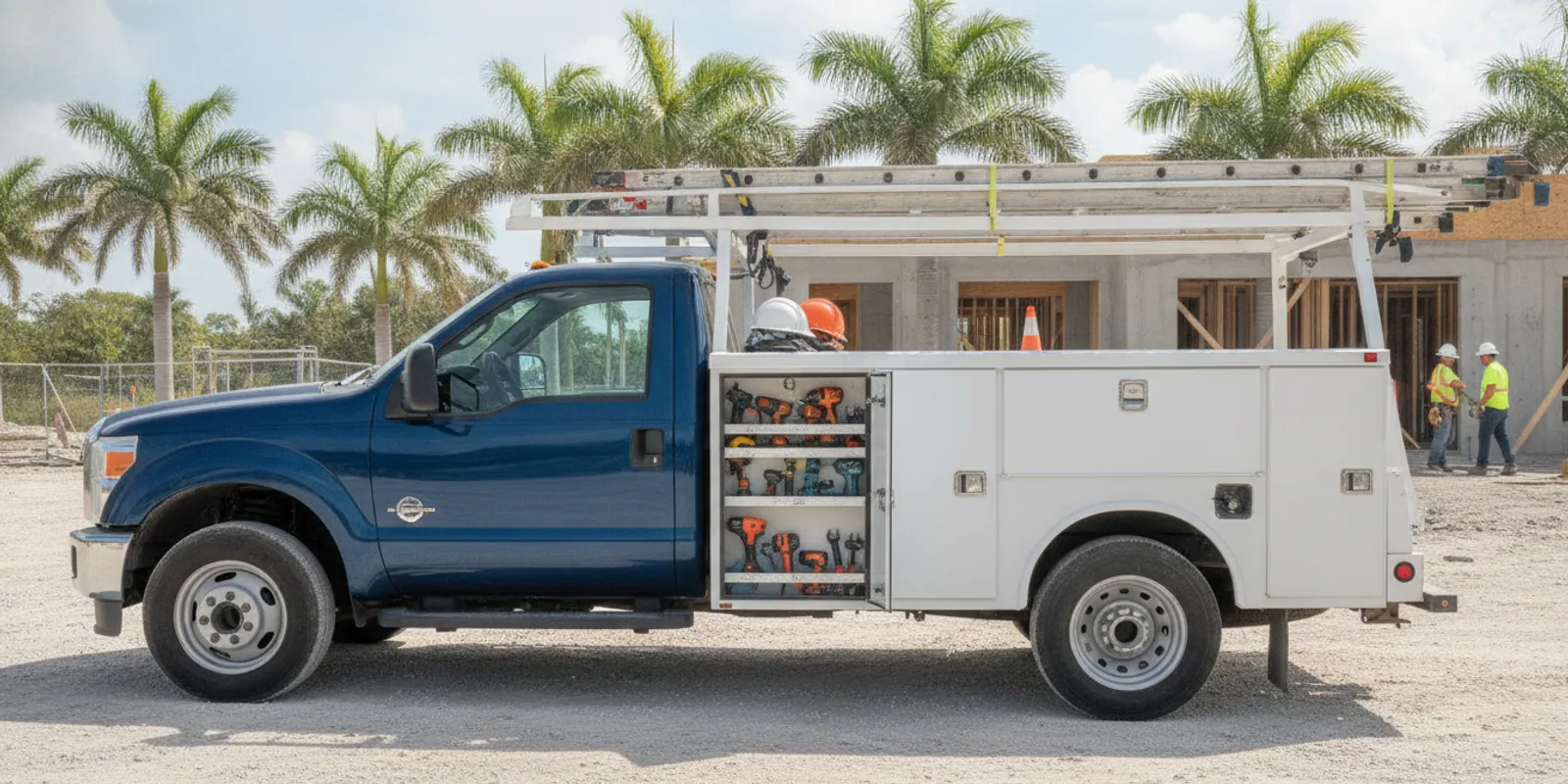
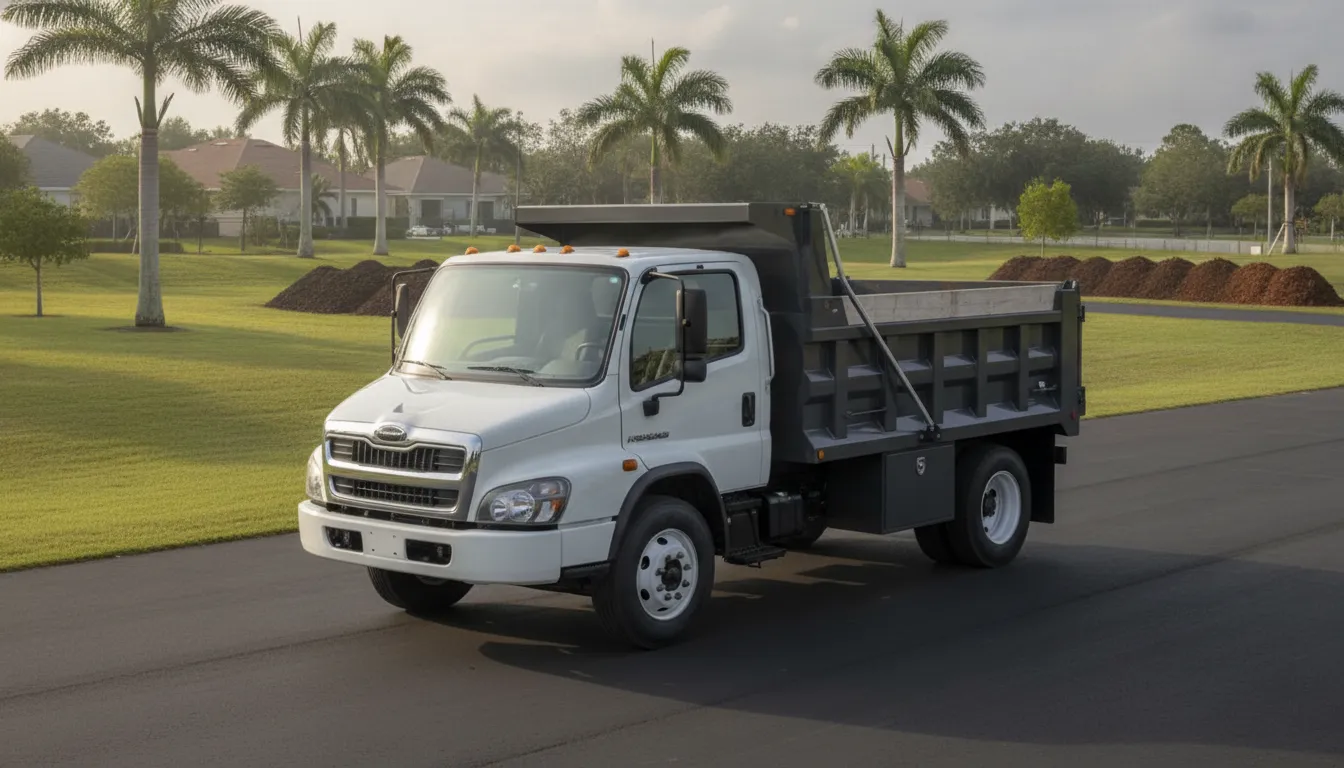
A landscape dump is a dump body built for lawn and landscape work. Sides contain loose material, a hoist dumps it, and many bodies add side doors, a toolbox, or a rack so the crew is not making a second trip for shovels and rakes. It is the body most landscapers mean when they ask for a work truck.
A dovetail landscape body uses a lower, sloped rear so a mower or other wheeled equipment can roll on. It still hauls material, but the rear design trades some containment for easier equipment loading. Ask whether the dovetail is fixed or removable, and whether the tailgate still holds a full load of mulch on the highway.
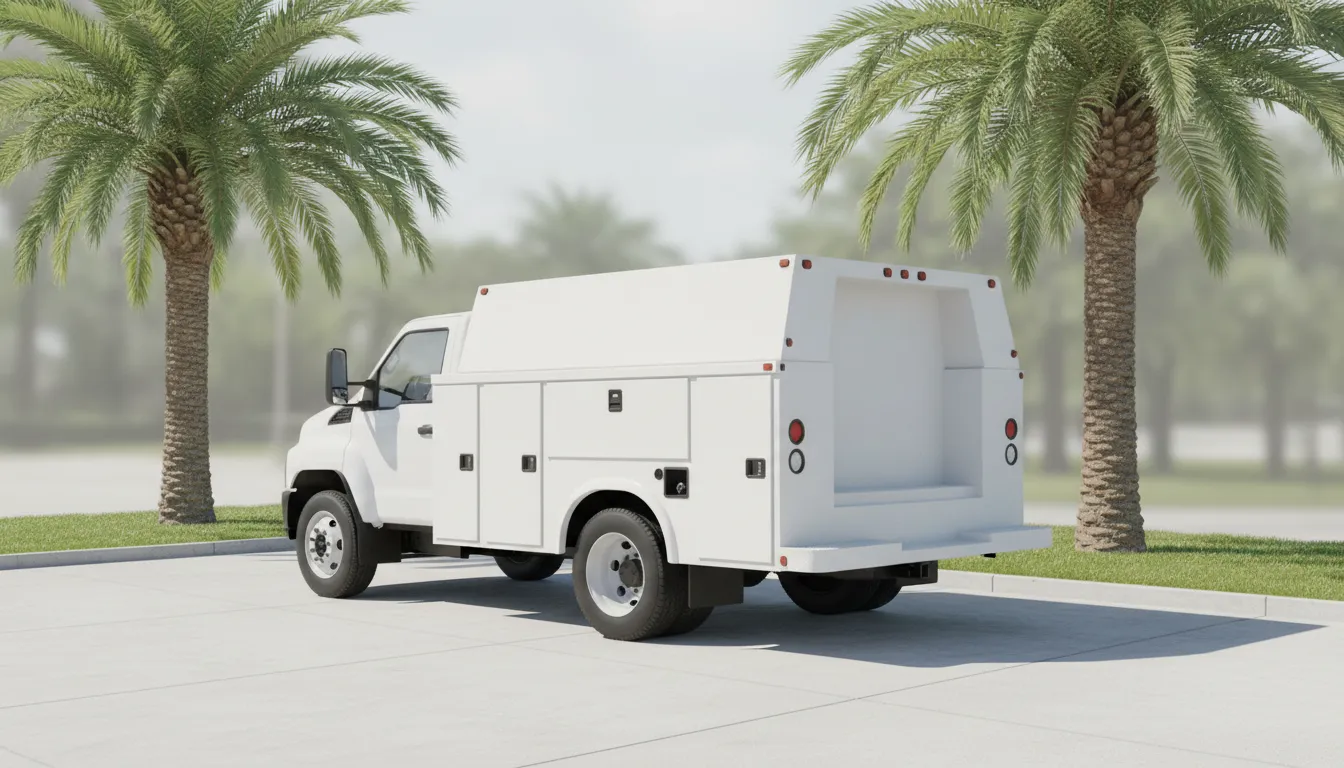
A service body is the wrong daily truck if the main job is dumping debris, and the right one if the main job is tools, parts, and locked compartments. A heavier contractor dump can take denser loads, but it is taller, longer, and harder to place in a residential driveway. The dump body versus flatbed comparison covers open platforms and general dump bodies. This guide stays on the landscaping choice.
| Daily work | Body to compare first | Question to settle |
|---|---|---|
| Mulch, soil, brush, and yard debris | Landscape dump | Will the sides hold the pile, and can the crew dump it where the job allows? |
| Mowers and wheeled equipment plus some material | Dovetail landscape body | Can equipment roll on without giving up a safe load of loose material? |
| Mostly tools, parts, and service stops | Service body | Do locked compartments matter more than a dump hoist? |
| Dense debris, demolition, or heavier hauls | Heavier dump body | Can the sites you serve take the length, height, and weight? |
If the calendar is split, do not average the jobs into a compromise nobody likes. Pick the body for the work that happens most mornings, then decide whether a trailer covers the rest.
Match payload to the material, not the empty bed
A long bed looks ready for a big day. Wet mulch, soil, and stone do not care how the bed looks. They care what the completed truck can carry after the body, fuel, driver, and crew are on it.
Payload is what is left after the truck's own weight. A body, toolbox, tarp system, and hitch all consume part of that number before the first yard of material goes in. A crew cab does the same thing: the extra row is useful, and it also adds weight and can shorten the body length a chassis will accept.
Isuzu publishes cab-and-chassis figures that show why class matters before anyone talks about a body. On the gas N-Series, a Class 4 NPR-HD is rated at 14,500 pounds GVWR. Its published standard-cab body payload is 8,826 to 8,986 pounds. A Class 5 NRR is rated at 19,500 pounds GVWR. Its published standard-cab body payload is 13,166 to 13,611 pounds. Those ranges are chassis figures from Isuzu's N-Series gas specifications, not the payload of a finished landscape truck. NTEA's work-truck rating guidance explains why GVWR and the completed vehicle, not the empty body, set what you can haul. The installed body comes out of the number.
Use the published figure as a ceiling, then ask Tri-County for the completed-truck weight on the exact unit. Do not guess a yardage capacity from a photo of an empty bed.
Check access before you fall in love with capacity
South Florida routes punish a truck that is only sized for the dump site. A body that clears the material pile can still fail at the driveway, the gate, or the overhang.
Look at four access points on the trucks you are comparing:
- Overall height with the body and any rack or tarp system, against carports, oaks, and covered entries.
- Overall length and wheelbase, against cul-de-sacs, alley cuts, and tight turnarounds.
- Side access: a fold-down or barn door can let a crew work from the curb when the rear is blocked.
- Dump clearance: the raised body needs room overhead, and the site has to allow a dump in the first place.
A regular cab with a longer body can be the better landscaping truck when the crew is small and the driveways are not. A crew cab is the better truck when people, not cargo length, are the constraint. Isuzu's gas N-Series page lists standard-cab body lengths of 10 to 20 feet on the NPR-HD and 12 to 24 feet on the NRR, with shorter crew-cab ranges. Those are chassis body-length windows, not a stock body sitting on Tri-County's lot.
If a stop cannot take the truck, plan the trailer or a smaller second unit on purpose. Hoping the big truck will "usually fit" is how a crew loses an hour before lunch.
What to confirm on a landscape dump
Once the body type is right, the details decide whether the truck works on Tuesday morning. Walk the body with the crew lead, not only with the spec sheet.
- Hoist and controls: who can operate the dump, and can it be stopped partway for a controlled unload?
- Sides and rear gate: solid sides for loose material, and a gate that latches when the truck is full.
- Side doors or a barn door: useful when the crew unloads tools without dropping the whole load.
- Tool storage: an integrated box or rack keeps shovels and blowers out of the material.
- Tarp and lighting: a cover and work lights matter on early routes and on the haul back.
- Hitch and trailer wiring: only if a trailer is part of the normal week.
Material choice is part of the same walk-around. Steel shrugs off impact from block and equipment. Aluminum can keep more of the payload available for the load. Ask which one is on the truck you are quoting, and what that choice does to the completed weight.
This is a selection pass, not an inspection checklist. A later look at what to inspect on a used landscape dump is a different job. Here, the goal is to know which configuration you want before you ask for numbers.
Put the chassis under the body
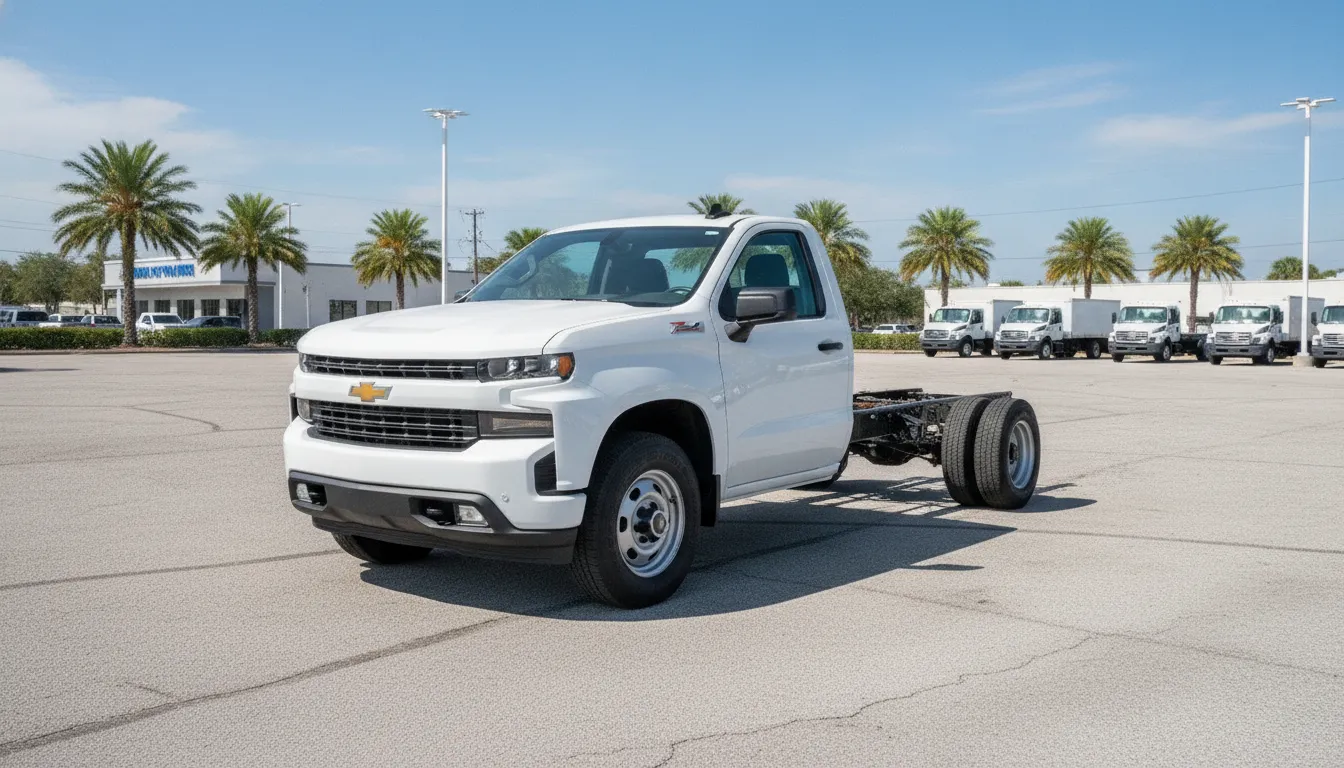
The body you picked still needs a cab and chassis that can carry it legally and comfortably. At Tri-County, that conversation usually runs through Isuzu N-Series, Chevrolet medium-duty, or Hino, depending on class, cab, and what the upfit needs.
Gas N-Series classes are a clean way to see the step from a lighter route truck to a heavier one. The NPR is a Class 3 at 12,000 pounds GVWR. The NPR-HD is a Class 4 at 14,500. The NQR and NRR are Class 5 at 17,950 and 19,500 pounds GVWR. Moving up the range buys payload and body length. It also buys a larger truck to park, insure, and send into a residential driveway.
Cab choice belongs in the same decision. A standard cab leaves more of the rating for body and material. A crew cab carries the crew and narrows the body-length window. Neither is automatically the best truck for landscaping. The morning headcount decides it.
Fuel and service belong on the short list too, not as a separate shopping project. A body that forces more trips, more idle time at a gate, or a longer detour around low trees will use more fuel than a smaller truck that finishes the route. The commercial truck fuel economy guide is the place for that comparison after the body is chosen.
If the truck will be upfitted rather than bought already bodied, use the truck body upfit checklist before anyone orders a hoist, a tarp, or extra boxes. The checklist is the ordering pass. This article is the choice of which setup to order.
How to compare trucks on the lot
Bring the morning list with you. A useful comparison is three trucks at most. Start with one landscape dump in the class you think you need. Add one step up in GVWR. Add one alternate body if equipment loading or service work is a real share of the week.
On each truck, write down:
- Cab style and how many people ride.
- Body style, length, side height, and whether the rear is a gate, a barn door, or a dovetail.
- The completed-truck weight and the payload that remains.
- Overall height and whether your worst driveway can take it.
- What is included: tarp, toolbox, hitch, lighting, and who services the body.
Then price the truck as a working unit. Tri-County quotes pricing on request rather than treating a web photo as the offer. Ask for the out-the-door figure on that configuration, and ask what changes if you add a crew cab, a tarp, or a different body length.
Financing is a separate conversation from the spec. A payment that only works if you overload the bed is not a bargain. Commercial vehicle financing is available through the dealership once the truck itself is the right one. Tri-County also offers complimentary delivery in Florida, which is worth confirming when the truck should go to a yard instead of the Pompano Beach store.
Service after the sale sits on the same property. Sales, service, and parts are separate numbers: sales 754-203-6347, service 954-977-3520, and parts 954-971-5598. A landscaping truck that cannot get hoist or chassis work locally becomes a second job.
How to choose the best truck for landscaping
Use one pass, in this order:
- Name the load you haul most mornings, and whether equipment has to roll on with it.
- Pick the body: landscape dump, dovetail, service body, or a heavier dump.
- Set the payload from the completed truck, not from the empty bed or a chassis brochure alone.
- Reject any truck that fails your tightest driveway, gate, or overhang.
- Choose cab, class, and brand only after those four are settled.
- Quote that configuration, then look at payment.
If two trucks both pass, take the one the crew can load and unload faster on a normal day. Extra capacity you cannot use in the driveways you serve is weight you haul around empty.
Call (954) 971-4022 to request a quote, or review landscape dump trucks before you visit.
Frequently asked questions
What is the best truck for landscaping?
For most crews that haul mulch, soil, and yard debris, a landscape dump on a chassis with enough payload and a size that fits the driveways is the best truck for landscaping. Choose a dovetail body if mowers have to roll on, a service body if the day is tools and parts, and a heavier dump only when the material and the sites both justify it.
Is a landscape dump the same as a regular dump truck?
No. A landscape dump is set up for lawn and landscape loads, often with side access and tool storage. A heavier dump body is built for denser material and is usually a worse fit on residential routes. Compare the body on the truck, not the word "dump" in the ad.
How much can a landscaping truck carry?
Only the completed truck can answer that. Manufacturer chassis payload, such as the Isuzu gas N-Series body-payload ranges, is a starting ceiling. The body, fuel, driver, crew, and add-ons reduce it. Ask for the remaining payload on the exact truck before you plan a material order around it.
Do I need a crew cab?
Get a crew cab if the crew rides in the truck every day. Stay with a regular cab if you need the longer body or the extra payload more than the seats. A crew cab that forces a second trip is not saving the route.
Where can I compare landscape dump trucks in Pompano Beach?
Tri-County Truck keeps a landscape dump trucks inventory at 1801 West Atlantic Boulevard in Pompano Beach. Call sales at 754-203-6347 and bring the load, the crew count, and the tightest site you serve.