Lou Bachrodt’s Tri-County Truck

Complimentary Delivery in the State of Florida

Blog

All Commercial Truck
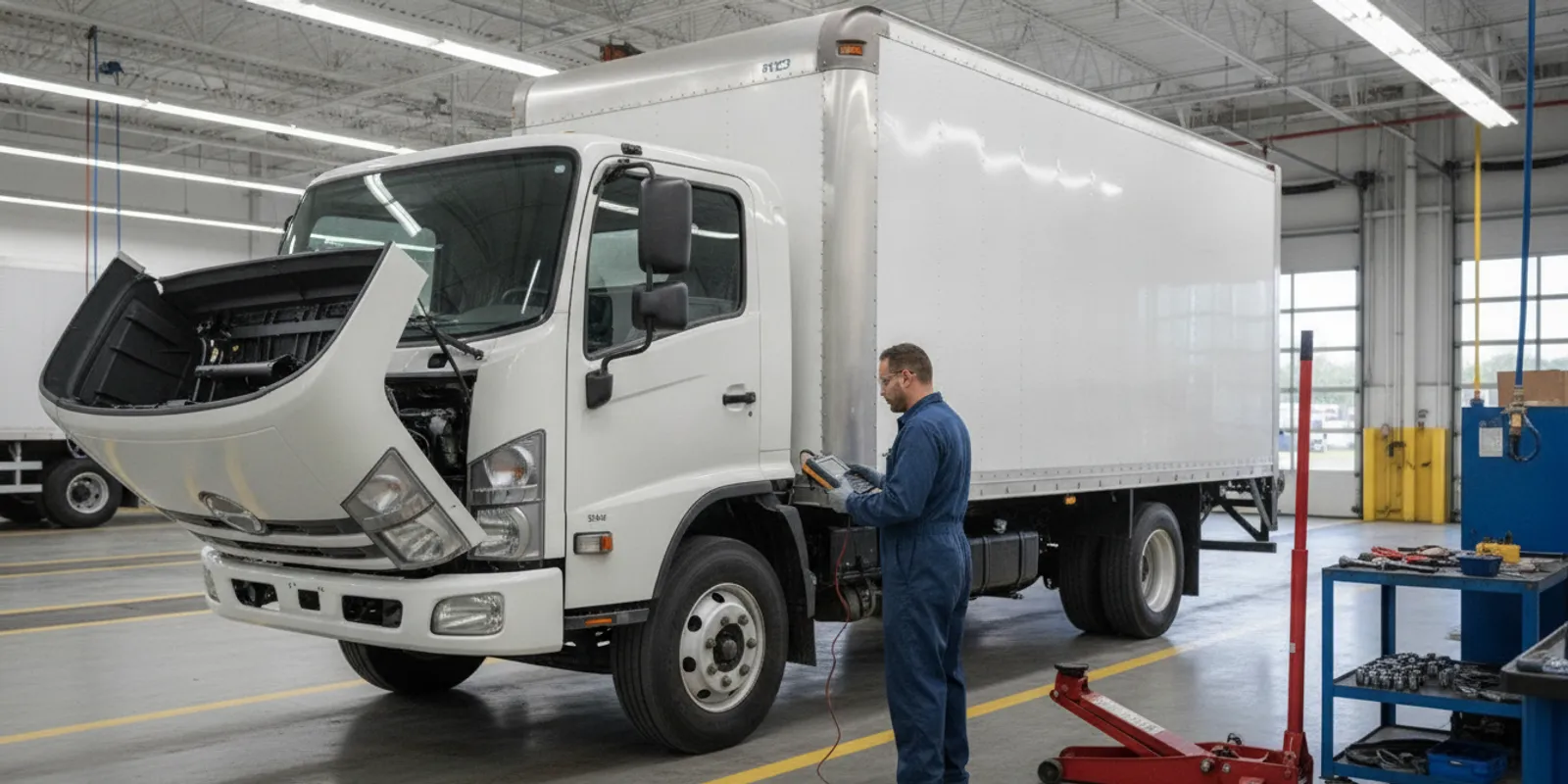
Technicians inspect a Hino box truck during scheduled maintenance in a service bay.

Hino Box Truck Maintenance Schedule: Daily Checks & Service

A maintenance reminder is only useful when it matches the truck it’s meant for. Hino box trucks can differ by model year, engine, drivetrain, and installed equipment, so copying a schedule from a similar vehicle can lead to missed or mistimed service. The hino box truck maintenance schedule in your owner’s manual and applicable Hino service information should guide your plan. From daily walkarounds to scheduled inspections, a consistent routine helps landscapers, movers, contractors, and other businesses spot issues and plan shop visits around busy workweeks. This guide explains how to confirm your truck’s requirements, keep useful service records, and account for demanding routes and heavy-duty use. Key Takeaways Verify the right maintenance plan: Match the schedule to your Hino’s model year, engine, and configuration, using its owner’s manual or official service information. Plan service around real use: Record mileage, engine hours, and service history, then ask a qualified technician how heavy loads, dusty sites, or frequent stops affect maintenance needs. Make inspections part of the workday: Check the truck before driving, document concerns, and arrange service promptly if you notice leaks, warning lights, brake changes, or unusual performance. What Hino Box Truck Maintenance Schedule Should You Follow? Match the schedule to the truck’s model year, engine, drivetrain, and configuration Before setting service reminders, confirm your truck’s model year, engine, drivetrain, and configuration. Hino box trucks that look alike may have different requirements, so match the schedule to the vehicle identification details and the correct manual. Don’t rely on a schedule for a similar truck. Include body equipment and modifications in your planning. A liftgate or other installed equipment may need its own inspections. If you’re unsure which schedule applies, share the truck’s details with a Hino service professional. Metro Hino’s maintenance guidance notes that service needs can vary by model, load, and driving conditions. Use the owner’s manual and official Hino guide as definitive sources Use the owner’s manual and the applicable Hino maintenance guide to check service intervals and procedures. These references are specific to truck models and may include warranty-related requirements. Somerville Hino’s maintenance overview points readers to Hino guides for different models and truck classes. Keep the correct guide accessible to the people who inspect the truck and arrange service. If an interval or task is unclear, confirm it with an authorized Hino dealer or qualified service provider before proceeding. Having the right reference on hand helps your team plan shop visits and gives technicians a useful starting point. Track mileage, engine hours, calendar time, and inspection requirements Record the truck’s mileage, engine hours, and service dates. Depending on the maintenance guide, a task may be due based on distance, operating time, calendar time, or an inspection requirement. Engine hours can be especially useful for trucks that idle often or make frequent stops. Keep a log showing what was inspected, repaired, or replaced, along with the next due date. Store invoices and inspection records with the truck or in a shared fleet system, so drivers and managers can find them quickly. Consistent records help you plan service, spot recurring problems, and give your repair provider a clearer picture of the truck’s history. Avoid applying generic intervals to every Hino truck Online maintenance tips can offer general guidance, but don’t treat one interval as a rule for every Hino box truck. Requirements differ by model and operating conditions, and an article may discuss only one task. An oil-change interval, for example, shouldn’t determine when to replace filters or inspect brakes and other components. Check each task against the guide for your truck. Confirm whether it calls for an inspection, adjustment, fluid change, or part replacement. If your truck carries heavy materials, works dusty construction sites, or follows demanding routes, ask a Hino service professional whether severe-duty guidance applies. That keeps the maintenance plan specific to your vehicle and its workload. What Should You Check Daily? A daily inspection gives you a chance to catch visible problems before your Hino box truck heads out on a job. For landscapers, movers, contractors, and other crews that rely on their trucks, a few minutes of checking can help prevent an issue from disrupting the day or putting people at risk. Follow your company’s inspection process and the instructions in the owner’s manual. The correct procedure can vary by model, equipment, and truck configuration, so use the manual for details such as how to check fluid levels and operate installed equipment. Don’t rely on a quick glance alone: walk around the truck, check the cab and dashboard, and note anything that looks, sounds, or feels different. If you find a problem, report it through your company’s maintenance process before driving. A truck that may be unsafe should remain out of service until a qualified person has assessed it. Keep clear inspection notes, including the mileage and the details of what you noticed. That information helps a technician investigate the issue and gives your team a record of recurring concerns. Check tires, wheels, lights, mirrors, and visible damage before driving Walk around the truck and look for tire cuts, bulges, embedded objects, or signs of low pressure. Check wheels for visible damage and missing or loose wheel nuts. Use a tire gauge when your inspection procedure calls for one, and compare the reading with the specification for your truck. Test the headlights, turn signals, brake lights, and hazard lights. Clean and adjust the mirrors, then check that the windshield and windows provide a clear view. Look over the body and undercarriage for fresh damage or loose parts. During startup, pay attention to unusual noises, changes in exhaust sound, or reduced engine performance. Hino service guidance recommends watching for these changes, since they may point to a problem that needs professional attention. Look for leaks and check fluid levels as the manual directs Before starting the truck, look beneath it for fresh drips or puddles. Check visible hoses and connections for signs of leakage, and note fluid around the engine, transmission, steering, cooling, or hydraulic components. A leak can signal a developing problem, even if the truck appears to run normally. Check fluid levels using the procedure in the owner’s manual. The correct method varies by fluid and truck configuration. Park on level ground when instructed, use the specified dipstick or reservoir markings, and never open a hot cooling system. Report low levels or visible leaks so they can be assessed. Leaks involving coolant, transmission fluid, power steering, or hydraulics deserve prompt attention, as truck repair guidance explains. Test brakes, steering, horn, and dashboard warning indicators Confirm that the horn works and that the steering responds normally. Check the parking brake and service brakes in a safe area, following your workplace procedure. Notice any pulling, vibration, unusual pedal feel, or squealing and grinding sounds. Watch the dashboard during startup. Warning indicators should follow their normal startup sequence. If a light stays on or appears while driving, report it and follow the instructions in the owner’s manual. Don’t dismiss a soft brake pedal or a change in stopping distance. These can signal a serious brake issue. Heavy-duty truck repair advice identifies brake noise, a soft pedal, and longer stopping distances as reasons to arrange prompt service. Secure cargo and inspect box doors, liftgates, and installed equipment Make sure cargo is stable and secured with suitable tie-downs or restraints. Check that the load is distributed appropriately and cannot shift, fall, or block your view while driving. Inspect box doors, latches, hinges, and seals. Confirm that each door closes and locks securely. If the truck has a liftgate, look for visible damage, leaks, or worn components. Operate it only if you’re trained and can do so safely. Check other installed equipment, such as ramps, racks, or toolboxes, and secure it before departure. Regular inspections can help limit downtime and repair costs, according to Hino maintenance guidance. Record concerns and take unsafe trucks out of service Record defects as soon as you find them. Include the date, mileage, warning lights, unusual sounds, and the location of any leak or damage. Specific notes help your fleet manager or service technician understand what happened and determine what to inspect. Report concerns through your company’s maintenance process, even if the truck still seems to operate normally. Do not drive a truck if a problem could affect safe operation, such as unreliable brakes, a serious fluid leak, a damaged tire, or a steering fault. Follow your workplace procedure for taking it out of service and arranging an inspection. A clear maintenance process helps drivers recognize when a truck needs attention, as truck repair guidance recommends. Which Maintenance Tasks Should You Schedule? A dependable Hino box truck maintenance plan covers more than engine oil. Schedule regular checks for filters, fluids, brakes, tires, steering, suspension, cooling, electrical components, and emissions equipment. The exact requirements depend on your truck’s model, engine, configuration, and operating conditions, so use the owner’s manual or official Hino service information to confirm intervals and specifications. Keep a record of the work performed, mileage, and any recommended follow-up. That makes it easier to plan service around your routes and keep your truck ready for the next job. Change engine oil and filters at the specified intervals Engine oil lubricates moving parts and helps manage heat and contaminants. Over time, it wears down, so change the oil and filter according to the schedule for your specific truck. The right interval, oil grade, and filter can vary by model and engine. As a reference, Somerville Hino’s maintenance guidance recommends an oil change every 5,000 kilometers, but that figure should not replace the interval in your owner’s manual. If you regularly idle, carry heavy loads, or work on demanding routes, ask a Hino service professional whether your use affects the schedule. Record the date, mileage, oil type, and filter used after each service. Inspect or replace fuel, engine air, and cabin filters as directed Filters help keep contaminants out of the engine and support proper airflow and fuel delivery. Check and replace each filter as directed in your owner’s manual. For example, Metro Hino’s filter guidance suggests inspecting engine air filters every 15,000 kilometers and replacing them if clogged or damaged, with fuel-filter replacement every 20,000 to 30,000 kilometers. These are reference intervals, not a universal schedule for every Hino. Dusty roads, construction sites, and debris-heavy work areas can make more frequent inspections worthwhile. Check the manual for cabin-filter requirements, if your truck has one, and use filters that meet the specifications for your model. Check transmission, driveline, and differential fluids on schedule Transmission, driveline, and differential fluids help protect gears and other moving parts from friction and wear. Check their condition and service intervals according to the owner’s manual. Requirements vary by transmission and drivetrain, and some checks may need to be performed by a technician. Metro Hino’s maintenance timeline lists 40,000 to 60,000 kilometers as a general transmission-fluid reference, but your truck may have different requirements. Confirm the correct fluid specification and service timing before arranging work. During service, ask the technician to check for leaks and note whether the fluid needs inspection, replacement, or further diagnosis. Inspect brakes, tires, steering, and suspension at prescribed intervals Brakes, tires, steering, and suspension affect how your truck stops and handles, particularly when it’s carrying tools, equipment, or materials. Follow the inspection intervals in the manual, and watch for visible issues during daily checks. Look for tire damage or uneven wear, brake noise, vibration, pulling, or changes in handling. Metro Hino’s brake maintenance guidance recommends regular brake inspections every 10,000 to 15,000 miles, depending on driving conditions. Confirm the appropriate interval for your model and use. A qualified technician can measure brake wear and check components that are difficult to inspect during a walkaround. Arrange prompt service if stopping distances increase or the truck handles differently. Maintain the cooling system, battery, electrical components, and emissions equipment Check coolant level and condition as directed by the manual, and inspect hoses, belts, and the radiator area for leaks or damage. Only check coolant when the engine is cool, and use the specified type. Hino maintenance tips also recommend checking fan-belt condition and tension. Include the battery, terminals, wiring, lights, and other electrical components in scheduled inspections. Keep emissions equipment in good working order, too. Don’t ignore warning lights, unusual exhaust sounds, or changes in engine performance. If a warning appears, arrange a proper diagnosis rather than replacing parts based on guesswork. Record inspections, repairs, and any follow-up service. Confirm whether each task requires inspection, adjustment, fluid, or part replacement A maintenance schedule may call for different work at different service visits. A component might need inspection only, or it may need adjustment, fresh fluid, or replacement. Before approving service, ask what the job includes and which items will be checked, especially for brakes, belts, filters, and emissions components. This helps you understand what’s been done and when the truck is due for attention again. Share any new symptoms with the technician, including unusual exhaust noise or reduced engine performance. Franks Hino’s service guidance recommends professional attention for exhaust concerns. Keep records of mileage, work performed, parts and fluids used, and any recommendations for follow-up. How Do Operating Conditions Change Service Intervals? A Hino box truck’s service needs depend on how it works, not just how many miles it travels. Stop-and-go routes, long idling periods, dusty sites, and heavy loads can call for closer attention to maintenance. Check severe-duty guidance for stop-and-go routes, idling, and frequent short trips Landscaping, moving, and delivery work often involves frequent stops, extended idling, and short trips. In these conditions, mileage alone may not reflect how hard the truck has worked. Track engine hours as well as mileage, and check the owner’s manual for severe-duty maintenance guidance. Depending on the truck and its use, some service tasks may be due sooner than they would be for regular highway driving. Metro Hino’s maintenance guidance notes that service needs vary with the model, load, and driving conditions. Use the guidance to identify what to confirm, then follow the schedule specified for your truck. Account for dust, construction sites, heavy loads, and towing Dust from construction sites, gravel roads, and landscaping work can affect air filters and other components. Heavy cargo and towing place added demands on the engine, brakes, tires, suspension, and drivetrain. When reviewing maintenance needs, consider the work your truck does every day, including the weight it carries and the surfaces it travels. Between scheduled services, watch for visible leaks, tire wear, or changes in braking and handling. Follow the manual’s instructions for inspecting filters and other components, since service requirements depend on the truck. Hino maintenance tips also stress the importance of keeping steering and suspension systems in good condition, especially when a truck regularly works on rough routes. Ask a Hino service professional if demanding use requires more frequent service If your truck spends most of its time in demanding conditions, ask a Hino service professional to review its maintenance schedule. Share the model year, engine, configuration, typical load, route conditions, idling time, mileage, and engine hours. These details help the technician assess whether the standard schedule fits the truck’s workload. Keep records of inspections, repairs, mileage, and engine hours. Good records make it easier to spot recurring issues and plan service around busy periods. A technician can also clarify whether a task calls for inspection, adjustment, a fluid change, or part replacement. Routine maintenance can help reduce breakdown risks and downtime, but use the owner’s manual and qualified service advice to determine the right intervals for your truck. Which Warning Signs Need Prompt Hino Service? A change in how your Hino box truck sounds, handles, or performs deserves attention. Catching a problem early can help prevent a breakdown during a delivery or job. If the truck feels unsafe to drive, pull over somewhere safe and arrange an inspection before continuing. Address leaks, overheating, and rising temperature readings Look beneath the truck for fresh oil, coolant, transmission fluid, or diesel fuel. A leak can lower fluid levels and lead to overheating or damage to key components. Make a note of the fluid’s color and where you saw it, then contact a qualified service provider. Adding fluid may help temporarily, but it won’t fix the source of the leak. Keep an eye on the temperature gauge while driving. If it rises above its usual range or an overheating warning appears, pull over safely and shut off the engine when conditions allow. Continuing to drive may cause further damage. A heavy-duty truck repair checklist identifies leaks and overheating as reasons to arrange prompt service. Respond to brake noise, a soft pedal, or longer stopping distances Squealing or grinding noises, a brake pedal that feels soft, or longer stopping distances all warrant prompt attention. These changes can affect your ability to stop safely, particularly when the truck carries tools, materials, or a full load. Don’t wait until the next scheduled service if the brakes feel different than usual. If braking changes significantly, park the truck safely and arrange an inspection. Avoid continuing the route until a technician has checked the system. Regular inspections can help identify worn or damaged components before they compromise safe operation. Review these truck brake warning signs to understand which symptoms call for urgent attention. Investigate warning lights, unusual engine or exhaust noises, and reduced performance Pay attention to dashboard warning lights, especially when they appear alongside rough running, a change in exhaust sound, loss of power, or a sudden drop in fuel economy. Note when the warning appeared and what the truck was doing. If a critical light comes on or the truck runs poorly, stop in a safe location and contact a service professional. Rattling, knocking, hissing, or a change in exhaust tone may point to an engine or exhaust-system issue. Don’t dismiss a new sound simply because the truck still runs. A Hino service and repair guide advises owners to watch for changes in noise, exhaust tone, and engine performance. Check uneven tire wear, handling changes, starting trouble, and electrical faults Uneven tire wear, pulling to one side, vibration, or loose-feeling steering can signal a tire, suspension, or steering problem. These issues may affect control, especially with a heavy load. Check for visible tire damage and arrange an inspection if the truck handles differently than usual. Hino maintenance guidance stresses the importance of keeping steering and suspension systems in good condition. Starting trouble, dim lights, flickering displays, or recurring electrical warnings may point to a battery, charging, or wiring fault. Note when the issue occurs and which components are affected. If the truck won’t start reliably, avoid repeated attempts and contact a technician. Testing the battery and charging system can help identify the problem before it interrupts a workday. Why Follow the Hino Box Truck Maintenance Schedule? A Hino box truck may carry tools to a job site, furniture to a customer, or materials between locations. When the truck is out of service, schedules and business operations can suffer. Following the maintenance schedule for your specific model helps you keep key systems in good condition, plan service ahead, and spot concerns before they disrupt a workday. Use the owner’s manual and Hino service information to confirm required intervals, and keep a record of inspections and repairs. Regular care supports dependable operation and can help manage the truck’s long-term costs, as Franks Hino explains. Support safe braking, handling, and dependable operation A loaded box truck needs reliable brakes, responsive steering, and tires in good condition. Scheduled inspections give a technician the opportunity to check these systems, identify wear, and recommend repairs. Drivers can also watch for changes between service visits, such as brake noise, a soft pedal, pulling to one side, or unusual vibration. Report these signs promptly and follow your company’s procedure for removing a truck from service if it may be unsafe to drive. Routine inspections and timely repairs help support safe, dependable operation on routes and at work sites, as Franks Hino’s service guidance describes. Protect engine, transmission, fuel, and emissions-system performance The engine, transmission, fuel system, and emissions equipment all affect truck performance. Following the correct service intervals helps keep these systems maintained according to the manufacturer’s guidance. Depending on the truck, scheduled work may include changing oil and filters, checking fluids, or inspecting emissions components. Arrange an inspection if a warning light comes on or you notice unusual exhaust, reduced power, or a change in fuel use. Addressing exhaust-system issues promptly can help maintain fuel efficiency and prevent related engine damage, as Franks Hino notes. Catch wear early to reduce breakdown risks, repair costs, and downtime Routine service can reveal wear while there is still time to plan a repair. For example, an inspection may identify brake components that need attention before they affect stopping performance. If your business relies on its truck to move tools, materials, or furniture, planned shop time is generally easier to work around than an unexpected breakdown. Keep track of inspection findings and ask your service provider which repairs need immediate attention and which can be scheduled. Metro Hino’s brake maintenance guidance explains how early detection can help prevent more serious problems. Support fuel efficiency, vehicle longevity, and maintenance-record requirements Keeping up with scheduled service can help maintain fuel efficiency and extend a truck’s useful life. It also gives your team a clear service history to reference when planning future work or preparing the vehicle for resale. Save receipts and record the service date, mileage, engine hours when available, work completed, and parts replaced. Check the owner’s manual and warranty information for any recordkeeping requirements that apply to your truck. Metro Hino’s routine maintenance guidance describes how regular care can support engine life, reduce downtime, and help with warranty compliance. Where Can You Find the Official Hino Maintenance Schedule? Consult the owner’s manual and official Hino maintenance information Start with the owner’s manual for your specific truck. It outlines the recommended maintenance tasks and intervals, along with inspection guidance. If the manual is missing, ask a Hino dealer or use Hino’s official service resources to find the correct documentation. Avoid relying on a schedule from another truck, even if it looks similar. Regular inspections and preventive maintenance help keep a truck safe and dependable, and can reduce the chance of breakdowns, costly repairs, and missed work. That matters when your box truck carries tools, materials, or customer orders to a job site. Somerville Hino’s maintenance guide explains why following a regular service plan is important. Confirm requirements using the truck’s model, year, engine, and configuration Before setting service reminders, confirm your truck’s model, model year, engine, drivetrain, and chassis configuration. Hino box trucks can have different maintenance requirements, so an interval that applies to one vehicle may not suit another. Check the manual’s vehicle details against your truck’s information to make sure you’re using the right schedule. How you use the truck matters, too. Frequent stops, long periods of idling, heavy loads, and demanding routes can affect service needs. If you’re unsure whether your work conditions call for a different maintenance approach, ask a qualified technician. Metro Hino’s maintenance guidance recommends following the schedule for your specific model and considering how the truck is operated. Check Hino service publications or ask an authorized dealer or qualified service provider For details beyond the owner’s manual, check Hino’s service publications. The Hino service information page provides access to on-demand materials, including owner manuals, repair manuals, wiring diagrams, service bulletins, and technical tips. Choose publications that match your truck, and consult a qualified technician if you’re unsure how to apply a procedure. An authorized Hino dealer or qualified service provider can help confirm the correct schedule and explain specific requirements. When you call, have the truck’s model year, engine, configuration, mileage, and typical workload ready. Details such as dusty job sites, heavy loads, or frequent stop-and-go driving help the technician make a more relevant recommendation. Keep the correct schedule and maintenance records with the truck Once you’ve confirmed the schedule, keep a copy in the truck or in a shared digital file that drivers and service staff can access. Record the date, mileage, and engine hours when the schedule calls for them, along with the work completed, parts used, and any concerns that need follow-up. These notes make it easier to plan upcoming service and give technicians useful history when they inspect the truck. For a fleet, assign someone to review the records and arrange service before tasks come due. Keep inspection notes and repair invoices with the maintenance history so your team can spot recurring issues and plan around shop time. Consistent care and recordkeeping can help manage downtime and long-term ownership costs, as Franks Hino’s service guidance notes. Frequently Asked Questions How often should I service my Hino box truck? The right interval depends on your truck’s model, engine, configuration, and workload. Check the owner’s manual or Hino service information for each maintenance task, and ask a qualified technician whether your driving conditions affect the schedule. Do engine hours matter if I track mileage? Yes. If your truck spends a lot of time idling or making frequent stops, engine hours can help show how much work it has done. Record hours, mileage, and service dates so you can compare them with the requirements in your maintenance guide. What should I do if I find a problem during a daily inspection? Write down what you noticed, including the date and mileage, and report it through your company’s maintenance process. If the issue could affect safe operation, such as a brake fault, damaged tire, or serious leak, keep the truck out of service until it has been assessed. Should a liftgate or other installed equipment be included in the maintenance plan? Yes. Liftgates, ramps, and other equipment may have separate inspection or service requirements. Check the equipment manufacturer’s instructions and include those tasks in your truck’s maintenance records. Where can I find the correct maintenance schedule for my truck? Start with the owner’s manual and Hino service information that match your truck’s model year, engine, and configuration. If you can’t confirm which guide applies, contact a Hino dealer or qualified service provider with the truck’s details and typical workload.
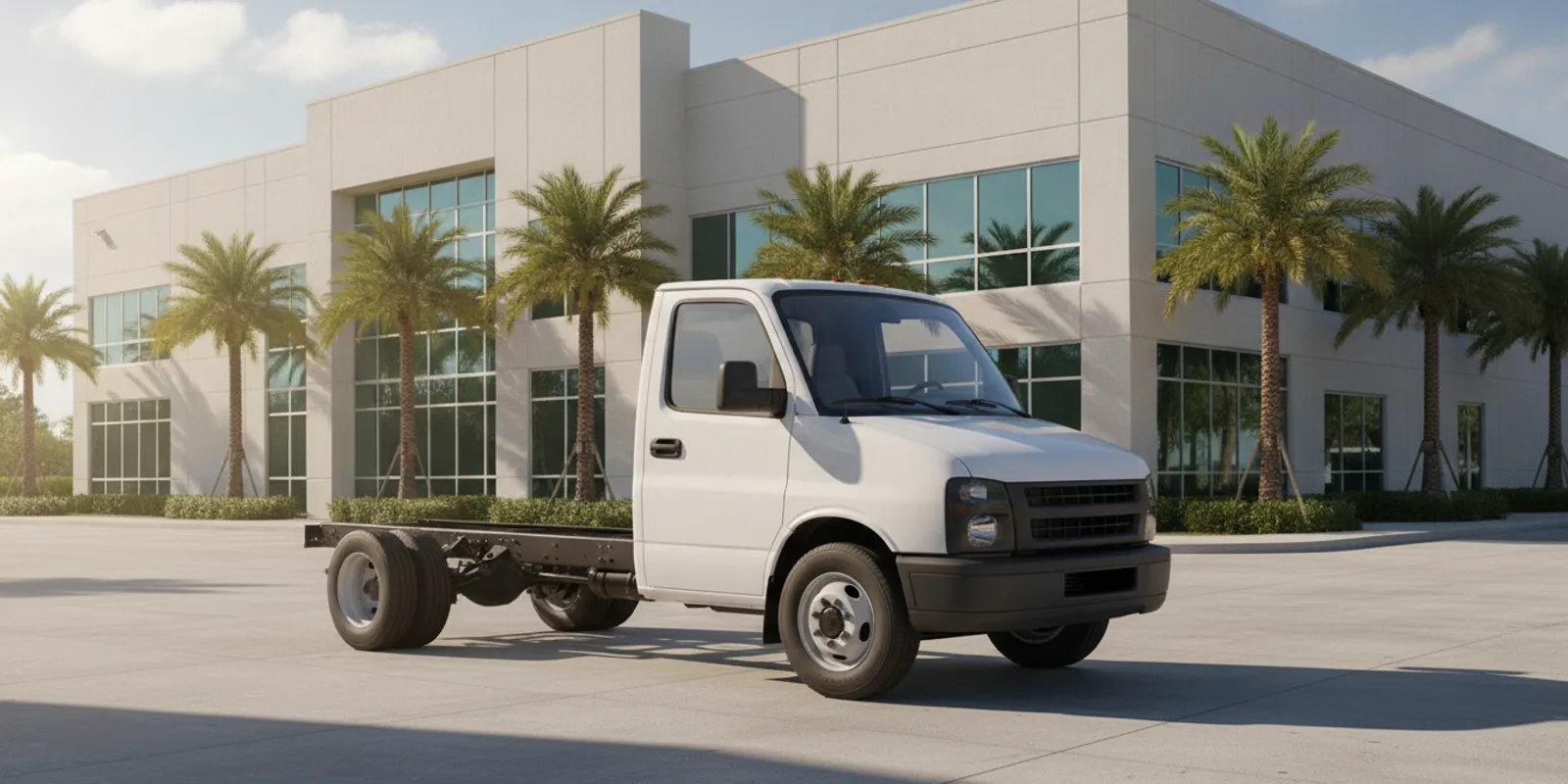
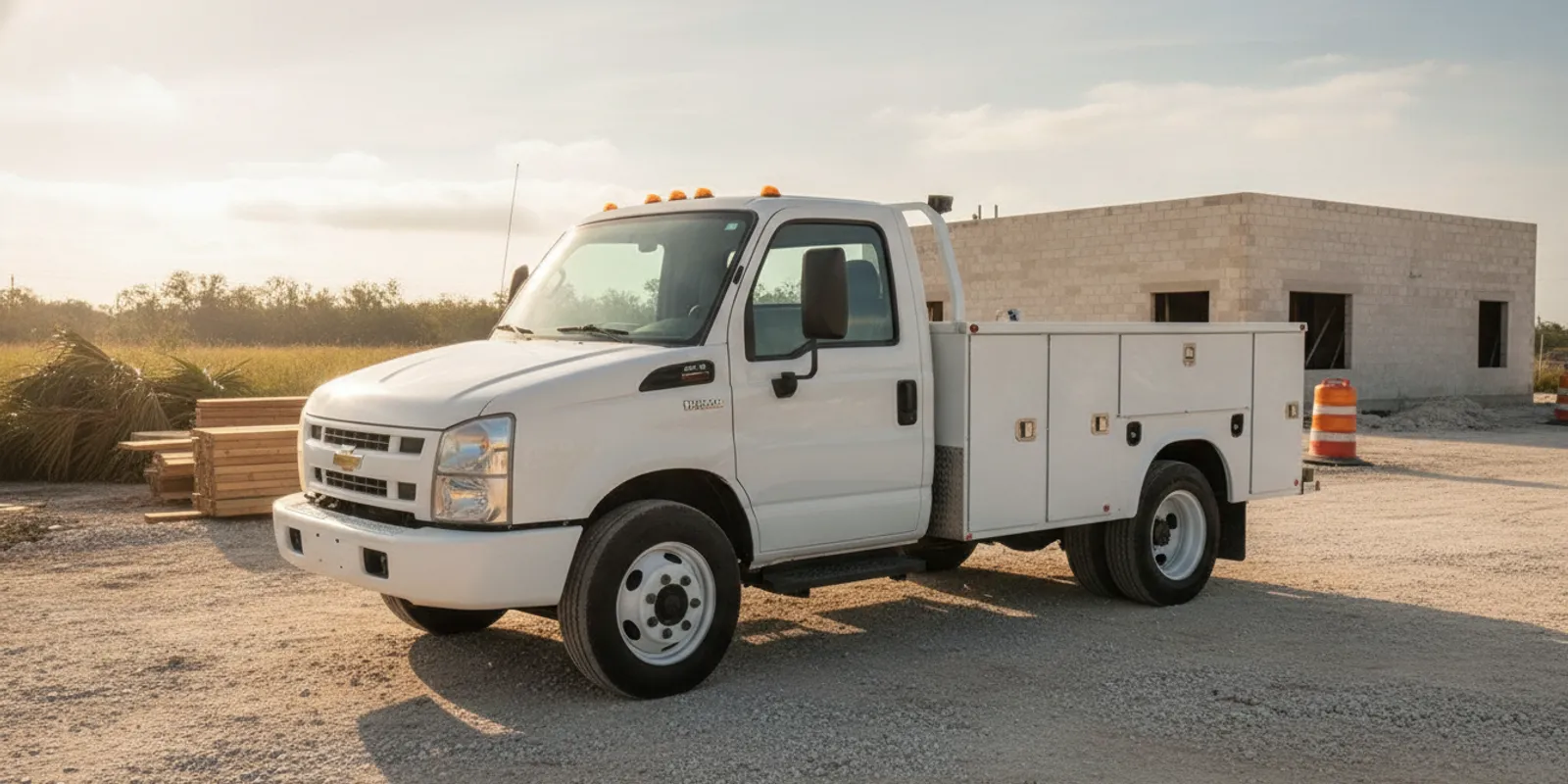
White commercial cutaway van prepared for a business upfit

Cutaway Van for Sale: How to Choose the Right Configuration

Shopping for a cutaway van for sale is not only a matter of choosing the newest chassis or the lowest advertised price. The right truck has to fit the work your business performs every day. Wheelbase, gross vehicle weight rating, payload, body design, and upfit compatibility all affect how well the vehicle carries equipment, protects cargo, and works at the job site. New and used options can both make sense when they are matched to the application. Talk with a commercial truck specialist What is a cutaway van? A cutaway van starts with a van-based cab and chassis. The front portion includes the cab, engine, controls, and front body structure, while the rear is left open for a separate body to be installed. That design gives a business more flexibility than a standard enclosed cargo van. The finished vehicle may become a delivery body, shuttle, service body, box body, or another purpose-built configuration. The chassis is only the starting point. The body, equipment, passengers, tools, fluids, and cargo all contribute to the finished vehicle's weight. That is why a buyer should decide how the truck will be used before comparing stock numbers. A cutaway that works well for light deliveries may not be the right choice for a contractor carrying heavy equipment or for a passenger-focused application. How should you define the work before looking at a cutaway van for sale? Begin with a written description of a normal workday. Note what the vehicle will carry, where it will travel, and how often it will be loaded. Consider both today's needs and realistic growth over the expected ownership period. For example, a delivery operator might record the largest package, number of stops, and whether returns or pickups add weight on the trip home. A maintenance contractor can list the technicians, tools, parts bins, and machines that usually travel together. Body use: Decide whether the truck will support deliveries, service calls, equipment transport, passengers, or a combination of tasks. Payload: List tools, inventory, parts, passengers, fuel, fluids, shelving, lifts, and other equipment that will be on board. Loading: Identify whether workers will load from the rear, curb side, or both sides. Think about ramps, liftgates, doors, and interior access. Travel: Consider tight city streets, parking areas, highways, construction sites, and any route restrictions. Future needs: Leave room for additional shelving, a generator, refrigeration, or other equipment if the business is likely to expand. Translate this list into a short must-have specification and a separate nice-to-have list. That distinction helps avoid paying for dimensions or equipment that do not improve the work. It also gives a dealer a clearer starting point when discussing chassis and body choices. Why does wheelbase matter? Wheelbase is the distance between the front and rear axles. It affects the vehicle's overall length, turning behavior, body length, weight distribution, and available cargo space. A shorter wheelbase may be easier to maneuver in urban areas and crowded job sites. A longer wheelbase can provide room for a larger body or a more useful equipment layout. Wheelbase should be considered with the body dimensions, not by itself. A long body placed too far behind the rear axle can create poor weight distribution. A body that is too short may leave valuable capacity unused. Ask how the proposed body length, rear overhang, door placement, and equipment location work together on the specific chassis. Think about daily access as well. If drivers regularly use narrow streets, small parking lots, or residential driveways, maneuverability may be more important than maximum interior volume. If the truck spends most of its time making scheduled deliveries or carrying bulky equipment, additional body length may be more valuable. Before choosing, compare the complete vehicle length with the actual spaces where it will park, turn, and load; a paper dimension is useful only when it matches the route. What is GVWR, and how does it affect your choice? GVWR means gross vehicle weight rating. It is the maximum allowed operating weight of the completed vehicle, including the chassis, body, passengers, fuel, tools, cargo, and installed equipment. The vehicle should not be configured or loaded beyond that rating. The Federal Motor Carrier Safety Administration explains commercial vehicle weight requirements and related safety rules in its regulations resource; check the rules that apply to your vehicle and operation. GVWR is different from curb weight. The difference between the completed vehicle's empty weight and its GVWR is the practical capacity available for people and cargo. Body construction and upfit equipment reduce that available capacity. A heavy body, liftgate, shelving package, refrigeration unit, or generator can use a meaningful portion of the rating before the first package or tool is loaded. Ask for the expected completed weight, not only the chassis rating. A dealer or upfitter can help review the body specification and intended equipment. You should also confirm that the front and rear axle ratings support the planned load distribution. A vehicle that technically has room on paper may still need careful placement of heavy items. Keep the ratings and the completed weight with your comparison notes, rather than relying on a broad model description. How do you estimate payload? Make a complete payload list before selecting a configuration. Start with the people who will ride in the vehicle. Then add cargo, tools, spare parts, fuel, fluids, racks, shelving, compressors, tanks, liftgates, and any other permanent or temporary equipment. Use the highest normal load rather than an unusually light day. If a service business carries a consistent inventory of parts and tools, include that inventory. If a delivery business returns with unsold goods or collects materials along the route, account for those conditions as well. A small reserve is useful because businesses often add equipment after purchase. For a practical estimate, write down each item and its weight from a label, specification sheet, or measured record where available. Separate permanent equipment from cargo that changes by route, then include the people who may ride together. Add the amounts and compare the total with capacity remaining after the body and installed equipment. If an item's weight is unknown, flag it for confirmation instead of treating it as zero. Repeat the calculation for the heaviest likely shift, not just the average trip. Payload is not just a sales specification. It affects braking, tires, suspension, handling, and the useful life of the vehicle. Overloading can also make the truck harder to control and may reduce room for future changes. The safest comparison is based on the completed vehicle and the actual work it will perform. Which body is right for the job? The body should support the way workers load, secure, and access materials. A delivery body may prioritize enclosed storage and organized shelving. A service body may emphasize exterior compartments and fast access to tools. A shuttle or passenger body may require a different interior layout and seating plan. The best configuration depends on the business process, not a generic label. For a service operation, consider how often technicians need a tool. Frequently used items should be easy to reach without unloading the entire body. For deliveries, measure the largest typical package and review door openings, floor height, and interior clearance. For equipment transport, check ramp angles, tie-down points, and whether the body can accommodate the machine's width and weight. Walk through a normal task in sequence. Where does the worker stand to unload? Can the item needed first be reached without moving everything else? Does the door open fully in the places the vehicle will use? A quick sketch of shelves, bins, equipment, and access paths can expose a poor layout before it becomes a permanent upfit. Body materials also matter: a lighter body may preserve more payload for cargo, while a durable body may be worthwhile for demanding job sites. Ask how it is mounted, how repairs are handled, and whether replacement parts or service support are available. What should you check for upfit compatibility? An upfit is equipment added to the chassis after or during the vehicle build. Examples include shelving, racks, liftgates, refrigeration, partitions, ramps, tool compartments, and specialized service equipment. Before choosing a cutaway van for sale, confirm that the chassis can accept the planned upfit without creating a weight, clearance, or balance problem. Bring the upfitter into the conversation early when the application is specialized. Share the intended body dimensions, equipment weight, power requirements, and access needs. Check mounting points, available electrical capacity, rear axle loading, door clearance, and the effect of the completed body on overall length. It is also useful to ask whether the vehicle is already upfitted or whether the body will be installed after purchase. A ready-to-work truck can save time, but the existing layout must suit the business. A chassis that needs an upfit may provide more control over the final configuration, though the buyer should account for scheduling, installation, and total cost. Request a written list of what is included and what remains to be installed, so equipment gaps do not emerge after delivery. Should you buy new or used? New and used cutaway vans each have practical advantages. New inventory may offer the latest chassis, a clean starting point, and a body selected for the current application. Used inventory may offer a lower purchase price or a completed body that is already suited to the work. Neither choice is automatically better; condition and fit are more important than age alone. Comparison point New cutaway Used cutaway Configuration More opportunity to select chassis and body together Existing body and equipment may shorten the path to work Condition review Review the build specification and upfit quality Review maintenance, wear, damage, and prior use carefully Budget Usually requires a larger initial investment May reduce the initial purchase cost, depending on condition Availability May involve ordering or an available new unit Can provide a faster option when the right truck is in inventory When reviewing a used vehicle, inspect the frame, suspension, tires, brakes, body mounts, doors, floor, wiring, and signs of water intrusion. Ask how the vehicle was used and whether the body or equipment was modified. Review service documentation when available. A professional inspection can help identify concerns that are not obvious during a short walk-around. Operate doors and access panels, look for uneven wear or repairs, and confirm that installed accessories function as expected. When reviewing a new vehicle, confirm the complete build rather than relying on a stock photo or a short description. Ask for the chassis rating, wheelbase, body dimensions, equipment list, and expected completed weight. If comparing configurations, review cutaway model information and search available inventory as part of the process. A listing is a starting point; confirm the specific vehicle's equipment and fit before deciding. What questions should you ask before buying? A focused set of questions can prevent an expensive mismatch. Bring your payload list and describe the routes and job sites the truck will serve. Ask for answers about the finished configuration, not just the base chassis. What is the wheelbase, body length, and overall vehicle length? What are the GVWR and front and rear axle ratings? What is the completed empty weight after the body and equipment are installed? How much payload remains for people, cargo, tools, and future additions? Is the body included, and was it designed for this chassis? Which upfits are already installed, and which would need to be added? For a used truck, what service and ownership records are available? Can the truck be inspected and evaluated for the planned application? Also compare the ownership plan. Ask about service access, parts availability, warranty terms that apply to the specific vehicle, and the expected delivery timeline. If financing is part of the purchase, review the complete terms rather than comparing only the monthly payment. Tri-County's commercial vehicle financing resources can be a starting point for that conversation. How can you compare two cutaway configurations? Put both vehicles on the same worksheet. Record wheelbase, GVWR, completed empty weight, estimated payload, body dimensions, equipment, mileage if used, and known service needs. Then score each vehicle against the actual job: loading, maneuverability, access, capacity, and ability to support future equipment. For instance, one option may have a shorter body and easier access in crowded delivery areas, while another offers room for additional shelving. Ask which difference changes a workday and which merely looks appealing in a listing. Mark each item as essential, beneficial, or unnecessary, then note any cost or installation work still required. This makes tradeoffs visible and helps a buyer explain the decision to other people involved in the purchase. Do not let a lower price hide a poor fit. A truck that cannot carry the normal load may require an early replacement. A configuration with unnecessary length or equipment may tie up money without improving productivity. The best value is the vehicle that supports the work reliably while leaving a sensible margin for changing needs. Schedule a test drive What is the next step when you find a cutaway van for sale? Bring your work description, payload list, and preferred body use to the dealership. Review the chassis and upfit together, confirm the ratings, and inspect the finished vehicle before committing. With the right questions, you can choose a cutaway van that fits the job now and remains useful as your business grows.

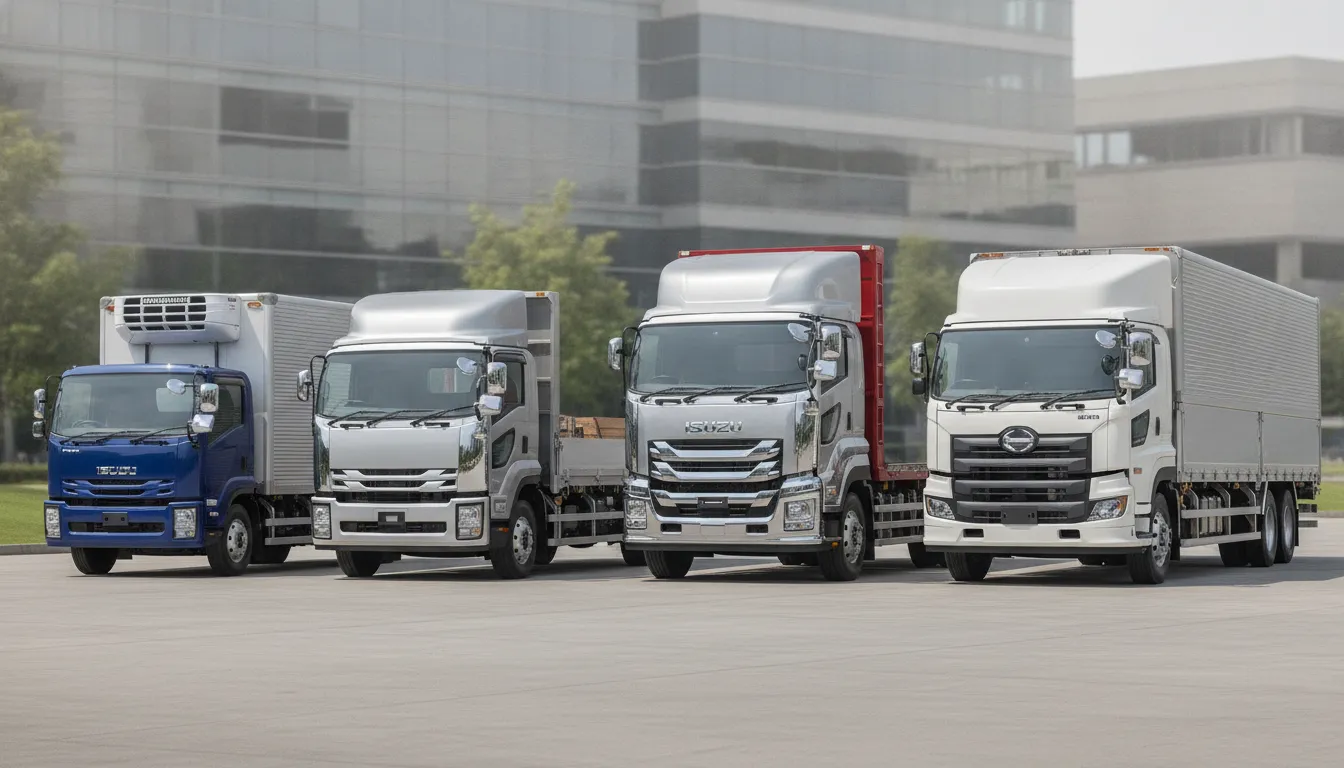
Lineup of Isuzu commercial truck models.

Isuzu commercial truck models and specifications: By Class

When you’re comparing commercial trucks, the numbers on a spec sheet can feel disconnected from the work you actually do. The key is knowing which figures affect your crew, cargo, routes, and equipment. Isuzu commercial truck models and specifications offer a starting point for comparing light-, medium-, and heavy-duty options, but model names and features can vary by market. You’ll also want to compare Chevrolet and Hino trucks in similar configurations. This guide breaks down the ratings and features that matter, from payload and axle capacity to engine output, towing, body options, and service support, helping you build a practical shortlist for your business. Key Takeaways Match the truck class to the job: Compare Isuzu’s light-, medium-, and heavy-duty options against your loads, routes, and work sites. Verify the finished truck’s ratings: Include the body, equipment, crew, cargo, and trailer when checking payload, axle limits, and towing capacity. Compare ownership needs before choosing: Review local specifications, upfit compatibility, service access, maintenance, and warranty with a commercial truck specialist. Which Isuzu Commercial Truck Classes Are Available? Isuzu’s commercial truck lineup covers light-, medium-, and heavy-duty work. The right class depends on what your business needs to carry, where you drive, and which body or equipment the truck must support. A landscaping crew working on residential streets, for example, may prioritize maneuverability and room for tools. A construction contractor hauling heavier loads may need a truck with a different chassis, axle capacity, and body setup. Isuzu uses the ELF, FORWARD, and GIGA names in Japan. In some other markets, the corresponding lines are known as the N-Series, F-Series, and C&E Series. These names describe broad truck classes, but they do not guarantee that models have identical specifications in every country. Check the Isuzu truck lineup for an overview, then confirm details with a local dealer. As you compare classes, look beyond the model name. Review the ratings for the specific cab, chassis, wheelbase, powertrain, and body configuration you plan to use. Include the weight of the body, equipment, materials, and crew when estimating payload. If you tow a trailer, confirm the ratings for the truck and trailer combination as well. These checks help you shortlist trucks that fit your daily work before you compare individual specifications. ELF/N-Series: Light-duty trucks for urban deliveries, landscaping, and maintenance The ELF/N-Series is Isuzu’s light-duty line, designed for applications such as urban delivery, landscaping, and maintenance. Its compact format can be useful for businesses that make frequent stops, work on narrow streets, or visit tight job sites. Depending on local availability, cab and chassis options can support different commercial bodies and equipment. Compare the rated weight, wheelbase, cab, and payload for the exact model you are considering. A body, liftgate, shelves, tools, materials, and crew all count toward the truck’s working load. Consider the access conditions on your regular routes, too, including parking, turning space, and job-site entrances. For an overview of the ELF line, Isuzu’s commercial truck range outlines its intended role. Confirm local ratings and available configurations with a dealer before choosing an upfit. FORWARD/F-Series: Medium-duty trucks for regional hauling and vocational work The FORWARD/F-Series is Isuzu’s medium-duty line. It may suit regional hauling, inner-city delivery, construction, and other vocational work where a business needs a different capacity or body setup than a light-duty truck provides. Depending on the local lineup, available builds may include box bodies, flatbeds, dumps, and other work-focused configurations. Compare payload and axle ratings along with wheelbase, engine output, transmission, and suspension. These specifications affect how the truck carries its load and performs on your routes. Isuzu lists some FORWARD/F-Series configurations with four-bag air suspension, which is designed to support ride comfort and load stability. Availability varies, so check the official Isuzu truck information and verify the exact equipment with a local dealer. Recalculate payload after selecting the body and adding tools or other work equipment. GIGA/C&E Series: Heavy-duty trucks for high-capacity transport and demanding loads The GIGA/C&E Series covers Isuzu’s heavy-duty applications. Businesses moving high-capacity loads or working in demanding conditions may consider this class for heavy hauling and specialized commercial jobs. The right configuration depends on the work, including the load, route, chassis, driveline, axles, body, and any trailer the truck will tow. For a specific model, review engine output, torque, transmission, gearing, axle capacity, and gross combination ratings. Match these figures to your regular work and local requirements, rather than relying only on a model name or general class description. Also ask about emissions rules, legal weight limits, safety features, and service support in your area. Isuzu lists options such as four-bag air suspension and visual support technology in some markets. Check the GIGA/C&E range and confirm which features are offered on the truck you plan to buy. Check model names, specs, and availability in your market Isuzu model names, ratings, powertrains, safety features, and body options can vary by market. A truck sold as an N-Series in one country may not have the same specifications as an ELF with a similar name elsewhere. Start with local product information, and verify the model year and vehicle configuration before comparing trucks. Ask a local commercial truck dealer to confirm gross vehicle weight rating, axle ratings, payload, towing capacity, and available upfits for the exact build. If you need a specialized body or mounted equipment, discuss it before selecting the chassis. The completed truck must stay within its ratings once the body, tools, materials, and crew are included. Reviewing your typical loads, routes, job-site access, and service needs with a truck specialist can help you narrow the options to models that fit the work. Which Specs Matter Across Isuzu Truck Models? A model name alone won’t tell you whether a truck is right for your work. Compare the full configuration, including weight ratings, chassis dimensions, engine, drivetrain, body, and equipment. A landscaper hauling mowers and materials, for example, has different needs from a mover carrying household goods or a contractor towing a work trailer. Specs can also vary by model year and market, so verify the exact figures for the truck you’re considering. Compare GVWR, axle ratings, wheelbase, payload, and body dimensions Start with gross vehicle weight rating (GVWR), the maximum permitted weight of the loaded truck. Check front and rear axle ratings as well, since cargo and installed equipment must stay within both limits. Wheelbase affects turning space and which bodies can fit. Body length, width, and height matter for loading areas, parking, and access to tight job sites. Payload depends on the truck’s configuration, and it changes when you add a body, liftgate, tool storage, or other equipment. Isuzu’s 4x4 truck range shows that weight classes vary across configurations. Use the rating plate and documentation for the specific truck to confirm its limits. Review engine, horsepower, torque, transmission, and drive configuration Horsepower and torque describe engine output, but they don’t tell the whole story. Consider how the power is delivered, the transmission gearing, and whether the drivetrain suits your usual routes and loads. A truck carrying supplies on paved roads has different demands from one hauling equipment over steep or uneven ground. Compare the specifications for the exact model, rather than assuming every truck in a series has the same setup. Drive configuration matters, too. Isuzu’s 4x4 model specifications list the NPS75 with part-time all-wheel drive and the FTS34 with full-time all-wheel drive. Those details can vary by market, so confirm the transmission, transfer case, and differential equipment on the truck you plan to buy. Calculate working payload with the body, equipment, crew, and materials To estimate working payload, account for everything the truck will carry. Include the body, passengers, tools, racks, fuel, materials, and permanently installed equipment. A landscaping crew may carry mowers and supplies, while a window installer may need glass racks and protective gear. Every item takes up part of the truck’s available capacity. Ask the dealer or body builder for the completed truck’s weight, not just the bare-chassis figure. Isuzu describes the NPS as a platform suited to aftermarket modifications, but additions change the finished truck’s weight and payload. This NPS/NQS 4x4 review discusses the NPS’s adaptability. Before putting the truck to work, verify its finished weight and axle loads. Confirm towing capacity and gross combination ratings for your configuration If you plan to tow, check more than the truck’s maximum towing figure. Confirm the gross combination mass or rating (GCM or GCWR), which limits the combined weight of the loaded truck and trailer. Also check the tow rating, hitch rating, trailer brake requirements, and any limits tied to the engine, transmission, or axle setup. Published figures may apply only to a specific configuration. For example, a review of the Isuzu NPS 75-175 4x4 gives a 4,500-kilogram towing capacity for the manual-only model. Don’t assume that rating applies to every NPS. Check the owner’s manual and local regulations before towing. Check upfit compatibility, safety features, emissions rules, and local requirements Before choosing a body or equipment package, confirm that it fits the chassis and keeps the truck within its vehicle and axle ratings. Discuss body length, mounting points, electrical connections, weight distribution, and modifications with a qualified upfitter. This matters for dump bodies, cranes, liftgates, and specialized racks, where the completed setup must suit both the work and the truck’s approved limits. Review safety equipment and emissions compliance for the specific model year and market. Features and rules differ by location, so check what comes standard and what’s available as an option. Isuzu lists safety and environmental performance among its truck development priorities. Before finalizing a configuration, ask a commercial truck specialist to check local licensing, registration, inspection, and emissions requirements. What Does the ELF/N-Series Offer for Light-Duty Work? The Isuzu ELF, known as the N-Series in many markets, is a light-duty truck platform with configurations for a range of commercial jobs. Landscapers, movers, window installers, haulers, and maintenance crews can compare chassis ratings, wheelbases, cab options, and body styles to find a setup that fits their work. The right choice depends on the loads you carry, the routes you drive, and the space available at your job sites. Isuzu places the ELF in its light-duty truck range, alongside the medium-duty FORWARD and heavy-duty GIGA. Model names and specifications vary by country and model year, so check the exact version available locally rather than relying on the family name alone. Start with your expected day-to-day load, then account for the body, crew, tools, materials, and any added equipment. A truck for residential landscaping may need different dimensions and storage from one used for moving jobs or window installation. Confirm the completed truck’s ratings with your dealer or body builder before making a decision. That way, you can compare configurations based on the work they’ll actually do. Compare chassis ratings, wheelbases, cab options, engines, and transmissions Check the chassis rating first, then confirm how much capacity remains after the body and equipment are installed. Compare wheelbase and cab options, too. A shorter wheelbase may suit tight streets and compact job sites, while a longer one may provide room for a larger body. Cab styles and seating capacity differ by market, so verify the specific configuration you’re considering. Engine output and transmission should match your routes and loads. Think about frequent stops, steep roads, highway driving, and whether the truck will often operate fully loaded. Ask your dealer for the local specification sheet, including axle ratings and transmission choices. Comparing those details helps you select a truck for your actual workload, rather than choosing by model name alone. Consider cab-forward design and maneuverability on urban routes and tight job sites The N-Series cab-forward layout places the cab over the front axle, helping provide a compact footprint for a commercial truck. This can be useful on narrow streets, in crowded service areas, or at job sites where turning and parking space is limited. Landscapers and maintenance crews may value easier access between stops, while contractors and window installers can assess how the truck’s dimensions fit their regular work locations. The finished truck’s maneuverability depends on more than cab design. Wheelbase, body length, mirrors, load placement, and turning characteristics all play a part. Measure entrances, loading areas, and parking spaces along your regular routes. If possible, test-drive a truck with a similar wheelbase and body to the configuration you’re considering, and confirm its dimensions with your dealer. Match body styles and payload to delivery, landscaping, window installation, and contractor work Choose a body that supports your daily tasks. A box body can protect moving or delivery loads from weather. A flatbed can make it easier to load bulky materials and equipment, while a landscape body may suit crews carrying tools and supplies. Window installers should plan for secure glass storage and room for installation gear. Contractors may need a combination of material space, tool storage, and specialized equipment. Then calculate working payload, including the body, racks, liftgate, toolboxes, crew, tools, and materials. Every addition uses some of the truck’s capacity. Ask the dealer or body builder to confirm the finished vehicle’s weight, ratings, and compatibility with the chosen chassis. This check helps ensure the body and equipment suit both the work and the truck. Check model-specific safety and driver-assistance features in your market Safety equipment can vary by model, model year, and market. Ask which features come standard, which are optional, and whether they’re compatible with your planned body and equipment. Depending on the local configuration, equipment may include anti-lock braking, stability control, automatic lighting, or driver-assistance systems. Consider everyday visibility and access as well. Mirror placement, cab entry, seat adjustment, and the availability of cameras or sensors can make a difference during frequent stops and busy job-site maneuvers. Isuzu’s Australian NPS and NQS safety update describes features for specific models in that market. Use it as an example, not as a specification for every ELF or N-Series truck. Request the equipment list for your local model. Ask about ELF EV availability, range, charging, and route suitability If you’re considering an electric light-duty truck, first ask whether the ELF EV is available in your market and what configurations can be ordered. Isuzu describes the ELF EV as a light-duty electric truck, but availability, specifications, and support vary by region. Compare payload and body options alongside range so you can assess the complete working vehicle. Estimate your daily mileage using real routes and loads, including stops, traffic, hills, and tools or materials on board. Check charging time, charger access at your base, and whether your schedule allows for charging between shifts. Predictable local routes may be a practical fit for an electric truck, but the details matter. Ask a local Isuzu dealer for current specifications and guidance on charging for your planned use. How Does the FORWARD/F-Series Fit Medium-Duty Work? The Isuzu FORWARD, called the F-Series in some markets, is designed for work that needs more capacity than a light-duty truck can provide. Depending on the local model and configuration, it may suit regional hauling, construction support, urban delivery, and other vocational jobs. Isuzu’s global truck lineup shows the range of available truck types, but specifications and options vary by market. To find the right fit, assess the truck as a complete working vehicle. Match its ratings and chassis to the body, equipment, route, and heaviest loads you expect to carry. A commercial truck specialist can help verify the specifications for your area. Compare payload, axle ratings, engine output, torque, and chassis dimensions Start with gross vehicle weight rating (GVWR), axle ratings, and wheelbase. GVWR sets the maximum permitted weight of the loaded truck, while axle ratings limit the weight each axle can carry. Wheelbase and chassis dimensions affect body fit, maneuverability, and how weight is distributed. Then consider engine output and torque alongside transmission gearing, drive configuration, and the loads and routes you expect. Horsepower can matter when maintaining speed, while torque helps move a loaded truck and climb grades. No single figure tells the whole story. Check the specifications for the exact model, then confirm that the planned body and cargo stay within the truck’s GVWR and each axle rating. Review cab, transmission, and suspension options for your routes and loads Choose a cab that works for your crew and daily schedule. Consider passenger space, visibility, storage, and how often drivers need to get in and out. A shorter configuration may be easier to maneuver on tight streets or job sites, while cab comfort and storage can matter more on longer regional routes. Match the transmission and suspension to the route and cargo, too. Frequent stops and starts place different demands on a truck than steady highway travel or rough access roads. FORWARD/F-Series options vary by market, and select configurations may offer air suspension. Ask a dealer which cab, transmission, and suspension choices are available locally, and which ones suit your typical loads and operating conditions. Consider box, flatbed, dump, and other vocational bodies Choose the body based on the work you do most. A box body can protect deliveries from weather, while a flatbed can carry equipment, building materials, or landscaping supplies. A dump body may suit construction, aggregate, and hauling work. Other vocational bodies may be available for specialized jobs, depending on the chassis and local options. Before selecting a body, check its weight and dimensions, how it will be loaded, and how often you need to reach tools or materials. Think about where the truck will operate, too: a longer body may provide more room but can be harder to maneuver on narrow streets or compact sites. Confirm chassis compatibility and body-builder requirements with a commercial truck specialist before ordering an upfit. Recalculate payload after installing the body and work equipment A chassis payload figure does not necessarily tell you how much the finished truck can carry. The body and equipment add weight, as do fuel, the driver, crew, tools, and supplies. Ask the dealer or upfitter for the completed truck’s weight, then calculate the remaining capacity against the GVWR. Also confirm that the load stays within each axle rating. Use a realistic, fully equipped workday for your estimate. A landscaper should include the crew, tools, and materials; a window installer should account for glass racks, equipment, and passengers. If the truck will tow, check the applicable combination rating as well. Confirm the final figures and local weight requirements before putting the vehicle to work. What Should You Know About GIGA/C&E Heavy-Duty Trucks? Isuzu GIGA/C&E trucks are designed for heavy-duty transport, including construction hauling, long-distance freight, and tractor-trailer work. For contractors and haulers, choosing the right truck means looking beyond engine size. Axle ratings, transmission, gearing, chassis layout, and the body all affect how the vehicle handles its daily load. Start by listing what the truck needs to carry or tow, including the body, equipment, crew, and materials. Then consider where it will operate: highway routes, steep grades, busy urban roads, or rough job sites can call for different configurations. A truck that works well on a long-haul route may not be the best fit for frequent starts, stops, and loading at construction sites. Model names and specifications vary by market. Isuzu’s global truck lineup offers an overview, but a local dealer can confirm which GIGA/C&E models are available and provide specifications for the exact configuration. Ask for details on engine output, transmission, axle ratings, payload, and gross combination mass (GCM), where applicable. Use those figures to compare trucks against your work and local requirements. Compare engine output, torque, transmission, gearing, and axle capacity Horsepower and torque can help you understand an engine’s potential, but the transmission and axle gearing also shape how a heavy truck performs. Together, these components affect acceleration under load, hill climbing, and engine speed during highway driving. Ask a commercial truck specialist to explain how the available setup matches your typical routes and loaded weight. Check the axle ratings, too, and make sure they suit the planned body, equipment, and cargo. An engine capable of moving a heavy load does not change the truck’s legal axle limits. If your work involves steep roads, frequent stops, or sustained highway travel, discuss those conditions before selecting a configuration. Review cab, chassis, driveline, and heavy-duty body options Review the cab, chassis, and driveline as a complete working setup. Depending on local availability, GIGA/C&E trucks may be configured for hauling or tractor applications. Compare cab visibility and space, wheelbase, frame dimensions, drive layout, and suspension to the conditions your drivers face each day. Confirm that the chassis can accommodate the body you need, such as a flatbed, dump body, tanker, or specialized equipment. The body and accessories add weight and affect how much payload remains, so include them in your calculations. Share your intended use and body requirements with the dealer or upfitter before ordering. This gives them a chance to check fit and weight distribution before the truck enters service. Confirm gross combination ratings and towing capacity for your work If the truck will tow, confirm the approved combination weight and towing limits for the exact configuration. Gross combination mass (GCM) is the permitted combined weight of the truck, trailer, occupants, cargo, and equipment. The applicable rating can depend on the model, axle setup, coupling equipment, and local regulations. Don’t estimate towing capacity from engine output alone. Check the manufacturer’s specifications and the ratings of the installed towing equipment, then make sure the truck, trailer, and load stay within every applicable limit. If your work involves different trailers or changing cargo, ask a specialist to review the weights and recommend a suitable setup before you put the vehicle to work. Check emissions rules, load limits, safety features, and service needs Confirm that the truck’s emissions certification meets the rules where it will be registered and operated. Requirements can differ by location and may affect where the vehicle can work. Check licensing and registration rules as well, particularly if you’ll carry heavy loads or tow a trailer. Verify the permitted weight for the truck, each axle, and the full combination. Then ask which safety features are included on the specific model, since equipment can vary by market and configuration. Before making a decision, review service intervals, warranty coverage, parts availability, and access to technicians familiar with the truck. A practical maintenance plan helps you plan for service and reduce avoidable disruption to the work schedule. How Do the NPS75 and FTS34 4x4 Models Compare? The NPS75 and FTS34 are both Isuzu 4x4 trucks, but they’re built for different weight classes and work demands. The NPS75 has a 6-ton gross vehicle weight (GVW) and a shorter wheelbase. The FTS34 has a 13-ton GVW, a larger engine, and higher horsepower and torque. Those differences can help you narrow your options if you’re choosing a truck for landscaping, construction, hauling, or work at remote sites. GVW is the maximum permitted weight of the truck and its load, not the amount of cargo it can carry. To estimate working payload, subtract the completed truck’s tare weight from its rated limit. Include the body, accessories, crew, tools, and materials in that calculation. The final payload depends on the local configuration and the equipment you install. A 4x4 badge also doesn’t tell you everything about the drivetrain. Part-time and full-time four-wheel drive work differently, and features such as low range and differential locks can vary by configuration. Use Isuzu’s 4x4 model information as a starting point, then ask a local dealer to confirm the specifications for the truck available in your market. Compare rated weight, payload, wheelbase, engine, horsepower, and torque The NPS75 has a 6-ton GVW, a 3,395 mm wheelbase, and a 5,193 cc 4HK1-TCN engine. It produces 110 kW (150 hp) at 2,600 rpm and 404 Nm of torque at 1,500–2,600 rpm. The FTS34 has a 13-ton GVW and a 4,250 mm wheelbase. Its 7,790 cc 6HK1-TCN engine delivers 177 kW (240 hp) at 2,400 rpm and 706 Nm at 1,450 rpm. These figures show the FTS34’s greater rated weight and engine output, but they don’t establish how much payload either truck can carry. Ask for the tare weight of the specific chassis and body you’re considering. Then account for the crew, tools, and materials you expect to carry. Model specifications can vary by market, so confirm the local figures with a dealer. Review transmission, transfer case, low range, and differential-lock equipment The listed NPS75 configuration uses part-time 4x4, with a limited-slip differential and a button-operated switch between 4x2 and 4x4. The FTS34 is listed with full-time 4x4 and a rear differential lock. These details offer a useful starting point, but they don’t confirm every transmission or drivetrain feature available in your area. Ask the dealer to identify the transmission, transfer case, low-range gearing, and differential equipment on the exact truck. Low range can help maintain control at low speeds on steep or uneven terrain. A differential lock can help improve traction when a wheel loses grip. Check the vehicle’s operating instructions, too, since the correct use of four-wheel drive depends on the system and surface. Check whether your local configuration uses part-time or full-time 4x4 The specifications provided describe the NPS75 as part-time 4x4 and the FTS34 as full-time 4x4. With part-time four-wheel drive, the driver selects 4x4 when conditions call for extra traction. Full-time four-wheel drive is designed to send drive to all four wheels continuously, following the system’s operating instructions. Equipment can differ by country, model year, and trim. Don’t assume that every truck carrying the NPS75 or FTS34 name has the same setup as an international brochure model. Ask your local Isuzu dealer to confirm the drivetrain in writing, including whether the truck has a transfer case, low range, and differential lock. Isuzu’s 4x4 model information can help you prepare specific questions before you compare vehicles. Compare the NPS75’s lighter-duty flexibility with the FTS34’s greater capacity The NPS75’s lower GVW and shorter wheelbase may suit jobs where a more compact 4x4 truck is a practical choice. Depending on its completed body and payload, it could work for maintenance crews, landscapers, and contractors who need to reach rough sites without carrying the heaviest loads. Check the finished truck’s dimensions and payload before choosing a body or adding equipment. The FTS34’s higher GVW, larger engine, and greater torque make it a candidate for heavier-duty work. Its capacity may be useful when a job calls for substantial equipment or materials, but you’ll still need to account for legal load limits, access conditions, and operating costs. Compare both models against your typical loads and routes, rather than choosing on engine output alone. Match each model to your terrain, equipment, and remote-site access needs Start with the conditions your truck faces: paved roads, gravel, mud, steep grades, uneven job sites, or remote locations. Then estimate the weight of the body, tools, materials, and crew you’ll carry. The NPS75 may fit work where a lighter truck and access to tighter sites are priorities. The FTS34 may suit jobs that call for greater rated capacity and more power. Check the wheelbase and overall dimensions against your routes, turning areas, and work sites. Ask whether your chosen body or equipment will affect ground clearance, axle loading, or access over uneven terrain. For remote jobs, consider how easily you can arrange servicing and parts support along your usual routes. A commercial truck specialist can help match the configuration to the conditions you encounter. Confirm ground clearance, towing ratings, and drivetrain specs in your market Don’t estimate ground clearance or towing capacity from GVW, engine size, or model name. Ratings depend on the exact truck configuration. Towing limits can also depend on the trailer, hitch, load distribution, and local regulations. Ask for the specification sheet for the complete vehicle, then check that its ratings meet the demands of your work. Before ordering, confirm ground clearance, axle ratings, tire specifications, gross combination rating, and approved towing equipment. Ask whether quoted figures apply to the bare chassis or the truck with its intended body and accessories. Review Isuzu’s 4x4 model details alongside the local vehicle documentation, and have a commercial truck specialist verify that the final setup meets your operating and registration requirements. How Do Isuzu Trucks Compare on Performance and Ownership Costs? An Isuzu truck’s performance and ownership costs depend on how well its engine, gearing, chassis, and body match your work. A truck that handles landscaping supplies and local service calls may not be the right fit for hauling heavy equipment or making long regional trips. Start with your typical and maximum loads, routes, annual mileage, and job-site conditions. Then compare Isuzu models with Chevrolet and Hino trucks configured for the same tasks. Isuzu offers trucks across light-, medium-, and heavy-duty classes, with different models intended for different types of work. Its truck lineup gives an overview of those classes, but model names and specifications vary by market. Confirm the ratings and equipment available in your area before comparing prices or performance. Look at the complete working truck, not just its engine or purchase price. The body, tools, crew, and materials all affect payload and fuel use. Include scheduled maintenance, repairs, upfitting, warranty coverage, and potential downtime in your ownership estimate. A commercial truck specialist can help check that a proposed configuration fits your loads, towing needs, licensing requirements, and service plan. Compare engine output, gearing, payload, and intended duty Horsepower and torque offer useful clues about engine performance, but they don’t show how a truck will handle every load or route. Transmission, axle ratios, drive configuration, and loaded weight also matter. Frequent stops with a full load place different demands on a truck than steady highway driving. Begin with the work the truck will do most often. Compare engine output and gearing alongside GVWR, axle ratings, and payload. Then subtract the weight of the body, equipment, crew, and materials to estimate the capacity left for your load. A larger truck may provide more capacity than your work requires, while a smaller one may be overloaded once it’s fully equipped. Check specifications for the exact model year and configuration, since ratings and available equipment can differ across markets. Assess fuel use across similar loads, routes, bodies, and driving conditions Fuel comparisons are most useful when trucks are doing similar work. A lightly loaded box truck making short city stops is not a fair comparison with a flatbed hauling equipment over hilly roads. Body style, payload, traffic, terrain, route length, and driving habits all affect fuel use. Whenever possible, review fuel records from trucks operating on routes like yours. Track several fill-ups and note the load and driving conditions for each period. When comparing Isuzu, Chevrolet, and Hino, match the trucks by duty class, body, and typical load. Isuzu emphasizes operating economy across its truck range, but your results will depend on the specific configuration and job. Ask a dealer or fleet manager for real-world figures from comparable vehicles, and treat estimates as a starting point rather than a guarantee. Evaluate reliability through service history, maintenance needs, and parts support Service records can tell you more about a used truck’s condition than its appearance alone. Review maintenance logs, inspection reports, and repair invoices. Ask about recurring problems and whether major components have been repaired or replaced. If records are incomplete, arrange an inspection by a qualified commercial truck technician before committing. For a new truck, compare maintenance schedules, warranty terms, and access to service and parts where you work. A truck that requires long trips for routine service can take more time out of your workweek. Ask the dealer how often the truck needs scheduled maintenance, what common services cost, and how quickly parts are typically available. Also consider whether local technicians are familiar with the model. Reliability is shaped by the truck itself, how it has been maintained, and the service support you can access. Compare like-for-like specs across truck brands To compare an Isuzu with a Chevrolet or Hino, first choose trucks intended for the same job. Match duty class, cab style, wheelbase, engine, transmission, drive configuration, and body type. Then compare GVWR, axle ratings, payload, towing capacity, and gross combination rating where applicable. Use specifications for the exact model year and local configuration. Similar model names can refer to different equipment or ratings across markets. Include safety features, emissions requirements, service intervals, and warranty coverage in your review. Manufacturer sites can help you check available models, including Chevrolet commercial trucks and Isuzu’s truck range. Ask a dealer to confirm the ratings for the specific chassis and body you’re considering, rather than relying on a general brochure figure. Account for purchase price, fuel, maintenance, upfitting, warranty, and downtime The purchase price is only one part of owning a work truck. Estimate fuel, scheduled maintenance, repairs, insurance, registration, and financing costs over the time you expect to keep it. Add the body and upfitting required for your work, such as a dump body, liftgate, tool storage, or racks. These additions affect the total cost and reduce the payload available for materials and equipment. Ask dealers to prepare written estimates using the same equipment and ownership period. Review what the warranty covers, where you can get service, and how repairs may affect your schedule. If a truck is off the road, missed jobs or a rental vehicle can add to the cost. Some chassis may also require more time or expense to adapt to a specialized body. Compare the estimated total cost with the truck’s ability to handle your regular loads and routes, not just its advertised price. How Can You Choose the Right Isuzu Model and Configuration? Choose a truck based on the work it needs to handle every day, not just its model name or advertised payload. A landscaper carrying a crew, mowers, and soil has different requirements from a window installer transporting glass racks or a mover towing a loaded trailer. Start by listing your loads, routes, body needs, and operating requirements, then compare configurations that fit those details. Isuzu’s trucks are offered in different duty classes, with cab, suspension, and powertrain options that vary by application and market. The Isuzu truck lineup is a useful starting point, but published specifications are only part of the decision. The final body and equipment can change a truck’s weight and available payload, while local rules may affect licensing, registration, and towing. Before speaking with a dealer, gather a few practical details: what the truck carries on a typical day, its heaviest realistic load, expected annual mileage, and the conditions it will encounter. Include tools, crew, materials, accessories, and trailers in your estimates. With that information, you can compare trucks on the basis of your actual work and ask a commercial truck specialist to confirm the complete configuration. Define typical and maximum loads, including tools, crew, and materials List everything the truck may carry: driver and crew, tools, ladders, racks, fuel, materials, and equipment mounted to the chassis. Estimate both a typical workday and the heaviest realistic load. A painter may carry ladders and supplies, while a landscaper might need room for a mower, soil, and a full crew. Account for the body and accessories before relying on a payload figure. A dump body, liftgate, toolbox, or glass rack adds weight, leaving less capacity for cargo. Check axle ratings too, since a load may exceed an axle limit even when the truck’s total weight is within its rating. If your workload changes from day to day, use your maximum expected load when comparing configurations. Map annual mileage, routes, terrain, and job-site access Estimate annual mileage and note where the truck will travel most often. Urban routes with frequent stops, narrow streets, and crowded job sites call for different considerations than long highway runs or rough access roads. Record steep grades, unpaved surfaces, tight turns, low clearances, and places where parking or reversing may be difficult. Use this information to compare wheelbases, cab layouts, drivetrains, and suspension options. A shorter wheelbase may be easier to maneuver in tight spaces, while rough or steep routes may call for a driveline suited to those conditions. Write down typical trip distances and daily stops, then review them with a truck specialist. The best fit depends on your routes, workload, and job-site access. Choose the cab, wheelbase, body, and driveline before confirming payload Decide what body and equipment the work requires before settling on a payload figure. A box body, flatbed, dump body, service body, or specialized rack can change the truck’s weight and dimensions. Then consider how much cab space your crew needs, what wheelbase works for the body and routes, and which driveline suits the terrain. Ask the dealer or body builder to confirm that the chassis can support the planned upfit. Calculate the final payload with the body, accessories, occupants, and cargo included. Isuzu’s truck configurations vary by application and market, so compare specifications for the exact model and setup you’re considering, rather than relying on a model name alone. Check licensing, registration, towing, and upfit requirements Before ordering, confirm that the truck’s ratings and finished configuration meet local requirements. Check licensing and registration rules, weight limits, and any permits needed for your work. If you plan to tow, verify the towing capacity and gross combination rating for the specific configuration. Include the trailer, its cargo, and hitch equipment in your calculations. An upfit can affect vehicle weight, axle loads, dimensions, lighting, and safety equipment. Ask the dealer and body builder to confirm compatibility and provide documentation for the completed vehicle. Rules vary by location, so check with your local motor vehicle authority and insurer. Isuzu NPS configurations, for example, may include features such as electronic stability control and towing capability, but specifications differ by model year and market. Review the NPS and NQS model details and confirm the ratings for the truck available in your area. Review specs and the service plan with a commercial truck specialist Once you have a shortlist, ask a commercial truck specialist to compare each configuration with your loads and routes. Bring your payload estimates, body and equipment list, annual mileage, towing needs, and typical job-site conditions. Ask them to verify chassis and axle ratings, payload after upfitting, driveline suitability, and applicable safety or emissions requirements. Discuss the service schedule, warranty coverage, parts availability, and maintenance support near the areas where you work. Ask how routine service can fit around busy periods and what support is available if the truck needs repairs. Before finalizing a purchase, request the recommended configuration and its key ratings in writing. Frequently Asked Questions What’s the difference between Isuzu ELF, FORWARD, and GIGA trucks? They represent Isuzu’s light-, medium-, and heavy-duty truck lines. Names and specifications vary by country, so check the local model details and the exact chassis configuration before comparing options. How do I know which Isuzu truck class suits my business? Start with your heaviest expected load, the body and equipment you need, and the routes you drive. Consider job-site access and whether you’ll tow. A commercial truck specialist can help match those needs to a truck’s ratings and available configurations. Does the advertised payload include the truck body and work equipment? Not always. A body, liftgate, racks, tools, fuel, and passengers all contribute to the truck’s weight. Ask for the completed vehicle’s weight, then confirm the remaining payload and axle loads against the truck’s ratings. Are Isuzu truck specifications the same in every market? No. Model names, engines, drivetrains, safety features, and weight ratings can differ by location and model year. Ask a local dealer for the specification sheet for the exact truck you plan to buy. Can a dealer help compare Isuzu with Chevrolet or Hino trucks? Yes. For a useful comparison, review trucks intended for the same work and equipped with similar bodies. Compare payload, axle ratings, towing limits, service needs, warranty coverage, and total ownership costs.

Business team compares Hino box truck lease deals using a laptop and financial charts.

How to Compare Hino Box Truck Lease Deals for Your Business

Your truck is part of how your business gets the job done. It carries equipment to a worksite, helps crews complete deliveries, and keeps projects moving between locations. If you’re considering hino box truck lease deals, start by matching the truck to those daily demands. Check payload, box dimensions, mileage rules, maintenance responsibilities, and what happens at the end of the lease. Then compare the full cost with financing or buying. This article walks through the details that can be easy to miss in an advertised offer, so you can ask the dealer clear questions and decide whether leasing fits your business plans. Key Takeaways Compare the full cost of leasing and buying: Add upfront charges, monthly payments, operating expenses, mileage fees, and any lease-end buyout. Choose a truck and lease that fit your work: Match the box dimensions, payload, mileage allowance, term, and modification rules to your routes and equipment needs. Confirm the contract before signing: Get fees, maintenance duties, warranty coverage, return conditions, and end-of-lease options in writing; ask a tax professional to review potential tax effects. Lease or Buy a Hino Box Truck? Compare upfront costs, monthly payments, and total cost Leasing a Hino box truck may require less cash upfront than buying, leaving more room in your budget for payroll, fuel, tools, and other business expenses. Initial costs can include the first payment, a security deposit, and administrative fees. Predictable monthly payments can also make it easier to plan operating expenses. Buying often calls for a larger down payment or financing commitment. To compare the options fairly, add up every payment and fee over the full term. If you buy, include the truck’s potential resale value in your calculations. Ask your dealer for a written breakdown of upfront charges, monthly payments, and total costs. This lease-versus-ownership comparison can help you identify expenses to include. Weigh ownership, equity, depreciation, resale value, and replacement plans When you buy a truck, you own it outright after paying off the loan. That gives you more control over how long you keep it and how you use it. Buying may suit your business if the truck will handle regular work for many years, especially once the loan is paid off. You can also sell or trade it later, though its resale value will depend on factors such as age, mileage, condition, and market demand. Leasing may fit a business that prefers to replace trucks on a set schedule or keep more cash available. With a standard lease, you don’t build ownership equity through payments, and you must follow the agreement’s use and return requirements. Consider your plans for maintenance, replacement, and resale before choosing. This commercial truck ownership guide explains some of the trade-offs. Match the body, payload, and dimensions to your work Start with the jobs your truck needs to handle. A moving company may need an enclosed body with room for furniture. A contractor may need enough payload capacity for tools and materials. Landscapers, window installers, and maintenance crews should also consider loading access, interior height, door dimensions, and space for racks or other equipment. Before comparing lease payments, check the truck’s gross vehicle weight rating, payload capacity, and body dimensions. A truck that fits your typical loads can help you avoid paying for capacity you don’t need or choosing a vehicle that can’t carry your equipment. Hino’s L Series and XL Series specifications show the GVWR ranges for each series. Confirm the exact specifications of the truck and body with your dealer. Ask a tax professional how leasing may affect your business Truck leases and purchases can have different tax implications, and the right choice depends on your business and the agreement. Before signing, ask an accountant or tax professional to review each option alongside your expected revenue, cash flow, and plans for the truck. Bring the proposed lease or financing terms, the truck’s price, and an estimate of how you’ll use it for work. Ask how each option may affect deductions, recordkeeping, and tax planning. Avoid assuming that leasing automatically offers a tax advantage. A professional familiar with your business can help you assess the potential financial impact, while your dealer can explain the lease or purchase terms. What Terms Should You Check in Hino Box Truck Lease Deals? A lease payment is only one part of the deal. Before comparing Hino box truck lease offers, check how long the agreement lasts, when payments are due, what you may owe at the end, and what happens if your plans change. These details can affect your cash flow as much as the truck’s monthly payment. Start with how the truck will support your work. A mover using a box truck every day may have different needs from a landscaper with seasonal demand or a contractor taking on short-term projects. Make sure the lease term and payment schedule fit your workload and business budget. Ask the dealer or leasing provider to explain any unfamiliar clause, and request written answers so you can compare offers accurately. It also helps to calculate the full cost of the agreement, including fees and any final purchase amount. Lower payments may leave more cash available for fuel, payroll, and equipment, but they don’t always mean a lower total cost. Use a truck leasing and buying cost guide as a starting point, then review the specific terms in your quote and contract. Review the lease term, payment schedule, and deferred payments Confirm the lease start and end dates, the number of payments, and when each payment is due. Ask whether the first payment is due at signing or later, and whether the agreement includes deferred payments. Deferring a payment may ease initial cash demands, but find out when that amount becomes due and whether interest or fees apply. Ask for a payment schedule that lists every amount due throughout the lease. Compare the full payment total with your plans for the truck. For example, if you expect to replace it after a few years, a longer lease could leave you paying after you’ve moved on to another vehicle. If your business has seasonal slow periods, ask whether payment timing is flexible, and get any agreed changes in writing. Understand lease-to-own terms, residual value, and buyout costs If you might keep the Hino box truck, check whether the agreement includes a purchase option. Ask how the residual value, or the truck’s estimated value at the end of the lease, determines the buyout price. Confirm whether that price is fixed in the contract and whether taxes, administrative fees, or other charges are added. Find out when and how you must exercise the purchase option. If you’ll need financing for the final amount, ask whether approval is guaranteed or depends on your credit and payment history at that time. A low monthly payment can come with a large buyout, so include it when comparing the deal’s total cost. This lease-to-own example shows why it’s worth confirming the residual amount and financing conditions before signing. Compare return, renewal, and purchase options Ask what choices you have when the lease ends: return the truck, renew the lease, or buy it. Check when you need to choose and whether the provider requires advance notice. If you plan to return the vehicle, confirm where and when to bring it, whether an inspection is required, and if any return fees apply. Consider which option fits your business’s equipment plans. Returning the truck may suit a company that wants to replace vehicles regularly. Buying may be a better fit if the truck still meets your needs and you want to keep using it. Don’t assume a renewal will carry the same payment or terms as your current lease. Ask how the renewal offer will be calculated. You can also review leasing versus buying considerations as you weigh flexibility, cost, and replacement plans. Check early termination, default, late-payment, and return-condition terms Read the contract’s terms for ending the lease early, missing a payment, or returning the truck in a condition the provider doesn’t accept. Ask how early termination charges are calculated and whether transferring the lease is allowed. Confirm any late-payment grace period, fees, and the steps the provider may take if a payment remains overdue. Get the return standards in writing before you sign. Ask what counts as normal wear and what may result in a charge, including damage to the body, tires, or mechanical components. Confirm whether the truck needs to be clean and whether you must provide maintenance records. If you add signage, racks, a liftgate, or other equipment, check whether you need approval and whether it must be removed before return. Review the contract against the provider’s written return requirements, and ask for clarification if the terms differ. This commercial truck lease overview offers additional points to consider when reviewing your options. What Upfront and Monthly Costs Should You Budget For? A Hino box truck’s lease payment is only one part of the cost. Before comparing offers, estimate what you’ll pay at signing, each month, and at the end of the lease. This helps you judge whether the truck fits your business’s cash flow, not just whether the advertised payment seems affordable. Start with the costs of getting the truck ready for work. A landscaping crew may need different equipment than a mover, contractor, or window installer. Insurance, fuel, maintenance, and any added equipment can all affect your budget. Your mileage and plans for the truck matter, too. A low payment may come with mileage limits or return conditions that don’t suit your routes or job sites. Leasing can require less cash upfront than buying, but the full cost depends on the lease terms and how long you plan to use the truck. Compare the expected total cost over that period, as Marquee Insurance Group’s leasing-versus-buying guide recommends. Then ask the dealer for a written breakdown of payments, fees, and lease-end options. Use it to compare offers and check that the truck’s body, payload, and included equipment match your work. Itemize the down payment, deposit, first payment, registration, and dealer fees Ask the dealer to list every amount due when you sign. Depending on the offer, upfront costs may include a down payment, security deposit, first monthly payment, registration, and dealer or administrative fees. Some charges may be waived or handled differently, so check the written quote and contract rather than relying on an advertised payment. Ask which costs are refundable and which are not. A security deposit, for example, may be treated differently from an administrative fee. If you’re adding a liftgate, shelving, or other work-ready equipment, confirm whether it’s included in the lease or billed separately. Truck leasing cost guidance notes that initial costs can include the first payment, a deposit, and administrative fees. Add every signing cost together before comparing deals, so you know how much cash you’ll need to put the truck to work. Ask how the truck price, lease term, and residual value affect monthly payments Ask how the agreed truck price, lease length, and estimated residual value affect the monthly payment. Residual value is the provider’s estimate of what the truck will be worth at the end of the lease. It helps determine how much of the truck’s value your payments cover during the term. If possible, request quotes for more than one lease length. A longer term may lower the monthly payment, but it also keeps your business committed for longer. Compare the total scheduled payments, including any amount due at signing, rather than looking at the monthly figure alone. Check that each quote covers the same Hino model, body, and equipment. This makes the comparison fair and helps you see how the terms affect the full cost. For more context, review truck leasing versus buying. Budget for insurance, taxes, fuel, maintenance, and other operating costs Build a monthly budget that includes expenses beyond the lease payment. Ask your insurance provider for a quote based on the specific truck and its use, whether you’ll haul construction materials, move customers’ belongings, or carry landscaping equipment. Estimate fuel based on your routes and expected mileage, and check the cost of scheduled service. Clarify how registration, taxes, and licensing costs apply to the lease. These expenses may be handled differently than they are when you buy, so don’t assume they’re included in your payment. Rush Truck Centers’ guide to leasing and buying explains that taxes and licensing costs can vary by arrangement. Include tires, repairs, and any equipment your crew needs in your estimate. For maintenance costs, ask the dealer’s service team what routine work the truck requires and whether a maintenance plan is available. Check mileage charges, excess-wear fees, and early termination costs Estimate the truck’s annual mileage, including trips between your shop, suppliers, job sites, and customers. Ask the provider to specify the mileage allowance, how it tracks mileage, and what it charges for exceeding the limit. If your business takes regional jobs or routes change from week to week, make sure the allowance reflects your likely use. Review the lease’s return-condition standards before you sign. Ask how the provider assesses wear and damage, and request the standards in writing. Also check what happens if you need to end the lease early. Early termination costs can affect your budget if your workload, fleet needs, or business plans change. A low monthly payment may not be the best fit if its mileage limits or return rules don’t match how your crew uses the truck. Compare these terms alongside the payment, not as an afterthought. Request a written quote with total payments and fees Ask for a written quote showing the amount due at signing, each monthly payment, the lease term, and the total scheduled payments. It should also identify the truck and included equipment, along with registration costs, dealer fees, mileage limits, excess-mileage charges, and other potential expenses. Use the same details when requesting quotes for other Hino trucks or lease terms. Before signing, check that the contract matches the quote and spells out your lease-end options, such as returning the truck, renewing the lease, or purchasing it. Ask the dealer to explain any unclear fee or condition in writing. A complete quote lets you compare leasing with financing or buying based on the full commitment, not just the advertised payment. As Rush Truck Centers notes in its fleet guidance, the right choice depends on a business’s needs. Review the numbers against your expected workload and operating budget before you decide. What Do You Need to Qualify for a Hino Box Truck Lease? Lease approval depends on the provider, the truck, and your business finances. Requirements can vary, so ask for the application checklist before you apply. That gives you time to gather the right records and understand any deposit, insurance, or guarantee the lease may require. Ask how the provider evaluates credit, revenue, and financial stability A leasing provider may review your personal or business credit, revenue, cash flow, and existing debt to assess whether your business can manage the payments. Ask which factors carry the most weight, whether the provider checks both personal and business credit, and whether it requires a minimum time in business. Find out how your application could be affected if your credit history is limited or your revenue changes from month to month. A provider may require a larger deposit, a personal guarantee, or different lease terms, depending on its criteria. Since approval standards vary, confirm them directly with the dealer or leasing company. Reviewing your finances can also help you compare leasing with owning and decide which option suits your business. Prepare financial statements, tax records, and proof of income Gather your financial documents before starting an application. Providers may ask for recent business bank statements, profit-and-loss statements, balance sheets, tax returns, and proof of income. You may also need identification, business registration details, and information about other commercial vehicles or loans. Ask for the provider’s exact checklist, including how many months or years of records it requires. Organized, up-to-date documents make it easier to answer questions about revenue, expenses, and your ability to make payments. Also review how much cash you have available for an initial payment and ongoing operating costs. Leasing may require less money upfront than purchasing, but your budget should account for the full cost of the agreement and truck ownership expenses. Truck leasing cost considerations can help you prepare questions about cash flow and upfront costs. Ask whether time in business or industry experience affects approval If your business is new, the provider may ask for more information to understand how you plan to use the truck and make payments. This could include a business plan, customer contracts, invoices, or records showing steady work. Some providers may also consider your experience in the industry, even if you gained it while working for another company. Ask whether time in business is part of the approval process and what types of experience or work history count. Requirements differ by provider and lease program, so get the details before you apply. If you’re a first-time truck lessee, ask whether the dealer offers options for newer businesses and what additional documents or terms may apply. This can help you prepare a stronger application and avoid surprises during review. Check insurance requirements and any personal guarantee or larger deposit Confirm the insurance requirements before signing a lease. Ask what coverage you need, when proof is due, and whether the leasing provider must be named on the policy. Also check whether you’ll need to provide a personal guarantee or security deposit, or pay more upfront based on your credit or business history. These requirements affect how much cash you need before putting the Hino box truck to work. Leasing can require less upfront capital than purchasing, but the amount varies by provider and applicant. Review your expected costs and compare leasing and buying considerations. Then ask for a written breakdown of the deposit, insurance requirements, guarantees, and other charges so you can include them in your budget. Ask about options for new businesses or limited credit histories If your business is new or has a limited credit history, ask the provider what options it offers. A co-signer, larger deposit, shorter lease term, or proof of contracted work may help support an application, but the provider sets its own requirements. Ask whether it considers your overall business finances and work history, rather than relying on a credit score alone. You can also ask whether a lease-to-own arrangement is available and how its payment schedule and end-of-term purchase amount compare with a standard lease. Look beyond the monthly payment: request the total cost, including upfront charges, fees, and any buyout amount. Reviewing leasing and buying options can help you prepare questions about cash flow and ownership. Confirm eligibility and all terms directly with the provider before applying. How Will Mileage, Work Use, and Modifications Affect the Deal? A lease payment is only part of the cost. Mileage limits, rules about how the truck is used, and restrictions on equipment changes can all affect whether the deal suits your business. Before you sign, compare the contract with your routes, drivers, and required truck setup. Estimate annual mileage for job sites, deliveries, and regional routes Estimate the miles the truck will travel in a typical year. Include trips to job sites, supply runs, deliveries, and travel between service areas. If the truck will be shared among crews or used for longer regional routes, account for that, too. Odometer readings from similar vehicles in your fleet can help. If you don’t have those records, track a typical workweek and use it to estimate annual mileage. Some Hino lease guidance points to 35,000 to 50,000 miles a year as a range where a longer lease term may make sense. Businesses expecting higher mileage may want to compare shorter terms, such as four or five years. Treat these figures as a starting point, since the right fit depends on the contract and your plans for the truck. Review the Hino lease mileage guidance against your own usage before choosing a term. Confirm the mileage allowance, how the provider calculates it, and excess-mileage charges Ask the provider to spell out the mileage allowance and how it is calculated. Some agreements set a total limit for the full lease, while others specify an annual allowance. Find out whether unused miles carry over, how mileage is handled if you return the truck early, and whether the provider checks the odometer at set intervals. Then ask for the excess-mileage rate in writing. Estimate the added cost at several likely mileage levels, especially if your crews travel across a large service area. A per-mile charge that seems small can add up over a full lease term. Confirm when the provider applies the charge and whether there is an option to address extra mileage before the lease ends. The lease mileage guidance underscores why it’s worth understanding the calculation before you commit. Check approved drivers, business uses, and travel-area restrictions Review the contract’s rules for who may drive the truck, what work it can support, and where it can travel. A landscaping crew may move equipment between job sites, while a mover or hauler may cross state lines. Check whether employees, temporary drivers, or subcontractors need approval, and make sure your normal routes and work activities are permitted. Ask the provider about any experience requirements for approval. One Hino lease discussion mentions roughly four to five years of industry experience as a possible qualification, but requirements can vary by provider and application. Confirm the actual criteria that apply to your deal. Also ask about limits on travel areas, since a restriction could affect a business that serves customers across state lines or in multiple regions. Get written approval for signage, racks, lifts, and other modifications Make a list of the equipment and changes your work requires before signing. This could include company graphics, ladder racks, shelving, a liftgate, or tool storage. Ask which modifications are allowed, whether the provider must approve the installer, and if equipment needs to be removed before you return the truck. Get the requirements in writing, including any installation or removal conditions. Also ask whether modifications affect warranty coverage or the truck’s required return condition. An upfit may be essential for daily work, but an unapproved change could lead to repair costs or a disagreement at lease-end. Review these truck leasing modification considerations, then confirm the terms with your provider. Keep the written approval with your lease documents. What Maintenance and Warranty Responsibilities Apply? A Hino box truck needs reliable service to keep your crew, tools, and daily work moving. Before you sign a lease, confirm who pays for scheduled maintenance and repairs, what the warranty covers, and what condition the truck must be in when you return it. Ask for the answers in writing so you can estimate costs and plan around service time. Confirm your duties for scheduled service, repairs, and maintenance records Some lease agreements make you responsible for routine maintenance and repairs, even if the truck has warranty coverage. Ask which service intervals apply, where you can take the truck, and whether the contract requires an authorized repair facility. Find out if you need approval before arranging non-emergency work. Keep service invoices, inspection reports, and repair records for the full lease term. These documents can show that you followed the maintenance schedule and may be needed at return. A Hino leasing program discussed by Monarch Truck Center notes that customers may be responsible for maintenance, while an extended warranty may cover certain major failures. Confirm what your own contract includes, especially if the truck will make frequent job-site trips or carry heavy equipment. Review warranty coverage, exclusions, and duration Ask for the warranty documents for the specific truck, not just a general summary. Check which parts are covered, when coverage begins, how long it lasts, and whether mileage or commercial use affects eligibility. Review exclusions and requirements for maintenance and approved repair facilities, since missed service or unauthorized work may affect coverage. Hino describes a five-year, unlimited-mile warranty on Allison transmissions. Verify that this warranty applies to the truck and transmission in your lease, and review its complete terms. Don’t assume every component has the same coverage. Understanding what is and isn’t included can help you budget for repairs and avoid surprises if the truck is used for hauling, deliveries, or long days on the road. Compare maintenance plans and extended warranty coverage A maintenance plan and an extended warranty serve different purposes. A maintenance plan may cover scheduled service, while an extended warranty may help pay for certain eligible repairs. Ask the provider to itemize what each option includes, what it excludes, and whether deductibles, service fees, or usage limits apply. Compare the plan price with the cost of arranging service yourself. Check whether it covers towing, roadside assistance, and repairs at locations that are convenient for your routes. Leasing providers may include maintenance or repair coverage, but the details vary by agreement. Use a lease-versus-ownership cost comparison as a prompt to look beyond the monthly payment. If a truck is essential to your crew’s work, ask how soon service can be booked and whether a replacement vehicle is available during repairs. Clarify warranty claims, repair procedures, and return-condition requirements Find out who contacts the warranty provider, who approves repairs, and whether you must use a particular dealer or repair shop. Ask what to do if the truck breaks down after hours, and whether you need written approval before authorizing work. These details matter when a disabled truck could delay a move, delivery, or job-site schedule. Review the lease-end inspection standards before signing. Ask how the provider defines normal wear and how it handles body damage, missing equipment, overdue service, or modifications. Request the return-condition checklist and examples of possible charges in writing. You can also review how lease responsibilities affect repair costs and truck value. Clear rules help you decide how to maintain the truck throughout the lease and prepare for its return. Ask about dealer service and roadside assistance Service access can be just as important as warranty coverage. Ask whether the dealer services Hino commercial trucks, how to schedule maintenance, and whether its technicians can work on the truck’s body and equipment. Check service hours, parts availability, and whether roadside assistance is included or costs extra. If your work takes you across multiple towns, ask where roadside support is available and what happens if a repair can’t be completed at the roadside. Confirm response procedures, coverage limits, towing arrangements, and any fees. Hino describes its dealer network as a source of customer support, but the specific services available depend on the dealer and your agreement. Get those details in writing before you sign, so you know whom to call when the truck needs service. Are Hino Box Truck Lease Promotions Available? Hino box truck lease promotions may be offered by dealers or leasing providers, but availability and terms can vary. An advertised payment can look appealing if you need a truck for moving, landscaping, deliveries, construction, or another commercial job. The key is to check what the offer covers and what it requires from your business. Before comparing promotions, decide what truck configuration your work calls for. Consider body dimensions, payload capacity, and any equipment you need, such as a liftgate or shelving. Then review the offer alongside your expected mileage, operating costs, and lease-end plans. A dealer’s sales team can help confirm which trucks qualify, while its service team can explain maintenance support for the model you’re considering. Ask the dealer about current offers and qualification requirements Contact the dealer or leasing provider directly to ask about current Hino box truck promotions. Offers may apply only to certain models, buyers, or lease structures, so ask for the full terms rather than relying on an advertised payment. Find out how the provider evaluates applications, including credit history, time in business, revenue, and financial records. Ask whether the payment depends on a specific down payment or other conditions. If you’re comparing providers, request written quotes with the same lease length and truck configuration. That makes it easier to see how the offers differ. Rush Truck Centers recommends checking current promotions and their qualification requirements. Confirm eligible models, lease terms, down payments, and deadlines Ask which Hino box truck models qualify and whether the promotion applies to the body configuration and equipment your work requires. Then confirm the lease term, payment schedule, down payment, offer deadline, and any fees due at signing. Check whether the advertised amount includes taxes or assumes a particular upfront payment. If you need a truck with a specific payload capacity or features for job-site work, confirm that an eligible model can meet those needs. Don’t assume every truck in stock qualifies. Review the eligible models, lease terms, and upfront costs before setting your budget or timing a purchase. Compare promotional payments with the full-term cost A low monthly payment doesn’t show the full cost of a lease. Add the upfront payment, all scheduled payments, required fees, and any charges that may apply for excess mileage or wear. Ask whether payments are deferred and, if so, when they begin and how that affects the amount due over the term. Compare the promotion with other lease offers and with financing or buying a truck. This gives you a clearer view of the total commitment and whether the payment plan works with your business’s cash flow. Compare the advertised payment with the full-term cost before deciding whether the offer fits. Get incentives, exclusions, and restrictions in writing Ask the dealer or leasing provider to document every incentive and condition before you sign. The written offer should identify the eligible truck, lease length, payment amount, down payment, fees, and deadline. Also check for restrictions on mileage, business use, approved drivers, modifications, and lease-end condition. Review the quote alongside the lease contract, and ask about any differences before agreeing to the terms. Keep copies of the promotion and any written clarifications. Having the details in writing gives you a clear record of what the offer includes and what costs or responsibilities remain yours. What Should You Verify With the Dealer Before Signing? Before you sign a Hino box truck lease, check that the truck, costs, and contract terms match the needs of your business. Ask for answers in writing, especially when a detail could affect your budget, workload, or lease-end costs. Confirm truck specifications, availability, and included equipment Start by matching the truck in the quote to the work you plan to do. Confirm the model, cab configuration, box dimensions, payload capacity, and any equipment you need, such as a liftgate, tie-downs, or towing hardware. Movers may need different space and loading features than landscapers, painters, or construction crews, so consider the tools and materials you’ll carry before choosing a configuration. Ask whether the truck is available or needs to be ordered, and get an estimated delivery date. Then confirm which options and equipment are included in the lease payment and which cost extra. Hino’s L Series lineup offers different configurations and features, so ask the dealer to verify the exact truck listed on your quote. Review every payment, fee, mileage limit, and lease-end option Ask the dealer to list every amount due at signing, including the first payment, security deposit, administrative fees, registration, and other charges. Review the payment schedule and total payments over the full lease term. A low monthly payment may involve a larger upfront cost, a mileage limit, or fees due when you return the truck. Confirm the mileage allowance, how excess mileage is calculated, and whether the lease offers a purchase, renewal, or return option. Ask about charges for early termination and damage beyond normal wear. Initial lease costs can include the first payment, a deposit, and an administrative fee, as explained in this truck leasing cost overview. Have the dealer show how each cost applies to your specific offer. Verify maintenance, warranty, roadside support, and return-condition terms Clarify who is responsible for routine service, repairs, and keeping maintenance records. Ask whether you must use a particular dealer or service network, and what to do if the truck needs repairs while it’s away from your usual area. If your business depends on daily job-site or delivery work, knowing where and how you can get service can help you plan around downtime. Review the warranty’s length, coverage, and exclusions. Ask whether a maintenance plan or extended warranty is available, what it costs, and how to use it. Confirm whether roadside assistance is included and what it covers. Before signing, request the return inspection standards in writing, including how the provider defines acceptable wear, damage, and missing equipment. This Hino leasing overview discusses extended warranty coverage as a possible lease feature. Request the full quote and contract, and clarify unclear language Get the complete written quote and lease contract before committing. Check that the documents match what the dealer described, including the truck’s specifications, payment amounts, fees, mileage allowance, maintenance duties, and lease-end options. If a detail is missing or differs from the quote, ask the dealer to revise the paperwork before you sign. Ask for a plain-language explanation of any clause you don’t understand, especially terms about early termination, default, damage, or buying the truck at the end of the lease. Leasing may require less money upfront than purchasing, but the contract sets out your actual costs and responsibilities. Rush Truck Centers’ lease-versus-buy guide outlines factors fleet operators can consider. Keep copies of the signed contract, quote, and any written promises. Does a Hino Box Truck Lease Deal Fit Your Business? Match the lease term and mileage allowance to your workload Estimate annual mileage using actual routes: trips between your shop, job sites, deliveries, supply runs, and regional work. Include seasonal changes, since landscapers and contractors may drive more during busy periods. Compare your estimate with the contract allowance, and ask how excess miles are measured and charged. A discussion of Hino box truck leasing suggests a longer term may suit trucks driven around 35,000 to 50,000 miles per year, while higher mileage may call for a shorter four- or five-year lease. Treat that as a starting point, not a fixed rule. Ask the dealer to calculate options using your routes and expected workload. Make sure the full monthly operating cost fits your budget Look beyond the advertised lease payment. Add insurance, fuel, registration, taxes, scheduled maintenance, and any mileage or wear charges. If the truck needs racks, a liftgate, or other equipment for your work, ask whether those items are included and whether the lease permits them. A lower initial cost may leave cash available for payroll, materials, or other business needs, as this truck leasing and ownership comparison explains. Build a monthly estimate that includes both the lease and operating expenses, then compare it with the revenue the truck is expected to support. Request a written quote listing payments and fees. Compare leasing with financing and buying Leasing may work well if you want lower upfront costs and predictable payments during the contract. Financing a purchase may require more cash upfront, but payments go toward owning the truck. Once the loan is paid, you can keep it, sell it, or trade it in. Consider how long you plan to use the truck, whether your business may grow, and whether you want to handle resale. A lease may include mileage limits, return requirements, or a buyout option; ownership leaves you responsible for the truck’s resale value and ongoing costs. Review a leasing versus buying comparison, then ask the dealer to compare total costs for both options. Review tax and contract questions with an accountant or financial adviser Tax treatment depends on your business and the agreement, so ask an accountant or financial adviser to review the specific terms before you sign. Share the proposed payment schedule, fees, lease length, mileage allowance, and any purchase option. Also read the contract closely. Confirm what happens if you return the truck, renew the lease, or buy it at the end. Check rules for early termination, excess mileage, wear, maintenance, and modifications. The Hino leasing discussion notes that tax treatment varies by customer. Ask the dealer to explain unclear language in writing, then review those details with your adviser before committing. Frequently Asked Questions Is leasing a Hino box truck a good fit for a small business? It can be a fit if you want to limit upfront spending and prefer set payments during the lease. Compare the full contract cost with your expected revenue, operating expenses, and plans for the truck before deciding. Can I use a leased Hino box truck for my specific type of work? Usually, commercial work is the purpose of the truck, but your contract may set rules for drivers, mileage, travel areas, and modifications. Confirm that your routes, crew, and required equipment meet the provider’s terms. What happens if my business drives more miles than the lease allows? The provider may charge for miles above the contract limit. Estimate yearly mileage from job-site trips, deliveries, and supply runs, then ask for the excess-mileage rate in writing. Who pays for maintenance and repairs on a leased Hino box truck? That depends on the agreement. Check who arranges and pays for routine service, which repairs may be covered by warranty, and whether you must use an approved repair facility. Can I buy the truck when the lease ends? Some leases include a purchase option, while others may not. Ask how the buyout price is set, what fees or taxes may apply, and when you need to decide.

Chevy 6500 truck parked outside.

Chevy 6500 Reviews: Reliability, Performance, and Costs

<p>A truck can look right on a lot and still fall short once it’s loaded with tools, equipment, and materials. Before choosing a Silverado 6500 HD, get clear on the work it needs to do and the configuration that work requires. <strong>Chevy 6500 reviews</strong> can help you understand what owners notice during daily use, from cab comfort to maintenance, but broad praise or complaints don’t replace a close look at the individual truck. We’ll cover how to compare relevant reviews, confirm chassis and payload details, evaluate used-truck service history, and ask the right questions about upfits and ongoing support.</p> <h2>Key Takeaways</h2> <ul> <li><strong>Choose a setup for your work</strong>: Consider typical loads, towing, routes, job-site access, and the body your crew needs.</li> <li><strong>Confirm the truck’s specifications</strong>: Check the VIN and chassis documents for ratings, powertrain, wheelbase, axle setup, and equipment. Include the weight of the body, tools, passengers, cargo, and trailer.</li> <li><strong>Check condition and service needs</strong>: Review maintenance and recall records, arrange a commercial-truck inspection, and confirm local service support before buying.</li> </ul> <h2>What Do Chevy 6500 Reviews Tell You?</h2> <p>Chevy 6500 reviews can show how owners experience the truck during daily work, from driving comfort to performance under load. But a review is most useful when it matches the truck you’re considering. A landscaper’s service-body setup, for example, may handle differently from a contractor’s flatbed or a hauler’s towing configuration.</p> <p>Use reviews as a starting point, then compare what you learn with the truck’s specifications, maintenance history, and a professional inspection. Pay attention to model year, mileage, engine, transmission, chassis, and installed equipment. These details can explain why two owners report very different experiences.</p> <h3>Compare owner reviews, professional tests, and service records</h3> <p>Owner reviews offer firsthand insight into how a Chevy 6500 fits into a workday. Look for comments on comfort during long shifts, visibility, handling, maintenance, and how the truck performs with a load. Professional tests can provide a more consistent look at features and capability, while service records reveal the repairs and maintenance performed on a specific vehicle.</p> <p>For a used truck, ask to review maintenance records and confirm that the mileage and repair history make sense. An inspection by a commercial-truck technician can identify wear or issues that a review cannot. You can also use this guide to <a href="https://grangerwarranty.com/blog/common-chevy-truck-problems-and-repair-costs-owners-should-know">common Chevy truck problems</a> as background when discussing a truck’s service history.</p> <h3>Seek verified patterns, not isolated complaints</h3> <p>A single negative review doesn’t necessarily point to a widespread problem. The issue may relate to one truck’s maintenance, workload, or specific configuration. Instead, look for similar reports from multiple owners who have the same model year and setup. Note how often a problem occurred, what repair was required, and whether the truck was used for demanding work such as towing or carrying heavy equipment.</p> <p>Also look for feedback that relates to your own business. A contractor may care most about performance with a loaded service body, while a mover may focus on chassis capacity and upfit options. This <a href="https://www.platinum-chevrolet.com/blog/chevy-silverado-4500-5500-6500-hd-trucks-which-medium-duty-truck-is-right-for-your-business">comparison of Chevy’s 4500, 5500, and 6500 HD trucks</a> can help put owner comments in context.</p> <h3>Check model year, mileage, powertrain, and chassis</h3> <p>Before relying on a review, check whether it covers the same model year and powertrain as the truck you’re shopping for. Mileage matters, too, but so does how those miles were accumulated. A truck used mostly on highways may have a different wear profile from one that spent years towing, idling at job sites, or carrying heavy loads.</p> <p>Verify the engine, transmission, chassis ratings, and installed equipment using the VIN and vehicle documents. Published figures provide a useful starting point, but ratings vary by configuration. For example, a Silverado 6500 HD may have a GVWR of up to 23,500 pounds, but confirm the exact rating for the individual truck before planning a payload or upfit.</p> <h3>Compare ratings and experiences by configuration</h3> <p>The cab, wheelbase, axle setup, drive type, and body all shape how a Chevy 6500 works on the job. A landscaping crew may need room for tools and materials, while a window installer may prioritize accessible storage and a practical body layout. Haulers should pay close attention to the truck’s ratings and the combined weight of the truck, trailer, cargo, and equipment.</p> <p>Compare reviews from owners with similar setups, then confirm the specifications for the chassis you’re considering. Engine and transmission options can also vary by model year, so don’t assume a review describes the same powertrain as the truck on your lot. Ask the seller or a commercial-truck service team to verify the configuration and explain how it fits your intended workload.</p> <h2>Which Chevy 6500 Specs Matter Most?</h2> <p>The right Chevy Silverado 6500 HD depends on the work you need it to do. A landscaper carrying equipment, a mover with a box body, and a contractor towing machinery may need different chassis configurations. Start by checking the truck’s ratings, then account for its body, equipment, cargo, passengers, and trailer.</p> <p>Specs can vary by model year and configuration. When comparing trucks, confirm details with the VIN, chassis labels, and manufacturer documents instead of relying on a general listing. For a used 6500, review service records and check whether the body or equipment was added after the truck was built. A commercial-truck sales or service team can help verify that the setup fits your work.</p> <h3>Verify the model year’s engine and transmission</h3> <p>The Silverado 6500 HD is powered by a 6.6L Duramax Turbo-Diesel V8 paired with an Allison automatic transmission, but confirm the powertrain for the specific model year you’re considering. Equipment and specifications can change, so don’t assume a truck matches details from a listing for another year. The <a href="https://www.platinum-chevrolet.com/blog/chevy-silverado-4500-5500-6500-hd-trucks-which-medium-duty-truck-is-right-for-your-business">Silverado 6500 HD overview</a> provides a useful starting point.</p> <p>For a used truck, compare the VIN and vehicle documents with the seller’s description. Ask about engine and transmission service, particularly if the truck has regularly towed, hauled heavy loads, or idled for long periods. That history can help you judge whether the powertrain suits your routes and workload.</p> <h3>Check exact-chassis GVWR, GCWR, payload, and towing ratings</h3> <p>The Silverado 6500 HD can have a GVWR of up to 23,500 pounds, but a specific truck’s rating depends on its configuration. Check the chassis label and manufacturer documents rather than assuming every 6500 has the maximum rating. Verify GCWR, payload, and towing capacity too, since each affects what the truck can carry or pull. Chevrolet provides Silverado Chassis Cab specifications to help buyers compare models.</p> <p>Payload must account for the body, equipment, cargo, passengers, and other additions. A heavy utility body or tool setup can use a large share of available capacity before a crew loads materials. When towing, consider the loaded weight of the trailer and its tongue weight. Confirm the exact ratings for the VIN and the truck’s current equipment before putting it to work.</p> <h3>Compare cab, wheelbase, axles, and 2WD or 4WD</h3> <p>Cab style and wheelbase affect how a 6500 fits your crew, body, and work sites. A longer wheelbase may suit certain bodies or towing setups, while a shorter truck can be easier to maneuver in crowded yards and tight job sites. Check the body manufacturer’s requirements before selecting a chassis, and make sure the wheelbase works with the planned upfit.</p> <p>Choose the axle configuration and 2WD or 4WD based on where the truck will operate. A crew working on muddy construction sites, unpaved roads, or snowy routes may have different needs from one driving mostly on paved streets. Chevrolet’s Silverado Chassis Cab lineup includes configuration options that vary by model year. Confirm availability and ratings for the truck you’re considering, and make sure the chassis is suitable for its intended body and load.</p> <h3>Include upfits, equipment, and loaded weight</h3> <p>Choose a 6500 based on its working configuration, not just the bare chassis. A dump body, flatbed, utility body, liftgate, crane, tool storage, or other upfit adds weight and reduces the payload left for cargo. Include passengers, fuel, tools, materials, and trailer tongue weight when estimating the truck’s loaded condition.</p> <p>Ask the dealer or upfitter for the weight of the body and equipment, then compare the completed truck’s weight with its vehicle and axle ratings. This matters for contractors who carry tools and materials every day, as well as haulers who regularly tow. Plan the full setup before purchase so you can check that the finished truck will have enough capacity for the work you expect it to handle.</p> <h3>Review cab features, driver-assistance systems, and service access</h3> <p>Cab comfort and visibility matter when drivers spend long hours on the road. Compare seating, controls, storage, and available driver-assistance features for the model year and configuration you’re considering. A forward-tilting hood can make some maintenance tasks easier to access, while a tight turning radius may help drivers maneuver around job sites and crowded yards.</p> <p>Check which safety and driver-assistance systems are included on the specific truck. Features can vary by year and configuration, so review its build details rather than assuming they’re standard. If you’re considering a used 6500, test the controls and ask about warning lights or systems that need attention. Chevrolet’s Chassis Cab feature information can help you compare available equipment, and a commercial-truck technician can inspect the truck’s condition and service access before purchase.</p> <h2>How Does the Chevy 6500 Perform at Work?</h2> <p>The Chevy Silverado 6500 HD is a chassis cab, so its performance depends on how the truck is configured and what you ask it to do. The body, cargo, tools, trailer, route, and daily workload all matter. A landscaper hauling equipment, a mover carrying household goods, and a contractor using a service body may need very different setups.</p> <p>Start by listing the truck’s regular jobs, the heaviest loads it will carry, and whether it will tow. Include the routes it will travel, from highways to tight job sites, and note how many hours it may spend running or idling. These details give you a practical basis for comparing chassis and body options.</p> <p>Chevrolet offers the 6500 HD as part of its customizable medium-duty chassis cab lineup. Available features and configurations vary, so review the Silverado chassis cab options with your intended body and equipment in mind. Before purchase, confirm the ratings and specifications for the exact truck, then ask a commercial-truck specialist or upfitter to review the complete build.</p> <h3>Match chassis capacity to the body, cargo, and trailer</h3> <p>A chassis cab lets you select a body for your work, but the finished truck must stay within its weight ratings. Add the body, equipment, fuel, passengers, tools, cargo, and trailer tongue weight when estimating the load. Then check the specific truck’s GVWR, GCWR, payload, axle ratings, and towing limits. These figures vary by configuration, so don’t rely on a general model description.</p> <p>Plan around your heaviest expected workday, not only a typical load. A dump body, box body, or service body takes up some of the truck’s available capacity before you add cargo. If towing, account for the trailer and its contents as well. A <a href="https://www.platinum-chevrolet.com/blog/chevy-silverado-4500-5500-6500-hd-trucks-which-medium-duty-truck-is-right-for-your-business">guide to Chevy’s medium-duty truck lineup</a> can help you compare common applications, but verify every limit in the truck’s documentation.</p> <h3>Assess fit for construction, landscaping, moving, hauling, and contracting</h3> <p>The 6500 HD can be configured for many commercial tasks, but the right setup depends on what your business does each day. Construction crews may consider a dump body or flatbed. Landscapers may need room for tools, materials, and equipment. Movers often prioritize a box body and convenient loading access. Haulers and service contractors should factor in cargo, towing, and the equipment they bring to each job.</p> <p>Write down your regular tasks, heaviest loads, and any site restrictions before choosing a configuration. Consider whether the truck must fit into narrow streets, enter low-clearance areas, or carry equipment that needs a particular body or power connection. Then compare wheelbase, axle setup, body dimensions, and chassis ratings. Chevrolet’s chassis cab information outlines available options. An upfitter or commercial-truck specialist can help confirm that a proposed build suits your work.</p> <h3>Evaluate loaded performance, handling, visibility, and comfort</h3> <p>A truck may handle differently with a body and full load than it does during an empty test drive. If possible, drive a 6500 configured much like the one you plan to use. Notice steering response, braking, turning space, mirror coverage, and how it feels on roads similar to your regular routes. Check cab entry and controls, too, especially if drivers will get in and out throughout the day.</p> <p>Chevrolet describes a downward-sloping hood to support forward visibility, along with tuned shocks and cab mounts designed for ride comfort. The body and equipment can still affect sightlines, balance, and ride quality. Ask how the completed upfit changes the driver’s view and handling, and take a practical test drive when one is available. The Silverado chassis cab features can help you prepare questions for the dealer and upfitter.</p> <h3>Factor in fuel use, routes, terrain, and duty cycle</h3> <p>Fuel use varies with the truck’s configuration and workload. Heavy loads, frequent stops, long periods of idling, towing, and steep grades can all affect operating costs. Map the routes the truck will actually travel, including highway miles, hills, rough job sites, and tight urban streets. Consider how far it will travel between stops and whether it will often carry a full load.</p> <p>Estimate how many hours the truck will run each day and how often it will tow or idle. A truck making short, stop-and-start trips has a different duty cycle from one that spends most of its time on the highway. Ask your dealer or fleet manager about maintenance needs and expected operating costs for your use. Comparing those factors across configurations can help you plan beyond the purchase price. A <a href="https://www.platinum-chevrolet.com/blog/chevy-silverado-4500-5500-6500-hd-trucks-which-medium-duty-truck-is-right-for-your-business">medium-duty truck comparison</a> can help you frame the discussion.</p> <h3>Consider how upfits affect handling, capacity, and costs</h3> <p>An upfit can equip a 6500 for a specific job, but the body and added equipment also add weight. They can affect axle loads, remaining payload, sightlines, balance, and handling. Get the body and equipment specifications before choosing the chassis, then ask the upfitter how the completed truck will affect towing limits and access to routine service points.</p> <p>Some applications also need auxiliary power for work equipment. Chevrolet lists available Power Take-Off access from either side of the transmission for certain chassis cab configurations. Confirm that the feature is available on the truck you’re considering and suits the equipment you plan to run. Include installation, maintenance, and any required accessories in your budget. Reviewing the proposed build with both the dealer and upfitter can help you select a truck that fits the work without adding unnecessary weight or expense.</p> <h2>What Strengths and Drawbacks Do Owners Report?</h2> <p>Reviews of the Chevrolet Silverado 6500HD are most helpful when they describe the truck’s model year, chassis setup, body, workload, and service history. A landscaper hauling equipment may judge capacity and maneuverability differently from a contractor carrying a service body or a hauler towing a trailer. Look for feedback from owners whose trucks do similar work, and treat broad comments such as “reliable” or “expensive to run” as a starting point, not a complete picture.</p> <p>The 6500HD is built for demanding commercial jobs, but its size and capabilities come with practical trade-offs. A larger truck may offer the capacity a business needs, yet prove less convenient in tight streets, small job sites, or limited parking. Operating costs also depend on load, route, idling, maintenance, and the installed body or equipment. Chevrolet highlights the chassis cab’s work-focused design and available configurations in its Silverado 4500HD, 5500HD, and 6500HD overview.</p> <p>Before relying on a review, confirm that it applies to the 6500HD and the specific model year you’re considering. Online articles often group different Silverado models together, though their components and service needs may differ. Use owner feedback to develop questions, then check the answers against maintenance records, a VIN-based recall search, and an independent commercial-truck inspection.</p> <h3>Review feedback on capacity, chassis versatility, and service access</h3> <p>Owners may value the 6500HD’s ability to support demanding commercial work, but capacity depends on the exact chassis, body, equipment, and load. A review is more useful when it explains what the truck carries or tows, how often it works, and whether it performs well on the owner’s typical routes. Compare those details with your own payload and towing needs before deciding that a particular setup is a match.</p> <p>Ask how the installed body affects access to tools and equipment, and whether local shops can service the truck efficiently. Downtime can matter as much as repair cost for businesses with daily jobs to complete. Chevrolet’s chassis cab specifications and features provide a starting point, but confirm ratings for the exact configuration and ask a commercial-truck technician about service access and parts availability.</p> <h3>Assess ride, comfort, visibility, and turning</h3> <p>Ride quality depends on the truck’s load, suspension, tires, body, and route. An unloaded chassis cab may feel different from one carrying equipment or towing a trailer, so ask owners how it behaves during a typical workday. Look for specific comments about seat comfort, cab noise, visibility, and driver fatigue rather than relying on a general rating.</p> <p>Turning and maneuverability deserve attention if your crew works in residential areas, crowded job sites, or narrow driveways. Check the wheelbase and overall body dimensions, then test the truck in spaces similar to those it will encounter on the job. Chevrolet describes the chassis cab’s sloped hood as a feature intended to support forward visibility. A test drive can help you decide whether visibility, turning, and cab comfort work for your drivers and routes.</p> <h3>Check for recurring fuel, size, and maintenance costs</h3> <p>Fuel use varies with cargo weight, body style, idling, traffic, terrain, towing, and driving habits. If possible, ask an owner with a similar setup to share fuel records from comparable work. Consider practical costs too: the truck’s size may affect parking, storage, access to job sites, or the routes your drivers can use.</p> <p>Maintenance expenses depend on condition, workload, service history, and parts needs. Review invoices for routine maintenance and repairs, noting repeated visits for the same issue or long gaps in service. Be cautious with cost estimates and articles that discuss Silverado models as a group. A reported issue on a light-duty pickup does not necessarily apply to the 6500HD. Use general reports to prepare questions, then ask a technician to assess the truck you’re considering.</p> <h3>Research model-year concerns with the powertrain, electrical system, brakes, or emissions</h3> <p>Search by the exact model year and powertrain, not just by “Silverado problems.” Some articles focus on light-duty Silverado 1500 trucks, so their reported transmission, sensor, or electrical issues should not be treated as evidence of a problem with every 6500HD. The <a href="https://grangerwarranty.com/blog/common-chevy-truck-problems-and-repair-costs-owners-should-know">Granger Warranty guide to common Chevy truck problems</a> can help you identify questions to ask, but confirm whether each concern applies to the truck’s specific engine, transmission, and chassis.</p> <p>During an inspection, ask the technician to check warning lights and diagnostic codes, examine the brakes, and look for leaks or signs of emissions-system trouble. Request documentation for repairs, updates, and replaced components. Also check for recalls by VIN and ask a Chevrolet commercial service department to explain any model-year-specific concerns. This helps separate relevant evidence from reports about different trucks or configurations.</p> <h3>Verify complaints through service records, recalls, and inspections</h3> <p>An online complaint is a reason to investigate, not proof that the truck you’re viewing has the same problem. Ask for maintenance invoices, repair orders, and records of completed recall work. Compare dates and mileage across the documents, and pay attention to repeat repairs or unexplained service gaps. If records are incomplete, arrange an independent inspection before purchase.</p> <p>Use the truck’s VIN to check the NHTSA recall database, then confirm completed work with service documentation or a dealer. Read legal and settlement reports carefully, too. For example, coverage of claims involving a high-pressure fuel-injection pump does not establish that every Silverado 6500HD is covered. Ask a commercial-truck technician to verify whether a specific claim applies to the vehicle and inspect the systems most important to your work.</p> <h2>Can the Chevy 6500 Handle Long-Term Work?</h2> <p>The Chevy 6500 is designed for demanding commercial use, but long-term dependability depends on choosing the right configuration and keeping up with service. Before buying or assigning one, consider its workload, maintenance history, local service support, and the condition of its components.</p> <h3>Assess maintenance, workload, idling, and towing</h3> <p>A 6500 that hauls a trailer every day faces different demands from one that carries landscaping equipment on local routes. Consider the truck’s typical payload, trailer weight, terrain, mileage, and time spent idling. These factors affect wear on the engine, transmission, brakes, tires, and cooling system.</p> <p>Confirm that the chassis ratings fit the complete setup, including the body, tools, cargo, and trailer. Ratings vary by model year and configuration, so check the specific truck’s documentation rather than relying on the model name. Chevrolet’s medium-duty lineup is built for commercial work, but <a href="https://www.platinum-chevrolet.com/blog/chevy-silverado-4500-5500-6500-hd-trucks-which-medium-duty-truck-is-right-for-your-business">comparing the 4500, 5500, and 6500</a> can help you identify a suitable starting point for your workload.</p> <h3>Review engine, transmission, brake, tire, and emissions-system service</h3> <p>Service records can show whether a used 6500 has received consistent care. Look for documentation of oil and filter changes, fuel-filter replacements, coolant service, transmission maintenance, brake work, and tire replacement. Ask whether the truck has needed repairs to its emissions systems, including the diesel particulate filter or DEF system.</p> <p>Some Silverado medium-duty model years pair a 6.6L Duramax turbo-diesel V8 with an Allison automatic transmission, as <a href="https://www.platinum-chevrolet.com/blog/chevy-silverado-4500-5500-6500-hd-trucks-which-medium-duty-truck-is-right-for-your-business">Platinum Chevrolet’s model comparison</a> describes. Verify the powertrain and service requirements for the specific truck using its VIN and owner’s manual. A detailed maintenance history gives you a clearer picture than a general assurance that the truck has been cared for.</p> <h3>Consider parts, service support, downtime, and ownership costs</h3> <p>The purchase price is only one part of owning a 6500. Budget for scheduled maintenance, fuel, tires, repairs, insurance, and potential downtime. A truck that is off the road can disrupt a landscaping crew’s schedule, delay a move, or leave a contractor without equipment at a job site.</p> <p>Before choosing a truck, contact local commercial-vehicle service providers. Ask whether they work on the model year and configuration you’re considering, can service its upfit, and have access to the parts it may need. Keep a record of maintenance, repairs, and time out of service after purchase. Reviewing these costs over time can help you plan service between busy periods and make a more informed decision about keeping or replacing the truck.</p> <h3>Ask a commercial-truck technician to inspect used trucks</h3> <p>Have an independent commercial-truck technician inspect a used 6500 before you buy it. Ask them to check the engine, transmission, frame, suspension, steering, brakes, tires, electrical systems, and emissions equipment. A road test and diagnostic scan can help reveal warning lights, fault codes, leaks, unusual noises, or signs of hard use.</p> <p>Share the truck’s service records and explain how you plan to use it. The technician can assess whether its body and equipment suit that work, flag repairs that may be needed soon, and help you prepare questions for the seller. Request a written inspection report so you can review the findings and estimated repairs. You can also check the VIN for open recalls using the National Highway Traffic Safety Administration’s recall lookup.</p> <h3>Set preventive maintenance around the truck’s workload</h3> <p>Start with the maintenance schedule for the truck’s exact model year, then account for its daily use. Frequent short trips, heavy towing, dusty job sites, extended idling, and stop-and-go driving can place added demands on components. Track mileage, engine hours, loads, and work conditions so service decisions reflect how the truck is actually used.</p> <p>Set reminders for inspections and routine service. Check fluid levels, tires, lights, and visible leaks regularly, and give every driver a clear way to report warning lights or changes in performance. If the truck works through demanding seasons, plan service before the busiest stretch rather than waiting for a problem to interrupt a job. Review the plan with a commercial-truck technician and adjust it as the workload or equipment changes.</p> <h2>Which Chevy 6500 Model Year and Setup Should You Consider?</h2> <p>The right Chevy 6500 HD depends on the work you do, the equipment you need to carry, and the truck’s exact configuration. A model year alone won’t tell you whether a chassis can handle your body, tools, cargo, or trailer. Compare specific trucks and verify their ratings before deciding.</p> <p>Start with your daily routes and workload. Landscapers may need a service body or dump body; movers may prioritize a box body and cargo capacity; contractors may need storage for tools and materials. Consider the truck’s time on the road, typical load, job-site access, and how often it will tow. These details can help you narrow down the wheelbase, axle setup, cab, and body type that make sense for your business.</p> <p>Availability also matters. Local inventory may include new chassis cabs, used trucks, or vehicles already fitted with a body. Compare the cost and timing of each option, and ask what changes can be made before delivery. For used trucks, review service records and ask how the vehicle was operated. The <a href="https://www.platinum-chevrolet.com/blog/chevy-silverado-4500-5500-6500-hd-trucks-which-medium-duty-truck-is-right-for-your-business">Silverado 4500, 5500, and 6500 HD comparison</a> offers a starting point for understanding where the 6500 HD fits in Chevy’s medium-duty lineup.</p> <h3>Check new and used availability and local inventory</h3> <p>Check local commercial-truck inventory for new and used Silverado 6500 HD chassis cabs. Ask whether a truck is in stock, on order, or already fitted with a body, and find out which changes are possible. A vehicle with the right upfit may be ready for work sooner, while an unmodified chassis may give you more choice over its final setup.</p> <p>For a used truck, request maintenance records and ask about its previous work, typical loads, towing, and idle time. Look closely at the condition of the chassis and installed equipment, not just the odometer reading. The 6500 HD is designed for demanding commercial applications, but a truck’s history and condition will affect its readiness for your workload. Compare available vehicles by configuration and service history, then arrange an inspection before making a decision.</p> <h3>Compare year-specific changes to powertrain, ratings, equipment, and technology</h3> <p>Compare each model year’s engine, transmission, chassis ratings, cab equipment, and available safety technology. Don’t assume that two trucks with the same model name have identical specifications or features. The <a href="https://www.platinum-chevrolet.com/blog/chevy-silverado-4500-5500-6500-hd-trucks-which-medium-duty-truck-is-right-for-your-business">Chevy 6500 HD overview</a> identifies the Duramax 6.6L Turbo-Diesel V8 and Allison automatic transmission as key components of the lineup. Confirm that the details match the specific year and vehicle you’re considering.</p> <p>Check whether features your crew will use, such as driver-assistance systems or particular cab options, are included on the truck. Also compare ratings and service requirements alongside the purchase price. A lower-cost truck may need added equipment or maintenance, while a better-equipped option may suit your work with fewer changes. Use the VIN and vehicle documents to verify the details before comparing candidates.</p> <h3>Verify specs and features with the VIN and chassis documents</h3> <p>Ask for the VIN and chassis documentation, then confirm the truck’s specifications with a Chevrolet commercial dealer or qualified technician. Verify the GVWR, GCWR, axle ratings, wheelbase, engine, transmission, and factory-installed equipment. These details help you determine whether the chassis can support your planned body, passengers, tools, cargo, and trailer within its rated limits.</p> <p>Don’t rely on a listing’s general description to confirm capacity. The exact configuration matters, especially when comparing trucks with different wheelbases, axle setups, or upfits. Chevrolet’s Silverado Chassis Cab specifications provide useful model information, but confirm the ratings and features for the individual truck using its VIN and paperwork. If you plan to add a body or equipment, include its weight in your calculations.</p> <h3>Choose a wheelbase, axle setup, and body type for the job</h3> <p>Choose a chassis setup around the work your crew handles most often. A landscaper may need a dump body or service body for equipment, while a mover may need a box body with enough usable cargo space. Contractors and haulers should consider tool storage, payload needs, trailer use, and access to job sites. Match the wheelbase and axle setup to your routes, turning needs, and work environment.</p> <p>Include the body, tools, passengers, and cargo when checking the truck’s remaining capacity. An upfit adds weight and can affect handling, payload, and operating costs. If you’re comparing body options, ask the upfitter and commercial-truck team to confirm compatibility with the chassis. The <a href="https://www.platinum-chevrolet.com/blog/chevy-silverado-4500-5500-6500-hd-trucks-which-medium-duty-truck-is-right-for-your-business">6500 HD model comparison</a> can help you assess which chassis may fit your business needs.</p> <h3>Ask a commercial-truck sales or service team about inspections and ongoing support options</h3> <p>Before you buy, ask a commercial-truck sales or service team to review the vehicle’s condition and planned setup. For a used 6500 HD, arrange an inspection of the engine, transmission, brakes, tires, frame, electrical systems, and any installed body or equipment. Share the truck’s intended loads and routes so the team can assess whether its configuration suits the work.</p> <p>Discuss maintenance intervals, parts availability, service scheduling, and support for the upfit. If the truck will work far from your shop, ask where it can be serviced and how repairs may affect your schedule. These questions help you plan for upkeep and reduce surprises after the truck enters service. A commercial-truck team can also help you understand the inspections and ongoing support available for the specific model and setup you’re considering.</p> <h2>Frequently Asked Questions</h2> <p><strong>Are Chevy 6500 reviews useful when choosing a work truck?</strong><br /> Yes, especially when a review comes from an owner whose truck has a similar model year, body, workload, and route. Use feedback to identify questions, then verify details with the truck’s records, specifications, and an inspection.</p> <p><strong>How do I know if a Chevy 6500 can carry my equipment?</strong><br /> Check the ratings for the exact truck, including GVWR, GCWR, payload, and axle ratings. Account for the body, passengers, fuel, tools, cargo, and trailer tongue weight. Confirm the figures using the VIN and chassis documents.</p> <p><strong>What should I check when comparing different Chevy 6500 configurations?</strong><br /> Compare the cab, wheelbase, axle setup, drive type, powertrain, body, and installed equipment. Consider your usual routes, job-site access, towing needs, and heaviest expected load. A commercial-truck specialist or upfitter can help assess whether the full setup suits your work.</p> <p><strong>What should I review before buying a used Chevy 6500?</strong><br /> Ask for service and repair records, check the VIN for recalls, and arrange an inspection with a commercial-truck technician. Have them assess key systems, the frame, tires, brakes, emissions equipment, and any installed body or equipment.</p> <p><strong>Can a Chevy 6500 handle long-term commercial work?</strong><br /> It can be a fit for demanding work when its configuration matches the workload and it receives appropriate maintenance. Consider the truck’s service history, operating conditions, local repair support, parts availability, and potential downtime as part of your decision.</p>

Hino commercial truck parked outside a service bay for an engine inspection

Hino Diesel Engine Repair: Symptoms, Service, and Next Steps

When a Hino truck starts losing power, running roughly, or showing an unfamiliar warning light, it can be hard to know what to do next. Hino diesel engine repair starts with careful diagnosis: describe what changed, note when it happens, and have a qualified technician inspect the truck before approving work. Acting on clear symptoms can help you make a better service decision without guessing at the cause. Contact the service team What signs may point to an engine problem? A single symptom does not identify a failed part. Several different conditions can create similar behavior, so use warning signs to decide when to arrange an inspection—not to diagnose the truck yourself. Hard starting or extended cranking: Note whether the engine struggles only when cold, after sitting, or on every start. Rough idle or unusual vibration: Record whether it happens at startup, while stopped, or under load. Reduced power: Pay attention to whether the truck has trouble accelerating, climbing, or carrying its usual load. New smoke or unusual exhaust odor: Note the color, when it appears, and whether it continues after the engine warms up. Do not rely on smoke color alone to identify a fault. Unfamiliar engine noise: A knocking, rattling, hissing, or tapping sound deserves attention, particularly if it is new or becoming more noticeable. Warning lights or messages: Record the exact display and any diagnostic code if one is available. Avoid clearing codes before a technician can review them. Fluid loss or an overheating indication: Look for visible leaks and monitor the temperature display. If the engine is overheating, stop safely and follow the vehicle's operating guidance rather than continuing to drive. If a symptom is sudden, severe, or accompanied by an overheating warning, major fluid loss, or a loud mechanical noise, prioritize safety. Pull over when it is safe to do so and seek guidance instead of risking further operation. What should you note before requesting service? A concise symptom history gives the service team a useful starting point. Before calling, write down the truck's year and model, approximate mileage, and the main change you noticed. Include the following details when available: When the symptom began and whether it has changed over time. Whether it occurs at startup, at idle, at highway speed, or while carrying a load. Any recent maintenance, repairs, fuel stop, or change in operating conditions. Warning lights, dashboard messages, and diagnostic codes exactly as displayed. Whether the truck can be driven safely, and any other symptoms that appeared at the same time. Be specific rather than interpreting the cause. “The engine loses power on an uphill grade after it is warm” is more useful than “the fuel system is bad.” If you manage several vehicles, include which truck is affected and how its current behavior differs from its normal operation. How does a technician approach diesel engine diagnosis? A sound repair process connects the complaint to evidence before recommending work. The exact steps depend on the symptoms and truck, but an inspection may include reviewing the driver's description, checking warning messages or diagnostic codes, looking for visible leaks or loose connections, and testing components related to the reported condition. Codes can help direct testing, but a code by itself does not always prove that a particular part has failed. A technician may need to confirm the issue with additional inspection or tests. Heavy-duty diesel technicians commonly diagnose engine problems as part of their work; the overview of heavy-duty diesel mechanic duties describes engine diagnosis alongside maintenance and other truck systems. Diagnosis may also depend on reproducing the condition. For example, a truck that runs normally in the service bay but loses power under load may need testing in conditions that help expose the complaint. Tell the technician what was happening when the symptom appeared, including whether the engine was cold or warm and what kind of work the truck was doing. Avoid disconnecting batteries or clearing stored information before the visit unless instructed, since that may remove details useful to the inspection. Ask the technician to explain the link between the observed symptom, test results, and proposed repair. If the initial findings are inconclusive, ask what additional diagnostic step is recommended and what it is intended to confirm. This keeps the conversation focused on evidence rather than a guess based on one warning light or sound. What questions should you ask before authorizing work? Before approving a repair, make sure you understand the proposed scope. You can ask: What did the inspection or testing find? Which repair is being recommended, and how does it address the symptom? Are there other possible causes that still need to be ruled out? What parts and labor are included in the estimate? Will you contact me if the diagnosis changes or additional work is needed? Is the truck safe to operate while I decide, or should it remain out of service? Ask for the estimate and approval process in clear terms. If the repair is being considered for a working fleet vehicle, share any operational constraints, such as a scheduled route or a load that cannot be delayed. Do not assume that a symptom will resolve on its own or that a specific repair is guaranteed to fix it; diagnosis and findings guide the next step. Where can you arrange Hino truck service? Tri-County Truck & Equipment provides commercial vehicle service and maintenance for all makes and models, from routine maintenance through complex engine work. To discuss a Hino truck's symptoms and arrange an appropriate next step, use the commercial vehicle service and parts information or contact the dealership. If you are comparing replacement options, Shop New Hino Trucks. Share what the truck is doing and any warning messages; the service team can advise on arranging an inspection. Discuss your truck's symptoms What is the best next step? When engine behavior changes, document the conditions, take warning messages seriously, and seek a diagnosis before authorizing a repair. Clear information and a direct conversation about test findings can help you understand the proposed work and decide how to proceed with your Hino truck.

Technician inspecting the service body of a commercial utility truck in a shop

Commercial Utility Truck Maintenance Schedule

A commercial utility truck maintenance schedule is the written plan that says what gets checked each day, what the shop does each month, and which service is due by miles or by the calendar. Fleet owners who run service bodies, stake beds, and landscape dumps need that plan because a missed brake check or a dry PTO can park a crew for a day. Use the cadence below as the framework, then follow the mile and hour limits in each truck's owner manual. Schedule service at the Pompano Beach shop The schedule has four layers. Drivers inspect before the shift. A lead does a weekly fluid and tire pass. The shop does a monthly inspection and the mileage services. Someone in the office keeps the record that proves the work happened. Skip one layer and the others cannot catch up. What a Commercial Utility Truck Maintenance Schedule Covers Utility trucks are not one machine. The chassis has an engine, brakes, steering, and tires. The body has compartments, a crane or liftgate, a power take-off, and hydraulic lines. A useful schedule names both, or the body fails while the engine still looks fine. Write the plan by truck, not by the whole fleet. A Chevrolet 4500 with a service body and an Isuzu NPR landscape dump do not share oil intervals or PTO hours. Give each unit a company number, then list the checks due by day, week, month, miles, and engine hours. Four questions decide whether the plan is real: Who does the check, the driver or a technician? What "pass" looks like, such as tire pressure, fluid level, or brake stroke? What happens when it fails, and who can take the truck out of service? Where the result is stored, on paper or in the fleet file? Model pages on this site cover one chassis at a time, including the Chevy 6500 and the Silverado 4500 HD. This guide is the fleet layer that sits on top of those manuals. It does not replace the mile chart in the glove box. Daily Driver Inspection Before the Truck Leaves The daily check is the one item you cannot outsource to a monthly shop visit. Federal rules for most motor carriers require a driver vehicle inspection report at the end of each day the vehicle is operated. The report covers service brakes, the parking brake, steering, lights and reflectors, tires, the horn, wipers, mirrors, coupling devices, wheels and rims, and emergency equipment. The driver notes defects that affect safety and signs the report. Carriers must repair a defect that is likely to affect safe operation, and certify the repair, before that truck is dispatched again. Reports and repair certifications are kept for three months. The rule is in 49 CFR 396.11. A single-truck private carrier has a narrower exception, so confirm how the rule applies to your operation. Do the same walk in the morning, before the crew loads tools. A five-minute pass catches the failures that strand a truck at the job: Walk around the truck. Look for fresh leaks under the engine, transmission, rear axle, and hydraulic tank. Check tires for cuts, bulges, and low pressure. Confirm lug nuts look seated. Test headlights, brake lights, turn signals, markers, and the backup alarm. Set the parking brake and confirm it holds. Then check service-brake pedal feel. Look at the windshield, wipers, mirrors, and horn. Open the body. Confirm doors latch, the liftgate or crane stows, and outriggers lock if the truck has them. Confirm the fire extinguisher, triangles, and any required safety kit are in place. If a driver finds a defect that can affect control, braking, or lighting, the truck stays. Do not send it out with a note to "watch it." Tag it and call the shop. Weekly Fluid, Tire, and Body Checks Daily walks catch leaks. Weekly checks catch the slow losses that daily walks miss. Assign this pass to a lead driver or a shop helper, and do it on the same weekday so it does not slide. Fluids to check with the truck level and cool, unless the manual says otherwise: Engine oil level and color. Milky oil can mean coolant in the crankcase. Coolant level in the overflow and the condition of hoses and clamps. Power steering, brake fluid where the chassis uses it, and windshield washer fluid. Transmission fluid if the dipstick is meant to be checked cold or at a set temperature. Hydraulic reservoir for the body. Low fluid plus a damp fitting is a leak, not a top-off. Tires need a gauge, not a kick. Set pressure to the number on the tire placard or the tire maker's load chart, not a guess. Look at tread for cupping, which often points to alignment or a weak shock. On dual rear wheels, check the inner tire. It is the one crews skip, and it is the one that fails hot. On the body, cycle the liftgate or crane once with no load. Listen for a failing pump and watch for a cylinder that drifts. Latch every compartment. A door that pops open on the highway is a road hazard, not a nuisance. Monthly Shop Inspection and Mileage Service Once a month, put the truck on a lift or over a pit. The driver cannot see brake lining, the frame, or the underside of a service body. A monthly visit is also where mileage services get scheduled before they come due on a job site. Ask the shop to cover these items every month: Brake lining or pad thickness, rotor and drum condition, and air-brake stroke if the truck has air brakes. Steering play, tie rods, drag link, and power-steering hoses. Frame cracks, loose body mounts, and crossmembers. Exhaust leaks, especially near the cab and the body floor. Battery terminals, cables, and charging voltage. Belt condition and tension, plus any shaft that drives a PTO or pump. Mileage service still follows the manual. Many commercial chassis call for an oil and filter change somewhere in a wide band, often well under the long intervals sold for highway tractors. Short trips, PTO idle, and job-site dust shorten that band. If the manual gives both miles and months, do the service at whichever comes first. Fuel filters, air filters, and chassis lube are usually on their own lines. Do not fold them into "whenever we change oil" unless the manual says they share that interval. Keep model detail on the model page. An Isuzu NPR, a Hino 195, and a Chevrolet Silverado 4500 HD do not share one oil spec or one fuel-filter part. The fleet schedule only has to say when that truck is due and which manual governs it. When Who What to cover Write it down Each work day. Driver. Brakes, steering, lights, tires, horn, wipers, mirrors, wheels, emergency kit, and body stow. Signed inspection with defects noted. Each week. Lead or helper. Fluids, tire pressure including inner duals, a liftgate or crane cycle, and door latches. Checklist with the date and truck number. Each month. Shop. Brake thickness, steering joints, frame, body mounts, belts, and batteries. Inspection sheet and any repair order. By miles or months. Shop. Oil, filters, chassis lube, and other items at the manual interval, whichever comes first. Repair order with miles and the date. By body hours. Shop or body tech. PTO, hydraulic filter, cylinder pins, and liftgate or crane service. Hour-meter reading on the work order. Service Intervals That Depend on the Chassis Manual Copying a generic "every 15,000 miles" chart into a fleet file is how trucks get the wrong oil and the wrong filter. Highway tractor charts are a poor match for a Class 4 to Class 6 utility truck that idles at job sites with the PTO engaged. Build one row per truck instead: Oil and filter: miles, months, and the exact oil spec from that chassis manual. Fuel filters: primary and secondary, if the engine has both, on the stated miles. Air filter: miles or a restriction reading, sooner in dusty trades such as landscaping and concrete. Transmission and rear axle: fluid type and the severe-service line if the manual has one. PTO work is often severe service. Coolant: test or change on the calendar the manual gives, not when the overflow looks low. Diesel emissions parts: if the truck has a DPF or DEF system, follow the regen and filter rules for that engine. Do not improvise. Severe service is the normal life of a utility truck. Short trips, heavy loads, idle time, and stop-and-go work in Broward, Miami-Dade, and Palm Beach traffic all push a truck onto the shorter interval. If you are unsure which line applies, use the shorter one until the dealer confirms. Utility Body, PTO, and Liftgate Items The body earns the truck its keep, and it is the part generic PM sheets forget. A service body, crane, compressor, or liftgate can be due for service on hours while the odometer still looks young. Add these lines to the same schedule: PTO: engagement noise, mounts, and the driveshaft or pump coupler. Service it on the PTO maker's hours, not the engine oil interval. Hydraulics: filter and fluid on the body maker's hours. Wipe fittings and look for wet hoses each month. Liftgate or crane: pins, bushings, chains or cables, and the platform or boom stops. Grease the points the body manual lists. Compartment doors: hinges, gas shocks, and latches. Replace a shock that no longer holds the door. Lights on the body: marker and strobe circuits fail where the harness rubs the body. Load securement: racks, hitches, and tie-downs. A loose rack is a maintenance item, not a driver preference. Write the hour-meter reading on every body work order. Without hours, the next tech cannot tell whether the hydraulic filter is early or late. Maintenance Records Fleets Have to Keep A schedule that lives in someone's head will not help when a truck is inspected or when you sell it. Federal rules require motor carriers to systematically inspect, repair, and maintain vehicles they control. For each vehicle, the file must show the company number, make, serial number, and year, plus the inspections and maintenance required and the due date. It must also show the date and nature of inspections, repairs, and maintenance. Those records are kept for one year where the vehicle is housed, and for six months after it leaves the carrier's control. The rule is in 49 CFR 396.3. Daily driver reports follow the shorter three-month hold in 396.11. A practical file for each truck has five documents: The identity page: unit number, VIN, year, make, model, and in-service date. The schedule: daily, weekly, monthly, mileage, and body-hour items, with the next due date. Inspection sheets, including the driver reports and the monthly shop sheet. Repair orders that list miles or hours, the work done, and the parts used. A defect log that shows the date found, the date repaired, and who released the truck. Paper is fine. A shared folder is fine. What fails an audit is a pile of receipts with no unit number and no due date. When you trade or sell the truck, the record is also what a buyer uses to judge the truck. Keep it with the unit until the file can be closed. When to Bring the Truck to a Dealer Shop Drivers can handle the daily walk and most weekly fluid checks. The monthly inspection, brake work, emissions work, and anything that needs a lift belong in a shop that stocks the chassis you run. Tri-County Truck services commercial trucks at 1801 West Atlantic Boulevard in Pompano Beach, whether the truck was bought there or not. The shop works on Chevrolet, Isuzu, and Hino chassis plus other commercial makes, from routine maintenance through engine repair. Explore Commercial Vehicle Service & Parts. Call the service desk when a driver report names brakes, steering, a warning lamp, or a leak you cannot identify. Bring the last repair order and the mileage. Parts for service bodies, box trucks, and dump bodies can be ordered through the parts department so a filter or a latch is not a second stop. Service and parts hours run Monday through Friday, 8:00 AM to 6:00 PM, and Saturday, 8:00 AM to 2:00 PM. The service line is (954) 977-3520 and the parts line is (954) 971-5598. Use the dealer for the interval you are unsure about. A wrong oil spec or a skipped fuel filter costs more than the visit. Model-specific cost and interval questions belong on the pages for that truck, not in a one-size fleet chart. Call Tri-County Truck at (954) 971-4022 Frequently Asked Questions How often should a commercial utility truck be serviced? Inspect it every work day, do fluids and tires weekly, and put it on a lift monthly. Oil, filters, and chassis lube follow that truck's manual, by miles or months, whichever comes first. Body equipment follows hours on the PTO, crane, or liftgate. What should a daily truck inspection include? For most carriers, the end-of-day report covers brakes, steering, lights, tires, horn, wipers, mirrors, coupling devices, wheels, and emergency equipment. Add a morning check of leaks, body latches, and the liftgate or crane so the crew does not find a failure at the job. Do utility bodies need their own maintenance line? Yes. A service body, crane, or liftgate wears by hours and cycles, not by odometer miles. Put hydraulic filters, pins, latches, and PTO service on the same schedule as the chassis, with the hour reading written on the work order. How long do fleet maintenance records have to be kept? Under 49 CFR 396.3, carriers keep inspection and repair records for one year where the vehicle is kept, and for six months after it leaves their control. Driver vehicle inspection reports under 49 CFR 396.11 are kept for three months. This is general information, not legal advice for your fleet.

Commercial work truck parked at a job site, ready for a small business fleet

Work Ready Trucks With Financing: What to Compare

Choosing work ready trucks with financing means balancing the truck you need today with payments and operating costs your business can manage over time. Start with the work the vehicle must do, then compare configuration, useful capacity, total ownership costs, and the details of a financing offer before deciding. Explore commercial truck financing resources Start with the work, not the payment A low payment does not make a truck a good fit if it cannot carry the tools, materials, or freight your routes require. Write down the truck’s typical daily assignment and the most demanding job it will handle. Include the people and equipment that travel with it, not just the cargo. Think through questions such as: What will the truck carry most often, and what is the heaviest expected load? Will it work on narrow neighborhood streets, construction sites, or longer highway routes? Does the crew need enclosed space, open deck access, or built-in storage? Will the truck tow equipment, make frequent stops, or spend long periods idling? How many hours or miles will it work in a typical week? These answers help narrow the body style and chassis before you compare financing. For example, a box truck can suit businesses that need enclosed cargo space, while a flatbed truck offers open access for loads that are awkward to fit inside an enclosed body. A cab-and-chassis truck may be a useful starting point when the business needs a specific body or upfit. Match the body and capacity to the job Body configuration affects how a truck works every day. A delivery operator may value protected cargo and easy loading. A contractor may need room for tools, secure compartments, or a platform for materials. A landscaping business might compare a dump body with a landscape dump configuration based on how it loads and unloads. Check the proposed truck’s specifications and confirm what its capacity means for your intended use. Consider the combined weight of cargo, occupants, tools, and equipment. Also account for how the load is distributed and secured. Do not assume two trucks with similar exterior dimensions can carry the same useful load. Make a short requirements list before browsing inventory. Record the body type, approximate load needs, cab configuration, any required equipment, and must-have access or storage features. Then compare suitable options in the available truck inventory. If a truck needs an upfit, clarify what is included and what remains to be arranged before you evaluate the full purchase cost. Compare the full cost of ownership The amount financed is only one part of the decision. Build a practical cost picture that includes the purchase price, any down payment, scheduled payments, insurance, fuel, maintenance, tires, registration, and expected upfit costs. If the truck replaces an existing vehicle, consider the costs of keeping that vehicle in service during the transition. Ask how the financing arrangement treats fees, taxes, optional products, and equipment added to the truck. Confirm which items are part of the quoted amount and which may be billed separately. A payment estimate is more useful when you know what it includes and what assumptions were used to calculate it. For a business, uptime matters too. Think about where maintenance will happen, how the truck will be supported, and what a day out of service could mean for your schedule. Tri-County Truck provides commercial vehicle sales and service resources; buyers can review the dealership’s service and parts information while considering ongoing ownership needs. These questions help compare the practical cost of different truck choices instead of focusing on the payment alone. Review down payment and loan terms carefully Before discussing a financing option, decide what amount the business could put down without weakening its working cash position. A larger down payment may change the amount financed, but it also uses funds that could be needed for payroll, inventory, repairs, or seasonal fluctuations. Consider the business’s cash-flow cycle and leave room for operating expenses. Review each proposed arrangement on its own terms. Note the amount financed, payment amount and frequency, duration, any fees, and whether there are conditions or end-of-term obligations. Ask what happens if the business wants to pay early, change vehicles, or make an extra payment. Compare the total scheduled payments as well as the individual payment amount. Do not compare offers based on a single number. Different down payments, terms, fees, or included equipment can make two monthly estimates look similar while representing different overall costs. Ask for the assumptions in writing so you can review the same items across options. For general small-business financing education, the U.S. Small Business Administration is a government resource; it does not determine the terms of a specific truck purchase. Prepare useful questions for the dealer A focused conversation can clarify both the truck and the financing details. Bring your requirements list and ask questions that connect the vehicle to your work: Which available configurations match the body, capacity, and equipment requirements I listed? What is included in the vehicle price, and what would be an additional cost? What down payment and term assumptions are reflected in each estimate? What fees or other charges should I account for? Can I review the full terms and payment schedule before making a decision? What maintenance or service resources should I plan around for this vehicle? If I am considering a trade-in, how is its value assessed? Bring the business information the financing team requests, but do not assume that any particular structure or outcome is guaranteed. Financing options and terms depend on the details of the transaction and the review process. The dealership’s commercial vehicle financing page is a starting point for discussing available resources and next steps. Use a simple comparison process Keep the evaluation manageable by moving through it in order. First, rule out trucks that do not meet the work requirements. Next, verify the configuration, specifications, and equipment for the remaining options. Then compare the complete purchase and ownership costs, followed by the financing details. Define the job: List regular routes, loads, crew needs, and essential equipment. Shortlist configurations: Compare body types and capacity against those requirements. Confirm the details: Check what is included and whether any upfit or added equipment is needed. Compare the financing: Review down payment, payment schedule, term, fees, and total scheduled payments. Check business fit: Make sure the expected costs leave room for normal operating needs. This sequence helps prevent a financing estimate from driving the choice before you know whether the truck fits the work. It also gives you a consistent way to compare different configurations and purchase scenarios. Contact the team to discuss your truck needs Frequently asked questions Should I choose a truck before discussing financing? Identify the work requirements and suitable configurations first, then discuss the financing details for the vehicles that fit. This keeps you from comparing payments for trucks that cannot do the job. What should I compare besides the monthly payment? Review the down payment, term, fees, total scheduled payments, included equipment, and expected operating costs. Confirm the assumptions behind each estimate so the options can be compared fairly. How do I decide how much to put down? Consider the cash available to the business and the funds it needs for normal operations. Ask for estimates using the down payment amounts you are considering, then compare the resulting terms without sacrificing necessary working cash. What if I need a specialized truck body? Describe the job, load, and equipment needs before selecting a vehicle. Confirm whether the truck already has the required body or whether an upfit is needed, and include that cost and timing in your comparison. The right choice is the truck configuration that supports your daily work and fits a financing plan you understand, with the full costs and terms reviewed before you commit.

Used Trucks for Sale: Choose the Right Work Truck

A low price or low odometer reading doesn’t tell you whether a truck can handle a full day on the job. The body, chassis, maintenance history, and previous use all affect its fit for your business. If you’re searching used trucks for sale, first list what you carry, how much it weighs, where you drive, and how many people ride along. Those details can help you narrow the choices and avoid paying for capacity or equipment you don’t need. This guide covers how to compare Chevrolet, Isuzu, and Hino work trucks, check key specifications, review vehicle history, and plan for the costs beyond the purchase price. Key Takeaways Choose for the work you do: Match payload, towing needs, body style, crew space, and site access to your daily jobs. Check the exact truck, not just the model name: Verify its ratings, VIN, service history, equipment, and condition, and arrange an independent inspection. Plan for the full ownership cost: Compare financing and budget for insurance, fuel, maintenance, repairs, and upfit support. Which Used Truck Fits Your Work? Choose a used work truck based on the jobs it needs to handle, not just its price or model year. Think through a typical workweek: what you carry, how much it weighs, whether you tow, how many people ride in the cab, and where you drive. A landscaping crew hauling mowers and soil has different needs from a moving company carrying furniture or a contractor transporting ladders and tools. Matching the truck’s capacity and body style to your work can help you avoid paying for features you don’t need or choosing a truck that can’t handle the load. Truck configurations vary in size, power, and purpose. The cab, chassis, and body all affect how a truck performs and what it can carry. Before comparing listings, write down your essential requirements: payload, cargo dimensions, towing needs, crew size, and typical job-site conditions. A truck’s design and cargo setup can be adapted for general hauling or specialized work, so compare the complete configuration rather than relying on the model name alone. Use your list to assess Chevrolet, Isuzu, and Hino options against the demands of your business. Match Truck Class and Body to the Job Start by choosing a truck class and body style that suit your usual workload. An enclosed box body can protect tools and materials from weather and provide secure storage. A flatbed offers open access for bulky equipment or oddly shaped cargo. If you regularly move soil, gravel, or debris, a dump body may make loading and unloading more practical. Next, compare the truck’s ratings with the weight of your cargo, equipment, and passengers. The body and any installed equipment count toward the load, so include them when estimating available payload. If you tow a trailer, check that the truck’s towing rating, hitch, and braking equipment meet the demands of the trailer and its load. Make a list of must-have features and nice-to-haves before viewing trucks. This gives you a consistent way to compare listings and helps keep the search focused on trucks that fit the work. Landscaping and Property Maintenance Landscaping and property maintenance crews often carry a mix of equipment, supplies, and debris. Consider how you transport mowers, trimmers, fuel containers, mulch, and bags of soil. A flatbed can make it easier to load larger equipment, while a dump body may suit regular debris or material removal. If your tools need protection from weather or theft, look for an enclosed body or lockable storage. Also consider the routes between jobs. Residential streets, narrow driveways, and parks can make a shorter wheelbase easier to maneuver. Check that ramps, tie-down points, toolboxes, and other installed equipment are secure and in good condition. Ask about the truck’s previous work and review available service records. A careful assessment of its condition helps you make an informed choice, as used-vehicle inspection guidance recommends. Moving, Construction, and Hauling For moving work, compare each truck’s cargo length, interior height, and access points. A ramp or liftgate can make loading easier, but it adds weight and needs inspection. Check the body for damage, gaps, or signs of leaks that could expose furniture and boxes to rain. Make sure the cargo area has suitable tie-down points to secure loads in transit. Construction and hauling jobs call for close attention to payload and towing requirements. Add the weight of materials, tools, crew members, and installed equipment, then compare the total with the truck’s ratings. Consider where the truck will operate: a larger configuration may suit highway hauling and spacious sites, while tight access roads or crowded work areas may call for a more maneuverable truck. Inspect the frame, tires, brakes, and suspension, and ask how the truck was used and maintained. Window Installation, Painting, and Contracting Window installers, painters, and contractors may carry long or delicate materials alongside ladders, tools, and supplies. Look for a body that keeps items organized and protected, with enough room to secure glass, frames, paint, or equipment. Shelving, ladder racks, partitions, and lockable compartments can support day-to-day work, but check that each upfit is secure and appropriate for the cargo you carry. Think about access at homes and commercial properties, too. Check the truck’s height if you use garages or covered loading areas, and consider whether the cab has enough room for your crew. Inspect body attachments and electrical connections for any installed equipment. Ask which features are included in the sale and whether they work as intended. If the listing says little about service history or prior use, ask the seller for more detail and have the truck inspected before making a decision. Estimate Payload, Mileage, and Site Access Estimate your typical load before comparing trucks. Include cargo, tools, passengers, racks, liftgates, and other installed equipment, then check the ratings for the specific vehicle. Two trucks with the same model name can have different capacities based on cab, wheelbase, body, and equipment. Confirm the truck’s ratings using its door-jamb label and vehicle documentation, and make sure the configuration fits both your regular workload and occasional heavier jobs. Mileage is useful context, but it does not tell the whole story. Review service records, inspect wear, and ask how the truck was used. A well-maintained truck with higher mileage may suit your operation better than one with lower mileage and limited records. Finally, consider site access: measure entrances, parking areas, and covered spaces, and think about turning room and road conditions. These checks help you focus on trucks that can carry your work equipment and reach the places your crews need to go. Which Chevrolet, Isuzu, and Hino Models Should You Compare? Start with the work you need the truck to do. A landscaper hauling mowers and soil, a mover loading furniture, and a contractor carrying building materials may all need different combinations of payload, body space, and maneuverability. Choose a few models that appear to fit, then compare the specific used trucks by model year, chassis rating, wheelbase, cab, engine, rear axle, and installed equipment. The model name is only a starting point. Trucks within the same lineup can have different configurations, and a body or upfit adds weight that reduces the capacity available for people, tools, and cargo. Check the manufacturer’s information for the truck’s model year, then ask the seller or service team to confirm the vehicle’s build details and whether its chassis suits your planned use. As you compare options, picture the truck on your actual routes and job sites. Will it fit through residential streets or into a tight loading area? Can it carry the equipment you use every day, with room for supplies? Does the installed body suit your work, or will you need to budget for a different upfit? The models below offer a practical place to begin comparing Chevrolet, Isuzu, and Hino work trucks. Chevrolet Silverado 4500HD, 5500HD, and 6500HD The Silverado 4500HD, 5500HD, and 6500HD are medium-duty chassis cab trucks that can be configured for work bodies such as flatbeds, service bodies, and dump bodies. Compare them based on the finished truck’s weight and your daily demands. A crew hauling landscaping equipment may need a different setup from a contractor transporting heavier materials or towing a trailer. Check the truck’s chassis rating and the weight of its installed body before estimating how much payload remains for your crew, tools, and cargo. Also compare wheelbase, cab-to-axle measurement, and towing requirements to make sure the configuration fits your work. Since equipment and ratings can vary by model year, confirm the details for the specific used truck rather than relying on the model name alone. Chevrolet’s medium-duty truck information can help you compare the lineup. Isuzu NPR, NRR, and FTR Isuzu’s NPR, NRR, and FTR models cover a range of commercial applications. Their cab-over design can be useful for businesses that regularly work on narrow streets or crowded sites, including window installers, painters, and property maintenance crews. The NPR, NRR, and FTR differ in size and capacity, so compare the exact configuration against your cargo, equipment, and route needs. A moving company might prioritize a box body and loading access, while a construction crew may need a flatbed for materials. Check the truck’s payload capacity after accounting for the body and any installed equipment. Then review its wheelbase, rear-axle setup, and cab configuration. Isuzu’s commercial vehicle lineup provides a starting point, but the truck’s VIN and build records can help verify the specifications of a used vehicle. Hino L and XL Series Hino L and XL Series trucks are designed for different commercial weight classes and applications. Depending on the model year and configuration, an L Series truck may fit medium-duty local work, while an XL Series truck may suit heavier loads or vocational applications. They are worth comparing if you need a truck for hauling materials, carrying a service body, or supporting a specialized upfit. For a used truck, verify the exact model year, chassis rating, engine, and installed equipment. Estimate the total weight of the body, tools, crew, and cargo to see whether the truck fits your needs. Also consider whether its size and turning radius work for your regular routes and job sites. Review Hino’s truck lineup for model information, then confirm the specific vehicle’s configuration using its VIN and available records. Compare Cab, Chassis, Wheelbase, and Body After narrowing down the model options, compare each truck’s full configuration. Cab style affects passenger space and storage. Wheelbase affects maneuverability and the room available for a body. A shorter wheelbase may be easier to position on residential streets or compact job sites, while a longer chassis may accommodate a larger body, depending on the truck’s ratings and build. Check whether the truck has a regular, extended, or crew cab, and whether it uses single or dual rear wheels. Then consider the body that matches your work. A landscaper may prefer a flatbed or dump body, while a mover may need a box body with a liftgate. Before buying, ask a dealer or service team to check body mounting, equipment condition, and compatibility with your intended use. Which Used-Truck Specs Matter Most? A truck’s model name and mileage tell only part of the story. The right specs depend on what you carry, where you drive, and which equipment you use. Compare each truck’s ratings and configuration with your daily work, then verify the details on the vehicle and in its service records. GVWR, Payload, and Towing Capacity Gross vehicle weight rating (GVWR) is the maximum loaded weight set by the manufacturer for the truck. Payload is how much weight it can carry, including passengers, cargo, and added equipment. Towing capacity is how much it can pull, but that rating alone doesn’t tell you how much the truck can carry at the same time. Estimate the combined weight of your crew, tools, materials, and any installed body or accessories. Check the truck’s certification label and compare the ratings with your expected load. The Federal Motor Carrier Safety Administration’s definition of GVWR can help clarify the term. For towing, also check the truck’s configuration, hitch rating, and gross combination weight rating. Choose a truck that can handle your regular workload with room for the equipment you rely on. Engine, Transmission, Fuel, and Efficiency Consider how the engine and transmission will handle your routes and loads. Frequent stops, steep grades, highway driving, and long periods of idling place different demands on a truck. Ask for engine and transmission specifications, maintenance records, and details of major repairs. On a test drive, notice how the truck accelerates, shifts, and responds under load. Fuel costs can add up over a truck’s working life, so consider your annual mileage and typical routes when comparing gasoline and diesel options. A previous owner’s fuel figures may not reflect your operation, especially if their routes or loads differed from yours. Review records for engine, cooling-system, fuel-system, and transmission service. Before buying a used Chevrolet, Isuzu, or Hino, have a qualified technician inspect the powertrain, particularly if the truck will regularly carry heavy loads or tow equipment. Turning Radius, Visibility, Cab, and Comfort Make sure the truck fits the places you work, not just the road. Compare its wheelbase and turning radius with the residential streets, driveways, loading areas, and job sites on your routes. If possible, test-drive it in conditions similar to your daily work, then practice turning and parking in a safe, open area. From the driver’s seat, check your view around the mirrors and installed body. Look for blind spots that could make reversing or moving through a crowded site harder. Test any backup camera or parking sensors, and confirm that the display and alerts work properly. Cab comfort matters when you spend long hours behind the wheel, so check the seat, climate controls, visibility, and storage. Make sure each regular driver can adjust the seat and mirrors to maintain a clear view. Box, Flatbed, Dump, and Other Upfits Choose a body that suits your cargo and how you load it. A box body can protect furniture, tools, or supplies from the weather, while a flatbed can simplify loading bulky materials. Landscapers may need a dump body for yard waste or materials. Contractors and equipment haulers should consider the space, tie-downs, and access their work requires. Inspect the upfit as carefully as the truck. Check doors, hinges, latches, ramps, tie-down points, hydraulic components, and signs of rust or damage. Ask how the body was installed and whether its weight has been considered when calculating available payload. Confirm the body’s dimensions and make sure it leaves enough capacity for your crew and cargo. If you plan to add a lift, tool storage, or other equipment, ask a commercial-truck technician or upfit specialist to confirm that the chassis and electrical system can support it. Safety Features and Equipment Compatibility Check the condition and operation of brakes, tires, lights, mirrors, seat belts, and steering components. If the truck has stability control, traction control, a backup camera, or parking sensors, test each feature and ask about warning lights or related repairs. You can check the vehicle identification number (VIN) for open recalls with the NHTSA recall lookup tool. Next, confirm that the truck can support the equipment your work depends on. Check electrical connections, mounting points, power requirements, and hydraulic or power take-off (PTO) provisions, if needed. A lift, compressor, or other powered tool may require a specific chassis setup or electrical capacity. Ask a qualified technician or upfit specialist to review the truck and planned equipment before you buy. That assessment can help identify any changes required for a safe, compatible installation. What Affects Used-Truck Prices? The price of a used work truck depends on more than its make and model. Year, mileage, maintenance, chassis configuration, and body condition all matter. So does the equipment your business needs, whether that’s a box body for moving jobs, a flatbed for hauling, or a dump body for landscaping and construction. As you compare Chevrolet, Isuzu, and Hino trucks, consider the full cost of getting each one ready for work. A lower asking price may come with repair needs or an upfit that doesn’t suit your crew. Use the factors below to compare trucks fairly and set a budget that accounts for both the purchase and ongoing operation. Compare Model, Year, Mileage, and Configuration Compare trucks with similar model years, mileage, and configurations. A Chevrolet Silverado 5500HD, Isuzu NRR, or Hino L Series can vary in price based on cab style, chassis, wheelbase, engine, and installed body. A truck equipped for your work may save you the time and expense of arranging an upfit after purchase. Mileage and year are useful starting points, but they don’t tell the whole story. Check payload and towing capacity against the loads and equipment your business carries. Consider where the truck will operate, too: a longer wheelbase may suit highway routes, while tight residential streets or job sites may call for a more maneuverable setup. A used-truck market analysis can provide broad context, but compare local listings to assess a specific truck’s asking price. Consider Condition, Service History, and Upfit Quality Two trucks with similar mileage can have very different values. Ask for maintenance and repair records, then see whether the truck’s condition matches its history. Look for signs of leaks, rust, collision damage, worn tires, or neglected bodywork. Pay particular attention to the frame and the areas where an upfit attaches. Check work equipment as carefully as the truck itself. Inspect the box, flatbed, dump body, liftgate, shelving, or tool storage for damage and signs of poor repairs. If equipment needs replacement or modification to suit your crew, include that cost when comparing prices. A used-vehicle inspection checklist can help you prepare questions, but have a qualified technician assess any concerns before you commit. Budget for Taxes, Fees, Repairs, Insurance, and Operating Costs The sale price is only one part of your budget. Estimate taxes, registration, insurance, fuel, routine maintenance, and any repairs the truck may need. For a commercial vehicle, include the cost of servicing the truck and checking its work equipment before it joins your fleet. Think about how your crew will use it. Frequent stops, heavy loads, rough construction sites, and long routes can affect fuel use and maintenance needs. If the truck needs tires, brakes, or upfit repairs soon after purchase, those costs change what you can reasonably pay. The FTC’s used-vehicle buying guidance recommends accounting for expenses such as registration, insurance, fuel, and maintenance when setting a budget. Compare Listings and Set a Target Price Compare several listings for trucks with similar makes, models, years, mileage, and equipment. Note what each price includes, such as a particular body, liftgate, warranty coverage, or service records. A lower asking price may reflect higher mileage, repair needs, or missing equipment, so check the details before comparing it with another truck. Set a target price and a maximum amount before speaking with a seller. Use local listings, inspection findings, and the cost of any needed work to support your offer. Verify the truck’s features with its VIN and documents instead of relying only on the listing description. These vehicle negotiation tips can help you prepare questions and keep the discussion focused on the truck’s condition and value. Weigh Maintenance and Prior Use, Not Just Mileage Mileage shows how far a truck has traveled, but not how it was used or maintained. A higher-mileage truck with consistent service records may be a better choice than a lower-mileage truck with gaps in its history. Ask whether it handled highway routes, frequent deliveries, heavy loads, or demanding work on construction sites. Review records for regular oil changes, brake and tire work, and repairs to major systems. Check that the documents support the seller’s description of the truck. Then arrange an inspection by a qualified technician who can assess the vehicle and its upfit. A professional inspection can help identify wear or repair needs that mileage and a clean exterior may not reveal. Where Can You Find and Compare Used Trucks? Finding the right used work truck takes more than comparing asking prices. Start with commercial truck dealers and online listings, then compare each option’s configuration, condition, maintenance history, and included equipment. A truck that looks like a good deal may still need costly repairs or lack the body and capacity your work requires. For landscapers, movers, contractors, haulers, and other business owners, fit matters. A Chevrolet, Isuzu, or Hino truck should suit your daily loads, routes, and job sites. Compare key details such as GVWR, mileage, cab style, wheelbase, and body type, and ask for the VIN and service records before you arrange a visit. A dealer that sells and services commercial trucks can help explain differences between models and configurations, and may be able to inspect a truck or support it after the sale. Online listings are useful for finding options beyond your area, but confirm that the truck is still available and that the advertised specifications match the vehicle. Use each listing as a starting point, then verify the details directly with the seller. Check Dealers and Online Listing Platforms Start with commercial truck dealers near your business. Ask what used inventory is available and whether the team can help you compare Chevrolet, Isuzu, and Hino models, body styles, and equipment. If you plan to rely on the truck for daily work, it’s also useful to know whether the dealer can provide service or help source parts. Online platforms can expand your search. Filter by location, price, model year, mileage, and brand, then check whether the results include the commercial truck class you need. For example, TrueCar’s used-truck listings let shoppers narrow results by details such as mileage, features, and transmission. Before traveling to see a truck, contact the seller to confirm its availability, specifications, and condition. Compare Photos, Specs, VINs, and Included Equipment Look beyond the asking price and mileage. Compare the model year, cab style, chassis, wheelbase, GVWR, and body type. For a work truck, ask exactly what equipment comes with it, including a box, flatbed, dump body, liftgate, or service body. Confirm whether the equipment shown in the photos is included in the sale and whether it works as expected. Review photos of the frame, tires, cab, cargo area, and upfit. If important areas are missing or difficult to see, request more pictures. Ask for the VIN so you can verify the truck’s identity and review its history. Listings may mention features such as backup cameras, Bluetooth, or tow hitches, but confirm that each feature is installed and working. TrueCar’s listing filters offer a useful example of how equipment details can help narrow a search. Consider Market Trends, Fleet Turnover, and Local Demand Used-truck inventory and prices can vary with fleet replacement schedules, regional demand, and the cost of new vehicles. A business may consider a used truck to add capacity while managing its equipment budget. Meanwhile, demand for particular configurations can differ by region: a dump truck may be a practical fit for landscaping or construction, while a box truck may better suit moving or delivery work. Compare similar trucks in your area, not just vehicles with the same make or model. Look for close matches in year, mileage, GVWR, body type, and condition. The used-truck market report identifies factors such as small-fleet demand and financing availability as influences on market activity. Use that context alongside current local listings, and focus on trucks that match your workload and budget. Question Missing Records, Vague Details, and Low Prices Ask for maintenance and repair records, details about previous use, and an explanation for any gaps in the truck’s history. A vehicle used for local deliveries may show different wear from one that regularly hauled heavy loads or worked on rough sites. Get clear answers about the engine, transmission, frame, body, and installed equipment. Take extra care if the listing omits the VIN, service history, or key specifications, or if the seller cannot explain a price that seems unusually low. The truck may need repairs, have worn components, or include an upfit that does not fit your work. Arrange an independent inspection before you commit, with attention to costly systems and components. Consumer Reports recommends professional inspections to help identify potential problems before purchase. How Should You Check a Truck’s History and Condition? A used work truck needs to be dependable, properly equipped, and ready for the demands of your jobs. Before you buy, check its records, inspect its major systems, and confirm that its body and equipment fit your work. Taking time to review the details can help you estimate upcoming costs and make a more informed choice. Verify the VIN, Title, Ownership, and Accident History Match the vehicle identification number (VIN) on the truck with the number on its title and sales paperwork. Confirm that the seller has the legal right to sell it, and ask whether the title is clear or has a lien. A vehicle history report may show recorded accidents, title changes, or other reported events, but it may not include every repair or incident. Compare the stated mileage with service records and inspection documents. If the numbers don’t match, ask for an explanation and supporting paperwork. The Federal Trade Commission’s used-vehicle buying guide recommends researching repair records, mileage, and ownership costs before purchasing. Keep copies of the VIN and documents you review, especially if you’re comparing several Chevrolet, Isuzu, or Hino trucks. Review Maintenance, Repairs, and Prior Use Ask for maintenance records, repair invoices, inspection reports, and any available fleet service logs. Look for regular oil and filter changes, brake work, tire replacements, and repairs to the engine, transmission, cooling system, or emissions equipment. Consistent records can give you a clearer picture of how the truck was cared for. If records are incomplete, ask what work the seller knows has been done and when. Find out how the truck was used. Highway miles may cause different wear than frequent stops, heavy loads, or work on rough construction sites. If engine-hour readings or telematics records are available, compare them with the odometer. A thorough inspection of a used vehicle can help uncover maintenance needs that paperwork alone may not reveal. Inspect the Frame, Body, Tires, Rust, and Collision Damage Inspect the truck in daylight, and walk around it slowly. Look for mismatched paint, dents, cracked lights, uneven panel gaps, and signs that body parts have been replaced. Check the frame rails and crossmembers for rust, cracks, bends, fresh undercoating, or repairs. Examine the bed, box, dump body, liftgate, and mounting points for damage or loose hardware. Check tire tread and look for uneven wear, which may point to alignment, suspension, or maintenance issues. Confirm that each tire has the right size and load rating for the truck. Look over the cab steps, doors, and wheel wells for rust or damage that could affect daily use. Consumer Reports’ inspection advice highlights rust, dents, and misaligned panels as details worth checking for signs of repair work. Check the Engine, Transmission, Brakes, Steering, and Suspension Ask to see the truck started cold, before the engine has had time to warm up. Listen for unusual knocking, rattling, or belt noise, and watch for excessive smoke, leaks, or warning lights. Check fluid levels and condition where accessible. Have a technician look for leaks around the engine, transmission, differential, and cooling system. Ask a qualified technician to assess shifting, braking, steering, and suspension. The truck should shift smoothly, stop without pulling or vibration, and steer without excessive play. Listen for clunks over bumps, and check for worn shocks, damaged springs, or uneven ride height. These systems matter when the truck carries tools, materials, or equipment every day. A professional inspection of a vehicle’s mechanical components can help identify repairs that may not be obvious during a quick walk-around. Test Electrical Systems, Safety Features, and Work Equipment Test the lights, turn signals, horn, wipers, windows, mirrors, dashboard controls, and climate system. Check that warning lights appear at startup and then go out as expected. If the truck has a backup camera, parking sensors, trailer connections, or auxiliary power, test each feature rather than assuming it works. Inspect every work-related component, including the liftgate, power take-off (PTO), dump mechanism, tool storage, ladder rack, or refrigeration unit. With the seller’s permission, test equipment according to its safety instructions. Look for damaged wiring, corroded connectors, hydraulic leaks, and missing guards. Confirm that the body and equipment suit your work and can be serviced locally. Ask for manuals and maintenance records, then include needed repairs in your cost estimate. Test-Drive the Truck and Arrange an Independent Inspection If the seller permits, drive the truck on roads that resemble your usual work conditions. Pay attention to acceleration, shifting, braking, steering, visibility, and unusual vibrations or noises. Test it at low speeds and, where safe and legal, at normal road speeds. Consider how it handles turns, parking, and the access roads or job sites you use. Before agreeing to buy, arrange an independent inspection with a mechanic familiar with commercial trucks and the truck’s configuration. Ask them to review the chassis, powertrain, brakes, tires, and upfit, then provide written findings and likely repair costs. A seller’s refusal to allow a reasonable test drive or inspection is worth considering carefully. Consumer Reports recommends weighing whether you can inspect and test-drive a used vehicle before deciding to proceed. Which Financing Options Should You Compare? Financing affects more than your monthly payment. The loan also shapes how much cash your business has available for fuel, insurance, equipment, and repairs. Compare offers using the same truck price and down payment, then review the full cost before you decide. Compare Lenders, Rates, Terms, and Down Payments Request quotes from banks, credit unions, online lenders, and the dealership. Compare each offer’s annual percentage rate, loan term, required down payment, and total repayment amount. A longer term may lower your monthly payment, but it can increase the interest you pay over the life of the loan. Check that each quote covers the same truck and configuration. For a work truck, that means confirming the lender will finance the chassis, body, and installed equipment you need. If you’re trading in a vehicle, ask how its value changes the amount you’ll finance. Some dealers provide financing options or help with credit applications. Orlando Preowned describes financing support for used pickup buyers, but ask any lender or dealer to confirm that its options fit your commercial truck purchase. Review Credit Requirements, Fees, and Early-Payment Terms Ask what credit history the lender requires and whether you can apply as a business, an individual, or both. If your business has limited credit history, find out whether the lender will review your personal credit or require a personal guarantee. These details can affect both approval and the terms you receive. Request an itemized list of fees, including application, documentation, origination, and title charges. Ask whether the rate is fixed for the full term, and whether a prepayment penalty applies if you pay off or refinance the loan early. Dealership staff may explain the options they offer, but confirm the final terms directly with the lender. For example, Griffin Monroe advises buyers to contact the dealership for specific used-truck financing details. Get the requirements and fees in writing before moving forward. Calculate Monthly Payments and Total Costs Estimate your monthly payment before you commit, then consider it alongside the truck’s operating expenses. Budget for the down payment, taxes, registration, insurance, fuel, and any repairs or upfit work needed before the truck is ready for your crew. This gives you a clearer picture of how the purchase will affect business cash flow. Use a payment calculator to compare different loan amounts, rates, and terms. Orlando Preowned provides a payment calculator to help shoppers estimate payments for used pickups. Treat calculator results as estimates, since the final rate and fees may differ. Ask the lender for the total amount you’ll repay, and check that the payment schedule works with your business’s income and expenses. Secure Financing Terms Before You Commit Get the financing offer in writing before signing a purchase agreement. Check the approved loan amount, rate, term, down payment, monthly payment, fees, and any conditions you still need to meet. Make sure the approval applies to the exact truck you plan to buy, including its body and installed equipment. Ask how long the approval remains valid and whether the lender requires an inspection or particular insurance coverage. If you’re trading in a vehicle, confirm its agreed value and how that amount affects the loan. Before signing, compare the final paperwork with the offer you accepted. Contact the dealer or lender if any figure is unclear or has changed. A careful review helps you understand the full financing commitment before the truck goes to work. How Should You Negotiate and Finalize the Purchase? A used work truck is a significant business purchase, so prepare before you negotiate. Compare similar trucks, use inspection findings to guide your offer, and confirm which repairs and equipment are included. Before signing, review the price and paperwork carefully so the truck is ready for the work you need it to do. Base Your Offer on Listings and Inspection Findings Compare listings for trucks with similar makes, models, model years, mileage, body styles, and equipment. A Chevrolet Silverado 5500HD with a service body, for example, may not be comparable to a cab-and-chassis truck. Use the closest matches to estimate a fair price, then factor in the truck’s condition and service history. An inspection can help you support your offer with specific details. If a mechanic finds worn tires, fluid leaks, or repairs that may be needed soon, ask whether the seller will address the work or adjust the price. Kirk Brothers Chevrolet of Vicksburg’s negotiation advice also recommends considering market comparisons and vehicle condition when making an offer. Ask About Repairs, Included Equipment, and Price Flexibility Ask for service records and details about recent repairs, recurring issues, or work the truck may need. Confirm which equipment is included, such as a liftgate, ladder rack, toolboxes, tie-downs, or dump body components. For a work truck, check that each item functions properly and fits your crew’s needs. Use the VIN and vehicle documents to confirm the truck’s configuration and features. If an advertised item is missing or does not work, ask how that affects the price. You can also ask whether the seller is willing to complete a repair or adjust the offer. Getting these details in writing makes it easier to compare the truck’s full value with other options. Set a Maximum Price and Walk Away if Needed Set your maximum price before you begin negotiating. Include more than the truck’s sale price in your budget: account for taxes, registration, insurance, financing costs, and any repairs or upfit changes you expect after purchase. This gives you a clearer picture of the total cost and helps you choose a truck that fits your business budget. Use your research and inspection results to keep the conversation grounded in the truck’s value. If the seller’s price exceeds your limit, ask whether there is room to revise the offer. If the numbers still do not work, take time to consider other trucks. Pearson Ford’s negotiation tips recommend setting a budget in advance and being prepared to walk away if the price is not right. Confirm the Price, Title, Paperwork, Registration, and Insurance Before you pay or sign, check that the purchase agreement lists the final price, fees, included equipment, and any repairs the seller agreed to complete. Match the VIN on the truck to the title and sales documents. Ask whether the title is ready to transfer and whether any liens could affect the sale. Read the paperwork carefully and keep copies of the signed agreement, inspection report, service records, and warranty details, if applicable. Contact your insurance provider before taking delivery, and check your state’s registration requirements for the truck’s weight and intended use. The Federal Trade Commission’s guide to buying a used vehicle from a dealer outlines documents and details to review before completing a purchase. How Can You Prepare to Own a Work Truck? A used work truck needs more than a set of keys before it’s ready for the job. Plan for maintenance, confirm you can get support for the truck and its equipment, and start tracking operating costs. A little preparation can help keep your Chevrolet, Isuzu, or Hino working reliably for your business. Schedule Maintenance and Address Inspection Findings Use the inspection report and service records to plan the first round of maintenance. List recommended repairs, upcoming service, and any items that need a closer check. Take care of safety-related issues, such as worn tires, faulty lights, or problems with the brakes, steering, or suspension, before putting the truck to work. Then follow the maintenance schedule in the owner’s manual, adjusting for how you use the truck. Heavy loads, frequent stops, dusty sites, and long periods of idling may affect how often it needs service. Keep records of oil changes, inspections, tire rotations, and repairs so you can track recurring issues. A thorough inspection can give you a clearer picture of the truck’s condition, as explained in this guide to used-vehicle inspections. Confirm Parts, Service, Warranty, and Upfit Support Before buying, find out where you can service the truck and whether technicians can work on its specific make, model, and configuration. Ask about local access to routine parts, especially if you rely on the truck every day. For a Chevrolet, Isuzu, or Hino, confirm that the service provider can support the chassis and engine, as well as any installed equipment. If the truck has a box, liftgate, dump body, or another upfit, ask who can maintain and repair it. Get warranty details in writing, including what’s covered, how long coverage lasts, and where repairs can be done. Request maintenance and ownership records, too, and check that the seller has listed all included equipment. Clear vehicle details and documentation can help you assess a commercial truck before purchase, as noted in this report on direct-to-buyer truck sales. Track Fuel, Maintenance, and Repair Costs Start tracking costs as soon as the truck joins your operation. Record fuel purchases, mileage, scheduled service, repairs, tires, and downtime. If you run more than one vehicle, keep a separate record for each truck so you can compare operating costs and spot patterns. Use those records to estimate what the truck costs to run each month or on a typical job. Consider fuel use under your usual driving conditions and with the loads you expect to carry. Set aside money for routine maintenance and unexpected repairs, and include downtime when estimating the cost of keeping the truck on the road. A lower purchase price may not mean lower ownership costs, particularly if the truck needs frequent repairs. Tracking expenses gives you a practical way to plan your budget and see how the truck is performing for your business. Related Articles Used Work Pickup Trucks for Sale | Lou Bachrodt Auto Group Used Flatbed Trucks for Sale | Lou Bachrodt Auto Group Used Dump Trucks for Sale | Lou Bachrodt Auto Group Used Box Trucks for Sale | Lou Bachrodt’s Tri-County Truck Used Chassis Trucks for Sale | Lou Bachrodt’s Tri-County Truck Frequently Asked Questions How do I choose the right used work truck for my business? Start with your regular jobs and list what the truck must carry, tow, and access. Include crew members, tools, cargo, and installed equipment when comparing capacity. Then choose a cab, chassis, and body style that fit your routes and loading needs. How can I confirm a used truck has enough payload capacity? Check the specific vehicle’s certification label and documentation for its ratings. Account for the body, passengers, tools, cargo, and accessories, since all contribute to the truck’s loaded weight. If you plan to tow, review the towing and combination ratings as well. Are Chevrolet, Isuzu, and Hino trucks suited to different kinds of work? Each manufacturer offers trucks in different classes and configurations. The best fit depends on the specific model year, chassis, wheelbase, cab, body, and ratings, not just the brand. Compare individual trucks against your workload and job-site access. What should a mechanic inspect before I buy a used commercial truck? Ask for an inspection of the frame, engine, transmission, brakes, tires, steering, suspension, and electrical systems. Have the mechanic check the body and work equipment too, including items such as liftgates, dump mechanisms, or power take-off systems. What costs should I budget for beyond the purchase price? Plan for taxes, registration, insurance, fuel, routine service, repairs, and any changes needed to the body or equipment. If you’re financing, compare the interest rate, fees, term, and total repayment amount, not only the monthly payment.

Isuzu cab and chassis trucks for sale at a dealership with two people.

Isuzu Cab and Chassis for Sale: Find the Right Truck

A truck that works well for one business may not suit another. A window installer may need space for long materials, while a landscaper might prioritize equipment storage and a way to move yard waste. An Isuzu cab-and-chassis truck lets you choose a body and equipment setup around your daily work, but every added component affects the finished truck’s weight and capacity. When you search for isuzu cab and chassis for sale, look past the listing photos and check the specifications that matter to your jobs. Here’s how to compare configurations, plan an upfit, inspect a truck, and find the right support for your fleet. Key Takeaways Start with your workload: List your crew, typical cargo, routes, and job-site needs before comparing Isuzu cab-and-chassis configurations. Check the finished truck’s fit and capacity: Account for the body, equipment, passengers, and cargo, then confirm weight ratings and chassis measurements with a dealer or upfitter. Compare the full ownership picture: Review purchase price, upfit costs, financing, delivery timing, and service support before choosing a truck. What Is an Isuzu Cab-and-Chassis Truck? An Isuzu cab-and-chassis truck is a commercial truck that comes with the cab, engine, drivetrain, and frame, but without a finished body behind the cab. That open frame gives you room to choose a body or equipment setup that fits your work, from a box body for moving to a service body for contractor tools. For landscapers, haulers, construction crews, and maintenance businesses, choosing the right chassis is only part of the decision. Consider what you’ll carry, how much the finished truck will weigh, and the routes and work sites it needs to handle. A commercial truck dealer can help you match those needs to an Isuzu model and an appropriate upfit. How It Differs from a Complete Truck A complete truck arrives with a body already installed, such as a flatbed, dump body, or cargo box. A cab-and-chassis truck leaves the frame open so you can select a body that better suits your equipment, cargo, and daily tasks. That can be useful when a standard truck configuration does not provide the storage, access, or layout your crew needs. Remember that the body, equipment, passengers, and cargo all contribute to the truck’s total weight. Check the vehicle’s ratings before choosing an upfit, and make sure the finished truck can carry what you plan to load. Work Truck Online’s Isuzu fleet guide highlights the importance of accounting for body weight and payload when selecting a vocational configuration. A dealer or upfit specialist can help review those details for the specific chassis you’re considering. Why Its Open Chassis Supports Custom Upfits The open frame gives businesses the option to fit a truck to a specific job. A moving company might choose a box body, while a landscaper or construction contractor may prefer a dump body. Flatbeds can suit hauling, and service bodies provide organized storage for tools and parts used by maintenance crews, painters, and window installers. Isuzu cab-and-chassis trucks are used for local delivery and vocational work, in part because they can accommodate a range of body styles. FL Commercial Trucks’ review discusses their versatility for these applications. Before selecting an upfit, confirm that its dimensions, mounting requirements, and weight are compatible with the truck. K. Neal Isuzu’s overview describes common options such as box, flatbed, and service bodies. Find Isuzu Cab-and-Chassis Models for Sale An Isuzu cab-and-chassis truck gives you a platform to pair with the body and equipment your work requires. When comparing options for landscaping, construction, moving, or contracting, look beyond the model name. The truck’s model year, cab style, engine, wheelbase, and final upfit all affect how it performs on the job. Compare NPR, NPR-HD, NQR, and Available F-Series Models Isuzu’s N-Series includes the NPR, NPR-HD, and NQR. F-Series models may also be available, depending on the dealer and market. These trucks come in different configurations, so compare the ratings and specifications of each individual vehicle rather than choosing by model name alone. A lighter setup may suit local service work, while another configuration may better fit a larger body or heavier equipment. The Isuzu N-Series fleet guide offers an overview of model options and configurations. Use it as a starting point, then ask the dealer to confirm the specifications of trucks in stock or on order. For any F-Series option, check current availability and ratings directly with the dealer. Check Model Year, Cab Style, Engine, and Configuration Trucks with the same model name can have different capabilities. Compare the model year, engine, cab style, wheelbase, and chassis configuration. A regular cab may suit a crew that needs more body space, while a crew cab can carry additional workers. Consider who will ride in the truck and what it needs to carry each day. Pay close attention to payload after adding the body, tools, and other equipment. The chassis weight affects how much capacity remains for your load. The N-Series fleet guide notes that cab, wheelbase, and installed-body configuration all factor into a truck’s available payload. Ask the dealer for ratings and dimensions for the complete setup, not just the bare chassis. Confirm Availability with the Dealer Online listings can help you compare options, but inventory may change, and incoming trucks may not appear yet. Contact the dealer to confirm that a cab-and-chassis model is available and ask about its engine, cab, wheelbase, and current configuration. Find out whether the truck already has an upfit or whether the dealer can help arrange one. Share the kind of work the truck will handle, along with your preferred body type, payload needs, and equipment. You can also ask about delivery timing, inspection details, and service support. A dealer experienced with Isuzu cab-and-chassis applications can help you compare suitable setups and confirm what is available for your business. Which Specs Matter Most? The best Isuzu cab-and-chassis truck is the one that can handle your work after you add its body, equipment, passengers, and typical load. A landscaper carrying mowers and materials may need different capacity and body dimensions than a window installer transporting long frames or a contractor using a service body. Start with the truck’s ratings and measurements, then consider the routes and job sites it will handle. Compare the complete configuration, not just the model name. Cab style, wheelbase, engine, and installed body all affect capacity, fit, and maneuverability. For a useful comparison, write down your heaviest expected load, the equipment you plan to install, and the body dimensions your work requires. Bring those details to your dealer or upfitter so they can review the exact chassis configuration and help confirm it suits your application. You can also ask about service support for the truck once it’s working in your fleet. Compare GVWR, Payload, Wheelbase, and Cab-to-Axle Length Gross Vehicle Weight Rating (GVWR) is the maximum allowable weight of the fully loaded truck, including the vehicle, passengers, cargo, and equipment. Payload is the capacity available for those additions. A heavier cab or chassis can leave less payload, so check the ratings for the specific truck and configuration you’re considering. Wheelbase and cab-to-axle length help determine which body will fit and how the truck will handle. A longer setup may accommodate a longer body, while a shorter wheelbase can be easier to maneuver on compact job sites. Isuzu’s N-Series fleet guide explains why you should consider the cab, wheelbase, and body together. Ask your dealer to verify the ratings and measurements for the exact truck. Calculate Payload After Adding the Body and Equipment Start with the truck’s GVWR and subtract its actual weight to determine the capacity available for passengers, cargo, and added equipment. Then account for the body, tools, accessories, and the load you expect to carry. A liftgate, ladder rack, compressor, or storage system adds weight, which reduces the capacity left for materials and cargo. Use a typical workday as your guide. A landscaping crew might carry a mower, fuel, tools, and green waste. A moving crew may need capacity for furniture, dollies, and supplies. Isuzu’s N-Series fleet guide notes that body and payload allowances vary with chassis configuration. Ask your dealer or upfitter to verify the finished truck’s weight and planned load against its ratings. Check Frame Dimensions and Upfit Compatibility Before selecting a flatbed, box body, dump body, or service body, confirm it matches the chassis. Check frame length and width, wheelbase, cab-to-axle measurement, and the body manufacturer’s mounting requirements. These details help ensure the body fits correctly and leaves room for equipment such as a liftgate or tool compartments. Isuzu’s 2026 Pocket Guide describes how some low-cab-forward configurations offer additional cab-to-axle space, which can allow a longer body. Fit still depends on the specific truck and upfit, so have the body manufacturer or dealer review the chassis measurements before you order. Confirming compatibility early helps you choose a setup that fits the work without unexpected changes during installation. Consider Engine Options, Turning Radius, and Cab Comfort Choose an engine and transmission configuration based on your usual loads, routes, and job-site conditions. Consider whether the truck will make frequent stops around town, travel between job sites, or carry equipment over demanding routes. Your dealer can help compare available configurations with the work you expect the truck to do. Turning radius can matter when you work on narrow residential streets, in crowded lots, or around tight job-site entrances. Isuzu’s 2026 Pocket Guide highlights the maneuverability of its low-cab-forward trucks. Before choosing, sit in the cab and check visibility, seat comfort, storage, and access to controls. If multiple employees will drive the truck, have them try it too. A cab that fits the daily routine can make long shifts more comfortable and practical. Match Work Applications with Upfit Options An Isuzu cab-and-chassis truck gives you a foundation for a body designed around your work. Before choosing an upfit, consider what you carry, where you work, and how you load and unload. Then confirm the completed truck will stay within its weight ratings. Choose a Truck for Landscaping, Moving, Construction, or Hauling Start with the materials and equipment you carry most often. Landscapers may need room for tools, plants, soil, or yard waste. A moving business may prioritize enclosed space to protect furniture and boxes. Construction crews and haulers often need open access for bulky materials, machinery, or debris. The right body also depends on your worksites and loading routine. Consider whether you need side access, tie-down points, or a way to unload loose material. An Isuzu cab-and-chassis truck can be configured for a range of commercial applications, but confirm that the specific chassis suits your needs. Include the body, equipment, passengers, and cargo when checking payload and axle ratings. Consider Service Bodies for Maintenance and Contractor Work For maintenance crews, window installers, painters, and other contractors, a service body can help keep tools organized and accessible. Exterior compartments provide secure storage, while the work area can carry supplies and job materials. Think about what needs to be stored, how often you’ll access it, and whether you need features such as ladder racks, a generator, or a crane. Check the compartment layout and body dimensions against your daily tasks. The completed upfit must also stay within the truck’s weight and axle limits. Isuzu cab-and-chassis trucks are used in vocational applications in part because they can support different body configurations. This cab-chassis overview offers more detail as you compare options with a dealer or qualified upfitter. Compare Flatbeds, Dump Bodies, and Box Bodies A flatbed offers open access from the sides and can work well for materials, machinery, and loads that are awkward to reach from the rear. A dump body helps unload loose materials such as soil, gravel, or debris, making it useful for some landscaping and construction jobs. A box body encloses cargo, which can be a good fit for moving, delivery, or equipment transport. Compare each body’s weight, dimensions, loading height, and storage options with the work you do. A heavier body leaves less capacity for cargo and equipment, so review the finished truck’s ratings before you commit. Isuzu cab-and-chassis trucks can serve as a base for flatbed, box, and service-body configurations. Ask the dealer or upfitter to verify that your chosen body is compatible with the specific chassis. Where Can You Find Isuzu Cab-and-Chassis Trucks Nearby? Start with local commercial truck dealers, then verify each listing’s specifications and availability directly. For landscapers, movers, contractors, and other work-truck buyers, it’s also worth asking about upfits and service support before making a trip or requesting a quote. Search Local Dealer Inventory and Online Listings Search commercial truck dealers near your business for Isuzu cab-and-chassis inventory. Online listings can help you compare model year, cab style, wheelbase, and location. Use them as a starting point, then call to confirm the truck is still available and request its full specifications. If a listing looks promising, ask the dealer for photos of the frame and chassis, along with measurements your planned body or equipment may require. A cab-and-chassis truck can support a range of commercial applications, as K. Neal Isuzu Trucks explains. Share how you plan to use the truck so the dealer can help identify a suitable configuration. Ask About Incoming Trucks, Upfits, and Service Support If the right truck isn’t in stock, ask whether the dealer expects a similar unit soon or can locate one through its network. Confirm the expected arrival date and whether you can reserve it. If you need a service body, flatbed, dump body, or box body, ask whether the dealer can arrange the upfit, how long installation may take, and what it will cost. Before you commit, find out what service the location provides for Isuzu commercial trucks. Ask whether it can handle your truck’s size and configuration, perform routine maintenance, and support the equipment you plan to install. Because cab-and-chassis trucks often serve delivery and vocational roles, this overview of Isuzu cab-chassis trucks can help you prepare practical questions for the dealer. Compare Listings by Location, Configuration, and Availability Compare more than the advertised price. A nearby truck may be easier to inspect, pick up, and bring in for service, but it still needs to fit your work. Check the model, wheelbase, cab-to-axle measurement, GVWR, and frame dimensions against the requirements for your planned body and equipment. If details are missing, ask the dealer to confirm them in writing. Availability can change quickly, so verify that each truck is still on the lot and ask whether another buyer has placed a hold on it. Request an itemized quote that separates the chassis price, upfit, delivery, and additional fees. You can cross-check model details with Isuzu Commercial Vehicles, then compare listings using the same specifications and cost categories. Should You Buy New or Used? The right choice depends on your budget, timeline, and the work the truck needs to handle. A new Isuzu cab-and-chassis can make sense when you need a specific configuration and want warranty coverage. A used truck may have a lower purchase price, but its condition and fit for your planned upfit matter just as much. For landscapers, contractors, movers, and other work-truck buyers, compare the total cost of putting the truck into service, not only the chassis price. Compare Price, Availability, Warranty, and Upfit Costs A new truck may give you more choice in cab style, wheelbase, and configuration, along with current features and manufacturer warranty coverage. Confirm the warranty terms, delivery estimate, and whether the truck will arrive ready for your planned body or require a separate upfit. The body, equipment, and installation add to the final cost and can affect when the truck is ready for work. A used truck can help manage upfront costs, and an available unit may fit a tighter timeline. Check that its frame and specifications work with the body you need, whether that’s a landscape bed, box body, or service body. Include likely repairs, modifications, and upfit expenses in your budget. This comparison of new and used Isuzu cab-and-chassis trucks covers factors such as warranty, features, and potential savings. Review Used-Truck History, Maintenance Records, and Previous Upfits Before you buy a used truck, request its maintenance records and vehicle history. Look for regular service, and ask about gaps in the records, major repairs, or recurring problems. Arrange an inspection by a qualified technician, including checks of the engine, frame, brakes, tires, and cab. If you plan to carry tools or materials, confirm that the truck’s ratings suit your expected load. Ask whether the truck had a previous body or equipment installation, and find out how it was used and maintained. Existing upfits may save time, but they still need to suit your work and be in good condition. Check how the body was mounted and whether any changes are needed before you put the truck into service. This used Isuzu cab-and-chassis review explains why service records and previous upfits are worth checking. Inspect the Truck and Plan Maintenance Before buying an Isuzu cab-and-chassis truck, check its condition, specifications, paperwork, and service history. These details can affect safety, upfit compatibility, and the amount of work needed before the truck is ready for your crew. For a used truck, consider having a qualified technician inspect it before you commit. Inspect the Frame, Engine, Tires, Brakes, and Cab Look closely at the frame for cracks, corrosion, bends, or repairs, especially near crossmembers and body-mounting points. Check the engine for leaks, unusual sounds, and visible wear. Inspect the tires for damage and uneven tread wear, and have a technician assess the brakes. In the cab, test the lights, gauges, seat belts, climate controls, doors, and windows. Look for signs of water damage or heavy use. If you plan to add a service body, dump body, or other equipment, ask whether the frame suits that upfit. Isuzu cab-and-chassis trucks support a range of commercial applications, but condition and configuration still need to fit the work you have planned. Verify Ratings, Dimensions, Title, and Inspection Results Confirm the truck’s gross vehicle weight rating (GVWR), wheelbase, cab-to-axle measurement, and payload capacity. Then account for the weight of the planned body, tools, materials, and crew. A truck’s usable payload depends on its specific configuration, so check the truck’s ratings rather than relying on general model specifications. Work Truck Online’s Isuzu N-Series guide explains how chassis weight and body configuration affect the remaining payload allowance. Compare frame measurements with the upfitter’s requirements before ordering a body. Check that the vehicle identification number (VIN) matches the title and truck, and review any inspection reports. Ask the seller to explain missing records, mismatched information, or recommended repairs before you proceed. Review Service History and Follow the Manufacturer’s Maintenance Schedule Request service records for oil and filter changes, brake work, tire replacements, and major repairs. For a used truck, ask how it was typically driven and loaded. Highway use, frequent job-site stops, and heavy loads can leave different signs of wear. If records are incomplete, arrange an inspection and ask the technician to identify any maintenance that may be due soon. Once the truck is in service, follow the manufacturer’s maintenance schedule for its model and configuration. Keep records of inspections, fluid and filter changes, repairs, and work related to the upfit. Ask the dealer’s service team which maintenance items deserve extra attention for your routes and workload, particularly if the truck carries heavy equipment or works on demanding job sites. Plan Financing and Total Ownership Costs The truck’s purchase price is only one part of your budget. Include financing, the body and equipment, fuel, insurance, and routine service to estimate what the Isuzu cab-and-chassis will cost to put to work and keep on the road. Getting itemized quotes early can help you compare configurations on a like-for-like basis. Compare Loans, Leases, Down Payments, Rates, and Terms A loan may be a good fit if you plan to keep the truck long term and want to own it once you’ve made the payments. Leasing may offer a different payment structure, but check the mileage allowance, end-of-term requirements, and whether you have the option to buy the truck. Commercial TRAC leases may offer more mileage flexibility than consumer leases, but terms vary by provider. Ask for written quotes and compare the down payment, rate, term, fees, and total amount paid. Be sure to ask whether the financing is designed for commercial vehicles and whether the terms fit your expected use. Fox Isuzu’s finance center, for example, offers financing for commercial vehicles across multiple weight classes. Estimate Payments, Upfit Costs, Fuel, and Routine Maintenance Budget for the truck as it will be outfitted for work. Along with monthly payments, account for the body and equipment you need, such as shelving, a liftgate, tool storage, or a dump body. Ask the dealer and body supplier for itemized estimates, and confirm how the completed upfit will affect payload. Isuzu cab-and-chassis configurations can accommodate different work bodies, with costs that depend on the configuration and equipment. Include fuel, insurance, registration, tires, and routine service in your ownership estimate. Ask the dealer for the recommended maintenance schedule, especially if the truck will cover high mileage or work in demanding conditions. If you’re considering a lease, review its mileage terms closely. Commercial TRAC lease options may allow more mileage flexibility, but your contract will spell out the specific terms. Ask a Tax Professional About Potential Tax Implications Tax treatment can depend on how your business uses the truck, how you finance it, and the rules that apply to your situation. Before signing a loan or lease, ask a tax professional how the purchase or payments may affect your business and what records to keep. Bring your financing quote, expected business-use percentage, upfit estimates, and delivery details to the conversation. You can also ask the lender for documents your tax professional may need to review. Isuzu Finance of America offers financing and leasing options for Isuzu trucks; a qualified tax professional can help explain how a particular agreement may apply to your business. Choose the Right Truck, Upfit, and Budget An Isuzu cab-and-chassis truck gives you a base to build around your business, but the chassis is only part of the investment. Before you choose a truck, consider the body, equipment, payload you need, delivery schedule, and service support. Planning these details together helps you compare complete work-ready configurations. Budget for the Chassis, Body, and Equipment List the jobs the truck will handle, then identify the body and equipment each one requires. A landscaper might need a dump body and secure tool storage, while a mover may need a box body with room for furniture and supplies. Add the chassis, body, installation, and equipment costs to your budget. An Isuzu cab-and-chassis truck can support a range of commercial uses, but the final setup determines what you’ll pay. Ask the dealer or upfit provider for an itemized estimate, including installation and any required modifications. When comparing trucks, look at the cost of similarly equipped vehicles, not just the chassis price. That gives you a clearer picture of the investment required to put each truck to work. Confirm Payload Needs, Delivery Timing, and Service Availability Before selecting a configuration, estimate the weight of the body, equipment, crew, materials, and typical cargo. These weights all count toward the truck’s capacity, so a heavier body or chassis can leave less room for your load. Work Truck Online’s Isuzu N-Series guide explains how chassis weight and body configuration affect payload allowance. Ask your dealer to review the completed truck’s ratings against the loads you expect to carry. Confirm when the chassis will be available, how long the upfit will take, and where you can get service. Cab and wheelbase choices can affect the configuration, while installation scheduling affects when the truck is ready. Review the available Isuzu N-Series configurations with your dealer and discuss how your body choice fits your work and service needs. Related Articles New Isuzu Trucks for Sale | Lou Bachrodt’s Tri-County Truck 2021 ISUZU NPR Base Pompano Beach FL | Lou Bachrodt’s Tri-County Truck 54DC4W1D9MS200712 2021 ISUZU NRR Base Pompano Beach FL | Lou Bachrodt’s Tri-County Truck JALE5W164M7302710 2021 Isuzu NPR HD Base Pompano Beach FL | Lou Bachrodt’s Tri-County Truck 54DC4J1DXMS203413 2024 ISUZU NPR Base Pompano Beach FL | Lou Bachrodt’s Tri-County Truck 54DB4J1D6RS222284 Frequently Asked Questions What does an Isuzu cab-and-chassis truck include? It includes the cab, engine, drivetrain, and frame, but not a finished body. You can pair it with a body suited to your work, such as a box body, flatbed, dump body, or service body. How do I know which Isuzu model is right for my business? Compare the specific truck’s ratings, cab style, wheelbase, engine, and dimensions with your typical loads and job sites. A dealer can help review available configurations for your application. How much weight can a cab-and-chassis truck carry after an upfit? The available capacity depends on the truck’s actual weight and ratings. Account for the body, equipment, passengers, and cargo, then ask a dealer or upfitter to confirm the completed configuration stays within its weight limits. Should I buy a new or used Isuzu cab-and-chassis truck? A new truck may offer more configuration choices and warranty coverage. A used truck may cost less upfront, but review its service records, condition, previous upfits, and compatibility with the body you need. What should I ask a dealer before buying? Confirm availability, model specifications, frame measurements, upfit options, delivery timing, and service support. Request an itemized quote that includes the chassis, body, equipment, and installation costs.

Contact Us

Fill out this form below and we'll contact you shortly
*Required Fields