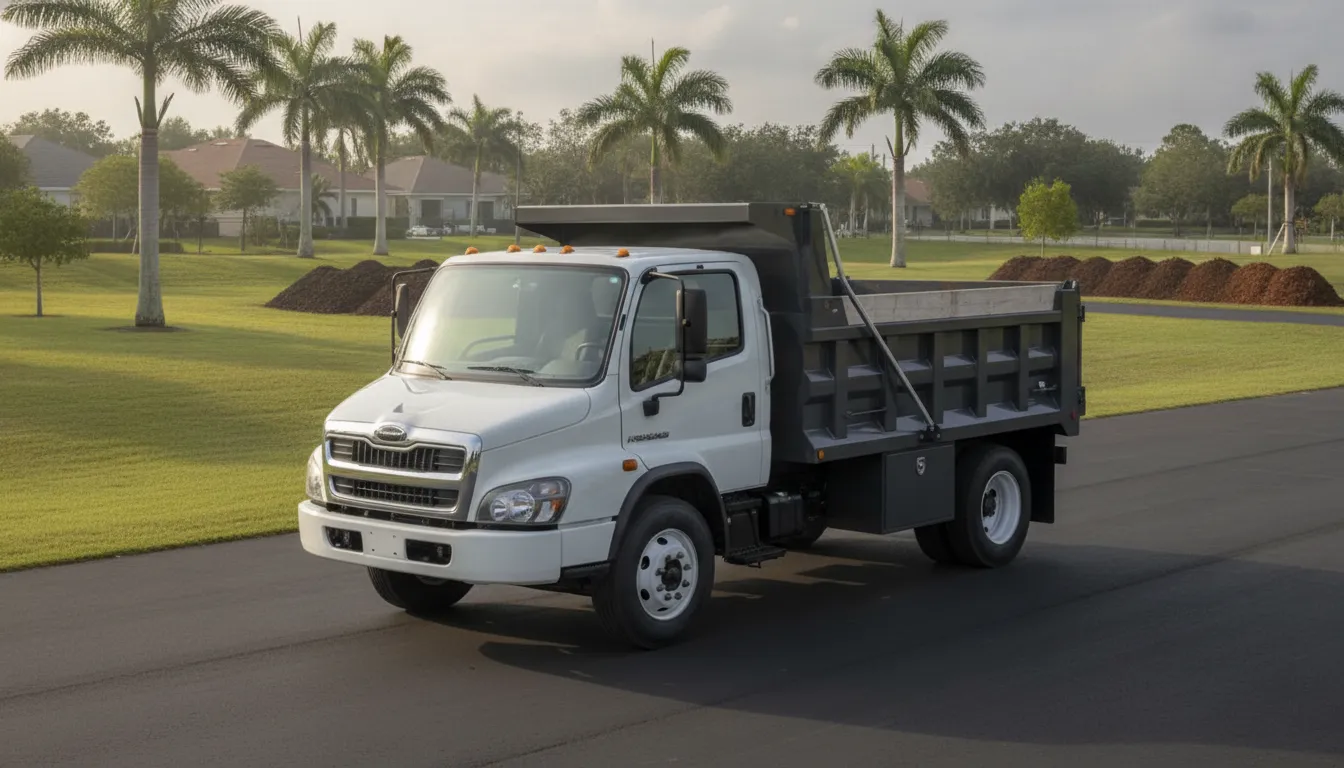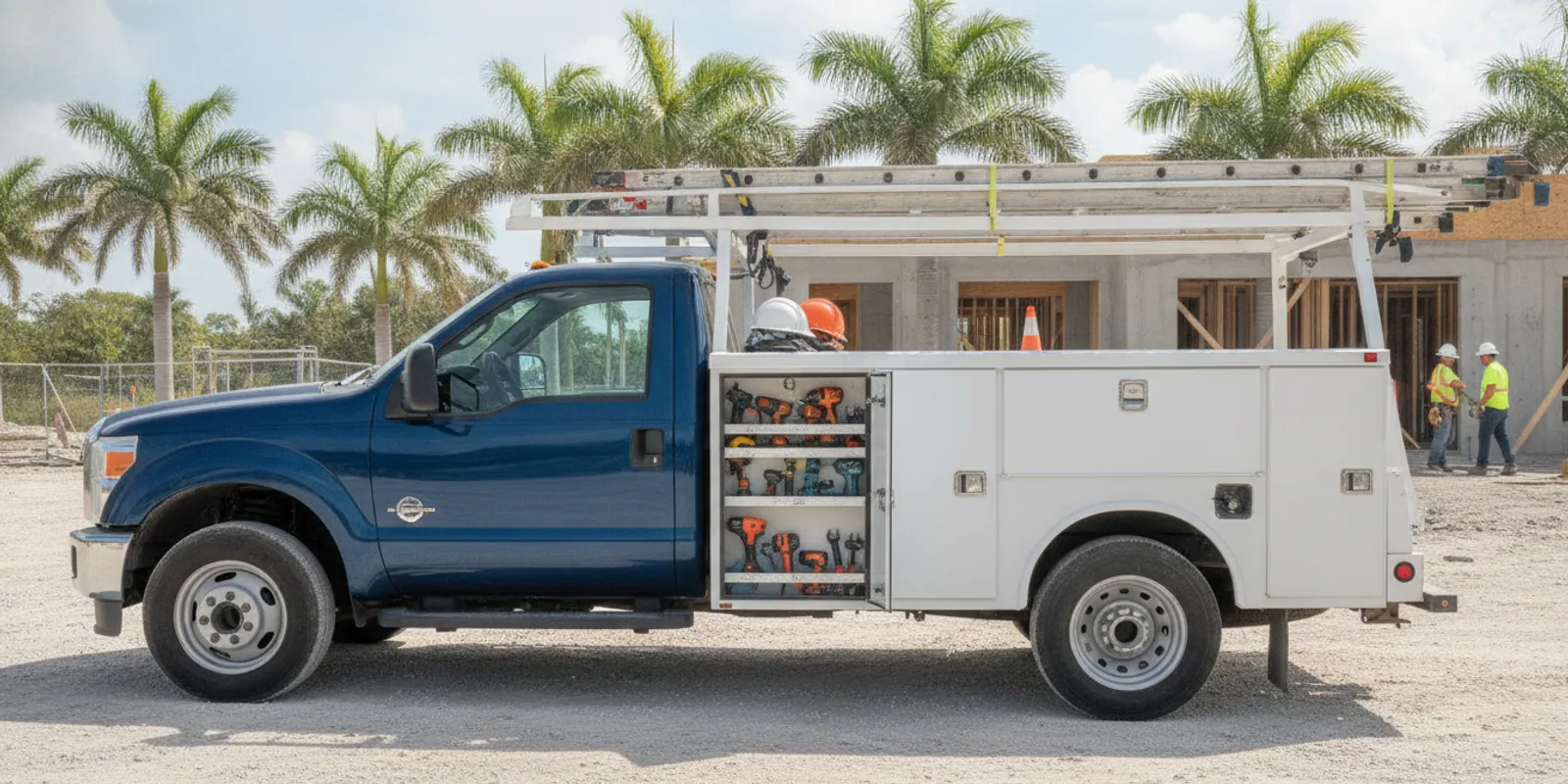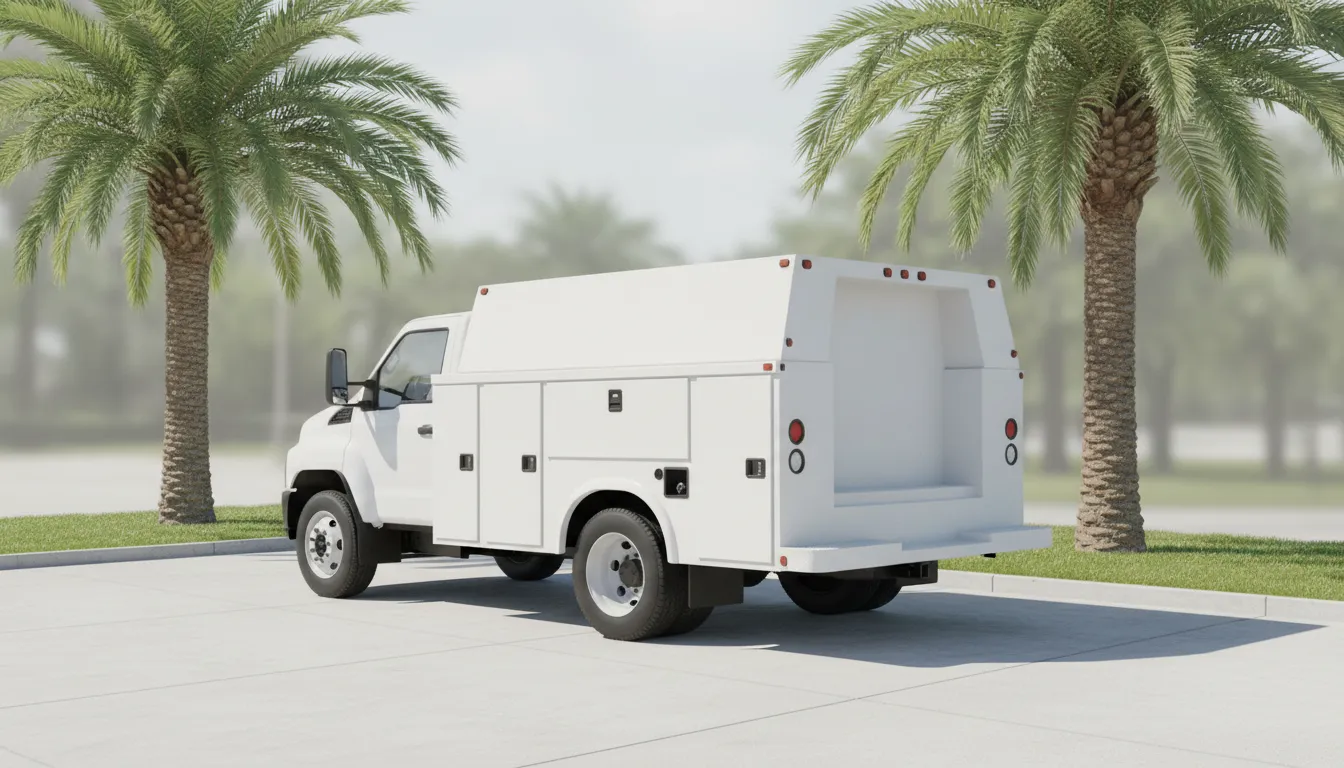
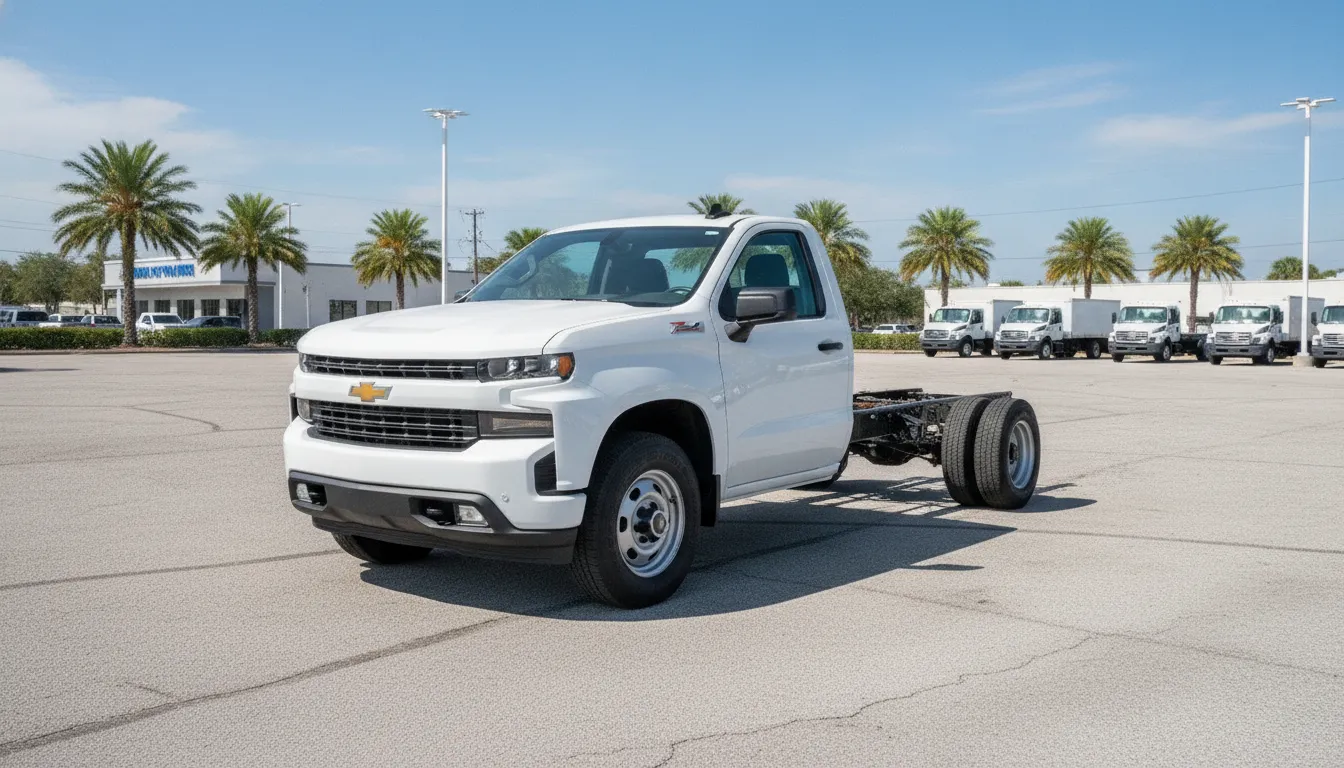
A Silverado work truck is not one truck. The same name covers a pickup that carries tools in a bed and a chassis cab that leaves the factory ready for a dump, service, or stake body. If you are looking at Chevrolet Silverado work trucks for sale, start with the work, then match class, cab, wheelbase, and body to that work. A truck that looks right on the lot can still come up short once the body, tools, and cargo are on it.
See new Chevrolet trucks and compare the Silverado work trucks currently listed at our Pompano Beach store.
What a Silverado work truck includes
Shoppers use "work truck" for two different Chevrolet setups. One is a Silverado pickup, often a 2500 HD or 3500 HD, with a factory bed. The other is a chassis cab, including the Silverado 3500 HD Chassis Cab and the Silverado 4500 HD, 5500 HD, and 6500 HD. A chassis cab has a cab and frame rails, and the body is added for the job.
At Lou Bachrodt's Tri-County Truck in Pompano Beach, the new Chevrolet page lists both styles. Recent listings have included Silverado 4500 HD, 5500 HD, and 6500 HD Work Trucks, plus a Silverado 3500 HD Chassis Cab Work Truck. Those names describe the chassis, not the finished body. A Work Truck trim is the vocational package. It is not a promise that a service body or dump is already installed.
We also stock Chevrolet Low Cab Forward trucks and Express cargo vans and cutaways. Those are different products. This guide stays on Silverado work trucks you can buy as pickups or chassis cabs. For the wider Chevrolet catalog, read our Chevrolet commercial truck models and specs guide, which is the lineup comparison, not a shopping walkthrough.
Match the class to the loaded truck
Class is a weight band, not a personality. Gross vehicle weight rating, or GVWR, is the most the finished truck should weigh, including the cab, body, fuel, passengers, tools, and cargo. Chevrolet publishes a range for each chassis-cab series because cab, wheelbase, axle, and equipment change the rating of a specific truck.
Chevrolet publishes a GVWR band for each 2026 Silverado chassis-cab series. Read the cells as ranges, then confirm the label on the truck.
| Chassis | GVWR band | Typical use |
|---|---|---|
| 4500 HD. | 14,001 to 16,500 lb. | Lighter bodies. |
| 5500 HD. | 17,500 to 19,500 lb. | Heavier bodies. |
| 6500 HD. | 21,000 to 23,500 lb. | Top of this family. |
Here is how those bands usually sort a shopping list.
- The Silverado 4500 HD band is 14,001 to 16,500 lb. It fits lighter vocational bodies and local contractor work that needs a medium-duty frame.
- The Silverado 5500 HD band is 17,500 to 19,500 lb. It fits heavier service, stake, or dump bodies when a 4500 HD is tight but a 6500 HD is more truck than the route needs.
- The Silverado 6500 HD band is 21,000 to 23,500 lb. It is the series to price when the finished body, cargo, or trailer needs the top of this family.
Chevrolet lists a maximum available GVWR of 23,500 lb and a maximum available gross combination weight rating of 37,500 lb for this chassis-cab family. Those are maximums, not the rating of every truck on the lot. The same page lists a Duramax 6.6L turbo-diesel V8 rated at 350 horsepower and 750 lb-ft, paired with an Allison transmission, as the powertrain for these chassis cabs. Confirm the engine, transmission, GVWR, and gross combination weight rating on the truck you are pricing. A door-sticker rating beats a brochure range.
The 3500 HD Chassis Cab sits below that family and is the step up from a heavy-duty pickup when you need frame rails for a body but do not need a 4500 HD. Read the certification label for that VIN before you compare it with a 4500 HD. Do not assume the next series number means the next truck can carry your body.
If you want owner experience on the heaviest series after you have picked the weight band, our Chevy 6500 reviews cover reliability and day-to-day notes. That article is not a substitute for the weight label on a truck that is for sale.
Cab, drivetrain, and wheelbase
Once the weight band is plausible, the next choices change how the truck works every day. Chevrolet offers these Silverado chassis cabs as Regular Cab or Crew Cab, and as two-wheel drive or four-wheel drive. Wheelbases run from 165 to 243 inches on Regular Cab models and from 175 to 235 inches on Crew Cab models, depending on series.
A Regular Cab keeps the truck shorter and leaves more of the frame for the body. A Crew Cab gives a crew a real back seat, and it uses some of the wheelbase that a body might otherwise occupy. Measure the people who ride daily, not the maximum the spec sheet allows. A crew that always rides together will feel a Regular Cab immediately.
Four-wheel drive helps on soft jobsites, boat ramps, and unfinished lots. It also adds weight and complexity. If the truck lives on paved South Florida routes, two-wheel drive is often the simpler truck. If it has to leave pavement loaded, ask whether the specific unit is four-wheel drive before you fall in love with a photo.
Wheelbase has to fit the body and the places you drive. A longer rail can take a longer service or stake body. It can also be the truck that will not turn into a downtown alley, a gated yard, or a tight Pompano Beach side street. Chevrolet notes a forward-tilting hood and up to a 50-degree wheel cut on these chassis cabs, which helps in tight yards, but wheel cut does not shrink a long body. Walk the wheelbase with the body length you actually need.
Choose the body before you choose the truck
The chassis is only half the purchase. Chevrolet describes these trucks as built for upfits, from a utility body to a dump to a stake body, on a single-piece frame rail with a clean top of rail. Available power-takeoff access on both sides of the transmission and up to 10 auxiliary switches are there so an upfitter can run a body without inventing a wiring plan. That equipment is available, not standard on every Work Truck in inventory. Ask which switches and whether power-takeoff prep are on the VIN you are looking at.
Write the body down before you ask for a price:
- Service or utility body: compartments for tools, with a top that may carry ladders or small material. Weight grows fast once the compartments are full.
- Dump body: loose material that has to leave the truck by gravity. The body, hoist, and a full load all count against GVWR.
- Stake or platform body: an open deck for palletized or bulky cargo that your crew loads and secures.
- Contractor or landscape body: a mix of side storage and an open load area. Compare it with a service body only after you know which one you fill first.
Our truck body upfit checklist is the place to turn that list into dimensions, mounting points, and power needs. Use it so the body conversation is specific. This article will not repeat that checklist.
Cargo still has to stay on the truck. The FMCSA cargo securement rules apply to commercial motor vehicles and set the tie-down and working-load expectations for cargo that can shift or fall. A stake body or open platform needs rated tie-downs and anchor points that match what you haul. A service body with doors needs latches that stay closed. The federal rule is 49 CFR 393.100, which requires cargo to be secured so it does not leak, spill, blow off, or fall from the vehicle. Read it against your actual cargo, not against a stock photo: 49 CFR 393.100 on GovInfo.
Payload left after the body
GVWR is not payload. Payload is what remains after the truck, the body, fuel, and passengers are already on the scale. A chassis that "can take a dump body" can still be illegal or unsafe once that body is installed and loaded with soil, block, or equipment.
Do the arithmetic in this order:
- Confirm GVWR and gross combination weight rating for the exact truck, from the label or build record, not from the series maximum.
- Add the weight of the body, hoist, liftgate, ladder rack, compressor, or any other installed equipment.
- Add passengers, fuel, tools that never come off the truck, and a typical cargo load. Use a real load, not an empty-day guess.
- If you tow, put the trailer and its cargo against the gross combination rating, and check that the hitch and wiring are part of the quote.
- Leave a margin. A truck that is legal only when the body is empty will not stay legal on a workday.
Chevrolet's own chassis-cab page warns that vehicles shown may wear equipment from an independent supplier, and that equipment is not covered by the GM new-vehicle warranty. If a body is already installed, ask who built it, who warranties it, and whether the remaining payload was calculated after that body. If the truck is still a bare chassis, the quote should say the body is not included.
What to check on Chevrolet Silverado work trucks for sale
Inventory changes. A model name on a search result is not a promise that the same cab, axle, or body is on the lot today. Ask for the items below on the specific unit.
- The VIN, model year, and series: 3500 HD Chassis Cab, 4500 HD, 5500 HD, or 6500 HD.
- Regular Cab or Crew Cab, two-wheel drive or four-wheel drive, and the wheelbase.
- The GVWR and gross combination weight rating for that VIN.
- Whether a body is installed. If it is, the body builder, body weight, and who services it. If it is not, the frame length available for the body you want.
- Power-takeoff prep, auxiliary switches, alternator, and fuel-tank size, if your body needs them.
- What the advertised price includes. Our site states that listed prices do not include tax, tag, title, registration, and other government fees, and that the dealer sets the final price.
Used Silverado work trucks need one more pass: service records, the body condition, and whether earlier upfits changed the weight or the wiring. Our used trucks for sale guide covers how to choose a used work truck in general. Use it for condition and history. Use this page for Silverado configuration.
We deliver complimentary within Florida, and the store is at 1801 West Atlantic Boulevard in Pompano Beach. Sales can walk a listed truck with you. Service and parts are on the same property if you want to know who will see the truck after the sale. Financing, when you want it, is a separate conversation from whether the chassis fits. Our work-ready trucks with financing article covers what to compare on payment and terms. It does not pick the series or the body.
A short way to narrow the lot
Bring three numbers and one body type. The numbers are the typical cargo weight, the body weight if you already know it, and the trailer weight if you tow. The body type is the one your crew uses most days, not the one that would be nice twice a year.
Then cross off trucks in this order. Drop any series whose GVWR band cannot hold the finished truck. Drop cabs that do not fit the crew. Drop wheelbases that do not fit the body or the jobsite. What remains is a short list you can price, instead of a long list of Silverado names that happen to be in stock.
If two trucks both fit, prefer the one whose label you have read and whose body plan is written down. A lower series that still has payload left is a better work truck than a higher series that is only heavier. A bare chassis with a clear upfit plan is a better purchase than a truck wearing a body your crew will not use.
Frequently asked questions
Are Silverado 4500 HD, 5500 HD, and 6500 HD pickups?
No. In Chevrolet's commercial lineup those three are chassis cabs. They leave the factory with a cab and frame so a body can be installed. A Silverado 2500 HD or 3500 HD pickup is a different truck, with a factory bed. A 3500 HD Chassis Cab is the chassis-cab version of that heavy-duty family, not the same thing as a 3500 HD pickup.
Does a Work Truck trim include a service body or dump body?
No. Work Truck is a trim. The body is a separate upfit unless the listing says a body is already installed. Ask for the body builder and the body weight before you compare two "work trucks" that are not wearing the same equipment.
Which Silverado chassis cab should a contractor choose?
Choose the lightest series whose GVWR still covers the cab, the body, passengers, tools, and a normal cargo load, with margin. For many local bodies that is a 4500 HD or 5500 HD. A 6500 HD is the right conversation when the finished truck or the truck-and-trailer combination needs the higher published band. The label on the truck decides it, not the series name alone.
Can I see Silverado work trucks at Tri-County?
Yes. New Chevrolet inventory is listed on our new Chevrolet trucks page, including Silverado chassis-cab Work Trucks when they are in stock. Call the store or use the contact form and ask for a quote on a specific VIN. The sales line posted on the site is 754-203-6347.
Tell us the body, the load, and whether you tow. We will help you compare the Silverado work trucks on the lot against that work. Request a quote or call (954) 971-4022.